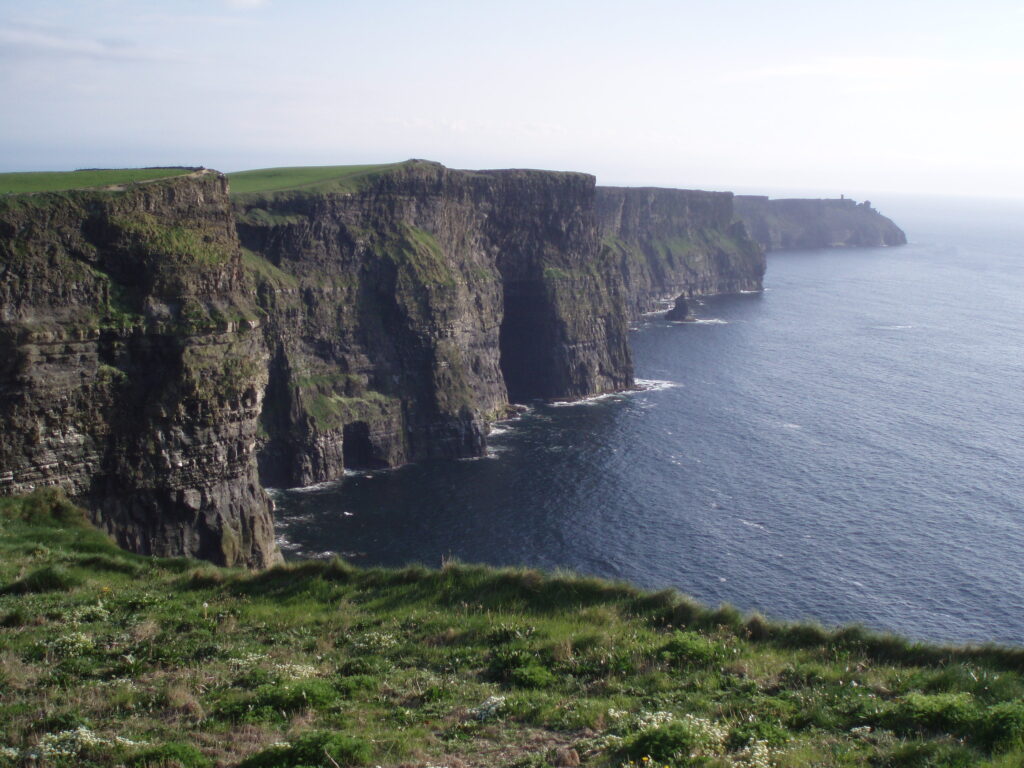
Standing at the edge of the Cliffs of Moher, with the Atlantic wind in your face and seabirds wheeling below, you understand why this stretch of County Clare coastline has captivated visitors for generations. These aren’t just cliffs — they’re a raw, elemental encounter with Ireland’s wild western edge.
Stretching for five miles along the Atlantic coast and rising to 702 feet at their highest point, the Cliffs of Moher are among the most visited natural attractions in Ireland. But statistics don’t capture the visceral impact of standing at the precipice, watching waves crash against ancient rock layers that tell 320 million years of geological history.
The Best Times to Visit
The cliffs reveal different moods depending on when you arrive. Early morning, before the tour buses pull in, offers the most peaceful experience. The light is softer, the crowds are minimal, and you might spot puffins nesting in the cliff face between April and July.
Late afternoon brings dramatic lighting, especially in summer when the sun sets over the Atlantic. The golden hour transforms the dark shale and sandstone into layers of amber and rust. Winter visits are rawer — fewer tourists, bigger waves, and that authentic sense of Ireland’s untamed coast. Just bring waterproofs and prepare for serious wind.
Weather changes quickly here. Fog can roll in within minutes, obscuring the views entirely. But even on gray days, there’s something powerful about the sound of invisible waves crashing hundreds of feet below.
Beyond the Main Viewing Platform
Most visitors stick to the paved paths near the visitor center, but the coastal path heading south toward Hag’s Head rewards those who venture further. This less-traveled section offers equally stunning views without the crowds. The walk takes about an hour each way and passes O’Brien’s Tower, a circular stone tower built in 1835 by local landlord Cornelius O’Brien to impress visiting ladies.
Climbing O’Brien’s Tower (a few dollars extra) adds another perspective, though the ground-level views are already spectacular. On clear days, you can see the Aran Islands, Galway Bay, and the Twelve Bens mountain range in Connemara. The Blasket Islands and Loop Head sometimes appear in the distance.
The path north toward Doolin is equally rewarding and leads to spots where local musicians sometimes busk near the cliff edge, their fiddles and flutes competing with the wind — a uniquely Irish soundtrack to your visit.
What Lives Here
The cliffs are more than scenic — they’re a crucial habitat for over 20,000 seabirds. Razorbills, guillemots, and kittiwakes nest on the ledges. Puffins arrive in April and stay through July, their comical orange beaks and waddling gait making them crowd favorites. Bring binoculars if you’re serious about bird watching.
Peregrine falcons hunt here too, and if you’re lucky, you might see one stoop on unsuspecting prey at speeds over 200 miles per hour. The updrafts along the cliff face create perfect conditions for these aerial predators.
Practical Details
The cliffs are located near the villages of Doolin and Liscannor in County Clare, about 40 minutes from Galway and an hour from Limerick. Parking at the official visitor center costs around $8 per car and includes access to the Atlantic Edge exhibition, which explores the geology, wildlife, and human history of the area through interactive displays.
Respect the barriers and warning signs — the cliff edges are unstable, and people have died here. The photo isn’t worth the risk. There are designated viewing platforms that offer incredible vistas safely.
Allow at least two hours for your visit, longer if you plan to walk the coastal paths or explore the exhibition. Wear layers regardless of the forecast — the wind chill at the edge can be fierce even on warm days.
After your visit, Doolin village is perfect for lunch and an afternoon trad session. Several pubs there host live music even during the day, especially in summer.
Why They Matter
The Cliffs of Moher remind us why Ireland’s landscape has inspired poets, painters, and musicians for centuries. They’re a place where geology, wildlife, and human history converge at the edge of Europe. Standing there, you’re not just taking in a view — you’re experiencing the elemental forces that shaped this island.
Whether you’re visiting for the first time or returning to a familiar spot, the cliffs never disappoint. They’re proof that some places live up to the hype.
Want more stories from Ireland’s most beautiful places delivered to your inbox? Subscribe to the Ireland Moments newsletter — a daily celebration of the Emerald Isle’s landscapes, culture, and hidden corners worth discovering.