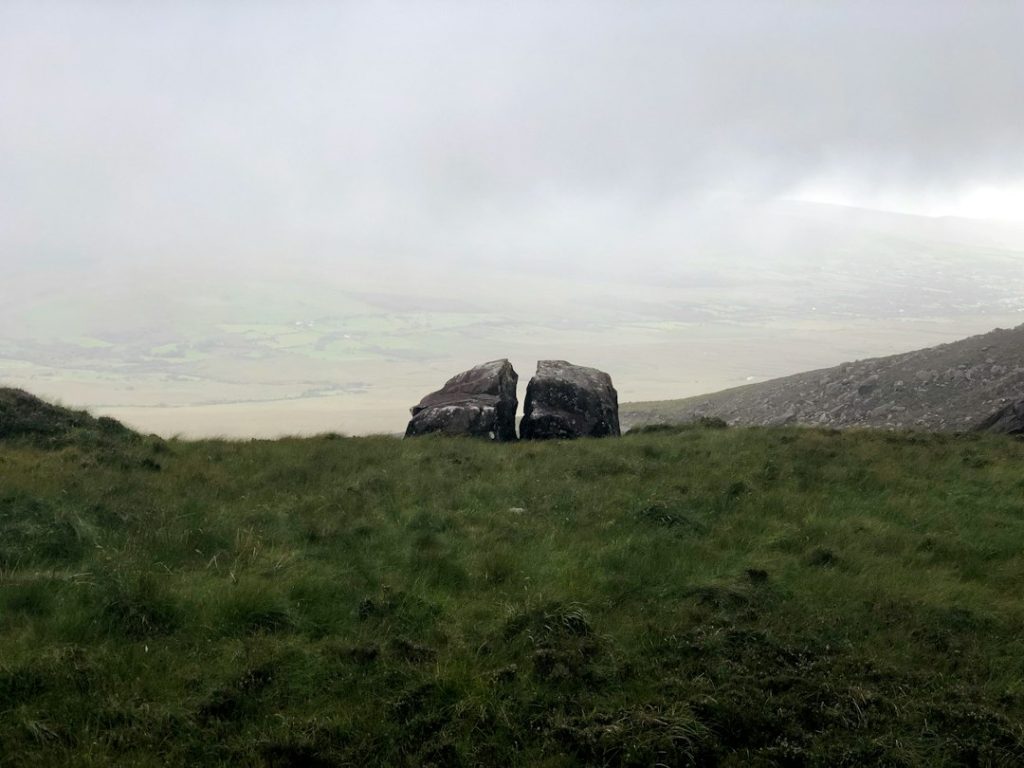
On the windswept slopes of the Dingle Peninsula and Skellig Michael, small stone structures huddle against the Atlantic gales. They look like they grew from the earth itself—rounded, rough-edged, and impossibly old. These are Ireland‘s beehive huts, known in Irish as clochán (plural: clocháin), and they’ve stood for more than a millennium without a single drop of mortar.
Built by early Christian monks between the 6th and 12th centuries, these corbelled stone shelters represent one of the most elegant solutions to a brutal problem: how to live on Ireland’s exposed Atlantic edge with nothing but the stones beneath your feet.
How They’re Built—and Why They Last
A clochán is constructed using a technique called corbelling. Flat stones are laid in overlapping circles, each ring slightly smaller than the one below, gradually tapering inward until the structure closes at the top. No cement, no timber framework—just gravity, precision, and patience.
The stones are carefully chosen and placed so rainwater runs outward along the flat surfaces rather than seeping through. The weight of each layer locks the one below it into place. The result is a waterproof, windproof, self-supporting dome that has outlasted kingdoms, plagues, and storms that would flatten a modern shed.
On Skellig Michael, where monks lived in near-total isolation 700 feet above the crashing Atlantic, six beehive huts still stand intact. They’ve survived without maintenance for centuries, a testament to the skill of their builders and the genius of the design.
Where to See Them
The best-preserved beehive huts are scattered across Ireland’s southwest. Skellig Michael is the most famous site, though reaching it requires a boat trip and a steep climb—and landings depend on the weather. The huts there are part of a UNESCO World Heritage Site and remain largely as the monks left them.
On the Dingle Peninsula, the Fahan Group near the village of Ventry includes several well-preserved clocháin within a stone-walled enclosure. You can walk among them, duck inside, and feel the cool stillness that must have offered the monks rare shelter from the wind. There’s a small entrance fee (around $3–$5 USD), paid to the landowner who maintains access.
Gallarus Oratory, also on the Dingle Peninsula, is a related structure—rectangular rather than round, but built using the same corbelling technique. It’s been standing since the 9th century and remains completely watertight. It’s one of Ireland’s most intact early Christian buildings and well worth the short detour from the Slea Head Drive.
What It Felt Like to Live Inside
Step inside a beehive hut and the world changes. The roar of wind cuts to a whisper. The light dims to a soft glow from the low doorway. The air smells of damp stone and earth. It’s cool, close, and utterly still—a womb of stone.
These weren’t luxurious dwellings. Most are no more than 10 to 15 feet across inside. Monks would have slept on stone ledges or straw pallets, prayed by candlelight, and lived lives of extreme simplicity. Yet the huts provided what mattered: shelter, dryness, and a space set apart from the world.
Some clocháin still show traces of interior features—stone shelves, niches for lamps, even drainage channels cut into the floor. These weren’t crude shelters. They were carefully designed homes, built to last by people who understood their environment intimately.
Why They Still Matter
Ireland’s beehive huts are more than historical curiosities. They’re proof that elegant solutions don’t require industrial materials or modern tools—just knowledge, patience, and respect for the landscape. They remind us that some of the most enduring human creations are also the simplest.
They also connect us directly to the people who built them. Stand inside a clochán and you’re occupying the same cold, quiet space a monk occupied more than a thousand years ago. The stone under your hand is the same stone he shaped and placed. It’s one of the most tangible links to Ireland’s early Christian past.
And they’re still teaching us. Architects and engineers study corbelled structures to understand how traditional building techniques can inform sustainable design. The beehive huts prove that local materials, used with skill, can outlast almost anything.
If you’re drawn to Ireland’s wild edges, its quiet history, and the ingenuity of those who came before, the beehive huts are essential. They stand as they always have—small, strong, and stubbornly enduring.
Want more stories from Ireland’s ancient landscapes and hidden corners? Subscribe to the Ireland Moments newsletter—a daily celebration of the island’s places, culture, and history, delivered to your inbox each morning.