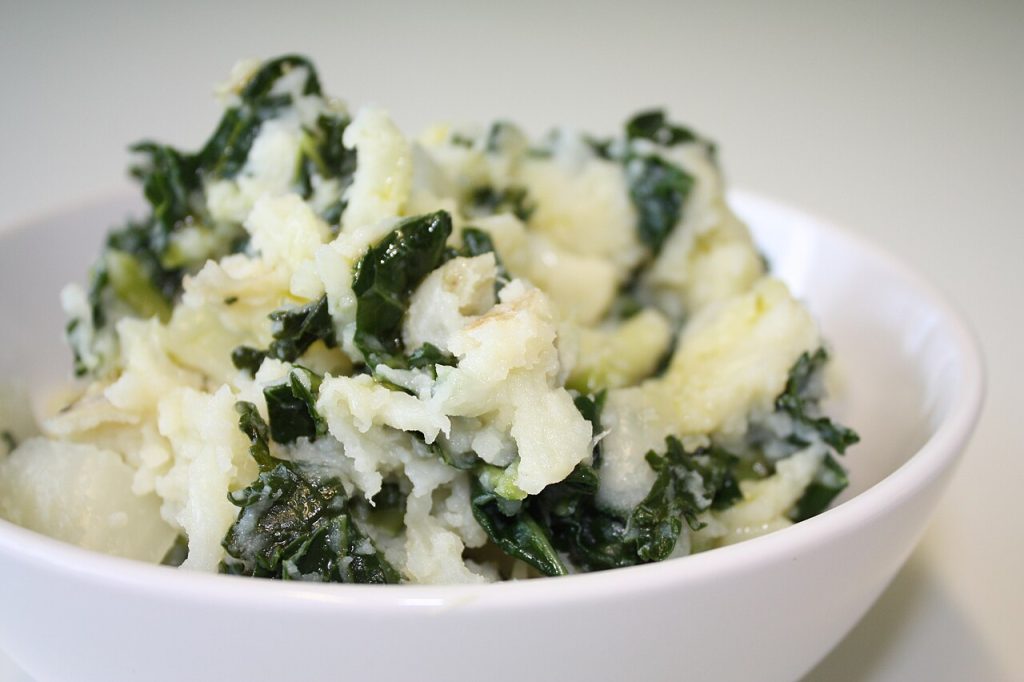
There’s a reason colcannon has endured on Irish tables for centuries. It’s simple, warming, and made from ingredients that have always grown well in Ireland’s climate—potatoes, cabbage or kale, butter, and milk. But beneath that simplicity is a dish that, when done right, becomes more than the sum of its parts.
Colcannon isn’t fancy. It’s the kind of food that filled bellies after long days in the fields, that appeared at Halloween gatherings with coins hidden inside for luck, and that still shows up at Sunday dinners across the country. It’s comfort in a bowl, and it deserves to be made properly.
The Right Potatoes Make All the Difference
Start with floury potatoes—varieties like Rooster, Kerr’s Pink, or Golden Wonder. These break down into a fluffy, soft mash that soaks up butter and cream without turning gluey. Waxy potatoes won’t give you the texture you’re after.
Peel and chop about two pounds of potatoes into even chunks. Boil them in salted water until they’re tender enough to fall apart when pierced with a fork—usually 15 to 20 minutes. Drain them well, then return them to the pot over low heat for a minute to steam off any excess water. This keeps your mash from getting watery.
Mash them while they’re still hot. Use a potato masher or a ricer if you have one. Don’t use a food processor—it’ll turn them into paste.
Cabbage or Kale: Both Work
Traditionally, colcannon is made with curly kale, though green cabbage became more common in many households. Both are authentic, and both bring their own character to the dish.
If you’re using cabbage, shred about half a head finely. For kale, strip the leaves from the stems and chop them roughly. Either way, you want about four cups of greens.
In a separate pan, melt a generous knob of butter and add a bunch of finely sliced scallions—white and green parts. Cook them gently until soft, then add your greens. If you’re using cabbage, cook it until tender, about five minutes. Kale takes a bit longer, closer to eight. Add a splash of milk or cream to the pan and let it warm through.
Bring It All Together
Add the greens and their buttery liquid to the mashed potatoes. Stir it all together, then add more butter—this is not the time to be shy. A good colcannon should be rich and glossy. Season generously with salt and white pepper.
Some families add a pinch of nutmeg. Others stir in chopped parsley. There’s no single right way, but the core stays the same: potatoes, greens, butter, and warmth.
Serve it hot, with a well of melted butter in the center. It’s perfect alongside bacon, sausages, or corned beef, but it’s also good enough to eat on its own with a glass of buttermilk.
Why It Still Matters
Colcannon is tied to the rhythms of the Irish year. It was especially popular around Samhain, the old harvest festival that became Halloween. Families would hide charms in the colcannon—a ring for marriage, a coin for wealth, a thimble for spinsterhood. The tradition has mostly faded, but the dish hasn’t.
It’s still a staple because it works. It’s affordable, filling, and adaptable. It uses what’s on hand and turns it into something that feels like home. In a world of complicated recipes and expensive ingredients, there’s something reassuring about a dish this honest.
If you’ve never made colcannon, now’s the time. And if you have Irish roots, making it might feel like stepping back into a kitchen you’ve always known.
Want more recipes, stories, and traditions from Ireland delivered to your inbox? Subscribe to the Ireland Moments newsletter—a daily celebration of everything that makes the Emerald Isle unforgettable.