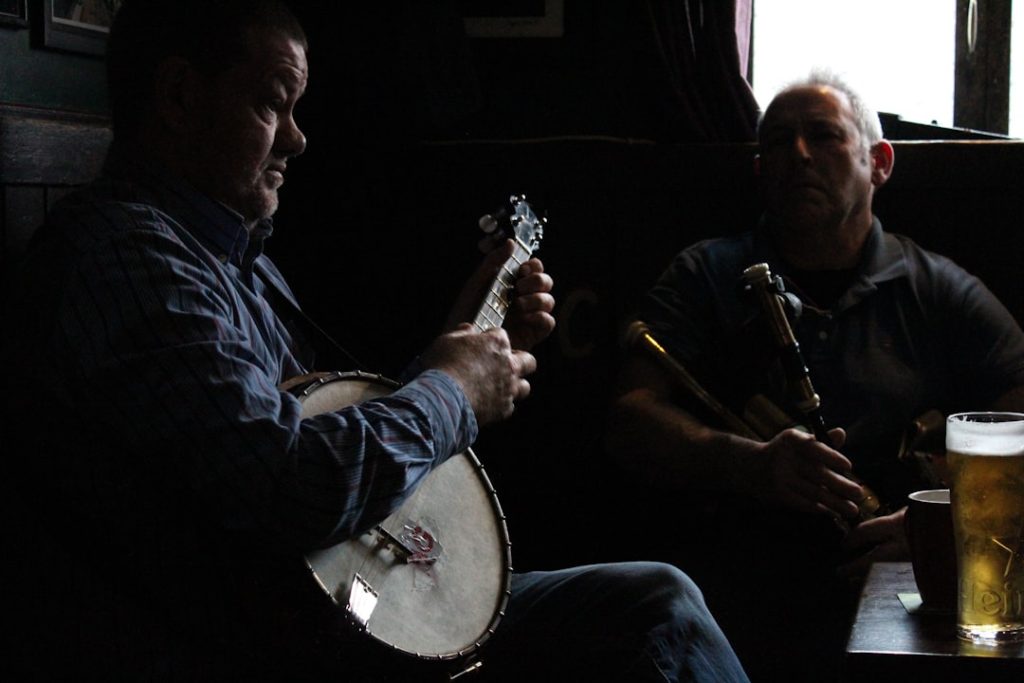
Walk into any trad session from Doolin to Dublin, and sooner or later you’ll hear it: the unmistakable lilt of “The Swallow Tail Jig.” It’s one of those tunes that feels like it’s always existed, passed down through generations of fiddlers, flute players, and accordion squeezers. But what makes this particular jig so special isn’t just its popularity—it’s what it teaches anyone who learns it about how Irish music actually works.
The Swallow Tail Jig isn’t the oldest tune in the tradition, nor the most complex. But it might be the perfect teaching tune, the one that reveals the architecture beneath all those reels, jigs, and hornpipes that make up Ireland’s living musical heritage.
The Shape That Makes It Sing
Irish jigs move in groups of three beats—one-two-three, one-two-three—creating that distinctive bounce that separates them from the driving four-beat pulse of reels. The Swallow Tail Jig takes this basic structure and does something elegant with it: it builds melodic phrases that rise and fall like the bird it’s named after, swooping through the scale with a natural grace that makes it easy to remember and impossible to forget.
The tune is built in two parts, each played twice through before moving to the next. The A part establishes a melodic idea in the lower register, while the B part lifts the tune higher, creating tension and release. This call-and-response structure is fundamental to Irish traditional music, and The Swallow Tail Jig demonstrates it with crystal clarity.
What makes it particularly useful for learners is how it uses repetition with variation. Small melodic motifs repeat throughout, but they’re never quite identical. This teaches musicians one of the most important skills in Irish music: how to ornament and vary without losing the essence of the tune.
Where Sessions Come Together
At O’Connor’s in Doolin, Matt Molloy’s in Westport, or The Cobblestone in Dublin, The Swallow Tail Jig serves another crucial function: it’s a common language tune. When a session is warming up or when musicians from different traditions meet for the first time, someone will strike up The Swallow Tail and suddenly everyone’s playing together.
This isn’t accidental. The tune’s popularity comes partly from its accessibility—it sits comfortably on most instruments, doesn’t require extreme range, and uses intervals that work naturally under the fingers. A fiddle player from County Clare and a flute player from County Donegal might play very different styles, but they’ll both know The Swallow Tail, and they’ll both be able to find their way through it together.
The tune also teaches listening. Because it’s so widely known, you can hear how different musicians approach the same melodic line. Some will add rolls and cuts, others will keep it spare and clean. A good session player learns by hearing these variations and understanding when embellishment serves the music and when it gets in the way.
The Tune’s Journey Through Time
Nobody knows exactly where The Swallow Tail Jig originated, though it’s been part of the repertoire for at least a century and probably longer. It appears in early 20th-century collections, and older musicians will tell you they learned it from their grandparents. Like most traditional tunes, it exists in multiple versions—each region, sometimes each family, has its own way of playing it.
The tune got a significant boost in visibility when it was recorded by multiple high-profile traditional musicians in the 1970s and beyond. But unlike some tunes that become museum pieces, preserved in a single definitive version, The Swallow Tail has remained alive and changeable. It continues to evolve in sessions across Ireland and throughout the Irish diaspora.
This living quality is what makes it valuable. When you learn The Swallow Tail Jig, you’re not learning a fixed composition—you’re joining a conversation that’s been going on for generations.
Why It Matters for Learners
For anyone picking up Irish traditional music, The Swallow Tail Jig offers something more valuable than just another tune in the repertoire. It’s a masterclass in how Irish music is structured, how melodies move, and how musicians communicate without words.
The tune teaches rhythm—that characteristic jig lilt that distinguishes competent players from great ones. It teaches ornamentation—where to add those grace notes and triplets that give Irish music its distinctive flavor. And it teaches session etiquette—how to blend with other musicians, when to lead and when to support.
You’ll find it taught at workshops from the Willie Clancy Summer School in County Clare to the Catskills Irish Arts Week in New York. Teachers love it because it contains so many learning opportunities in one accessible package. Students love it because it sounds great from the first time through and rewards years of refinement.
Next time you’re in a session and The Swallow Tail Jig starts up, pay attention. Listen to how each musician shapes the melody, where they breathe, how they navigate the transitions between parts. You’re hearing Irish traditional music at its most essential—a simple tune that contains worlds.
Want to dive deeper into the tunes, traditions, and stories that make Ireland unforgettable? Subscribe to the Ireland Moments newsletter—a daily celebration of the Emerald Isle delivered to your inbox.