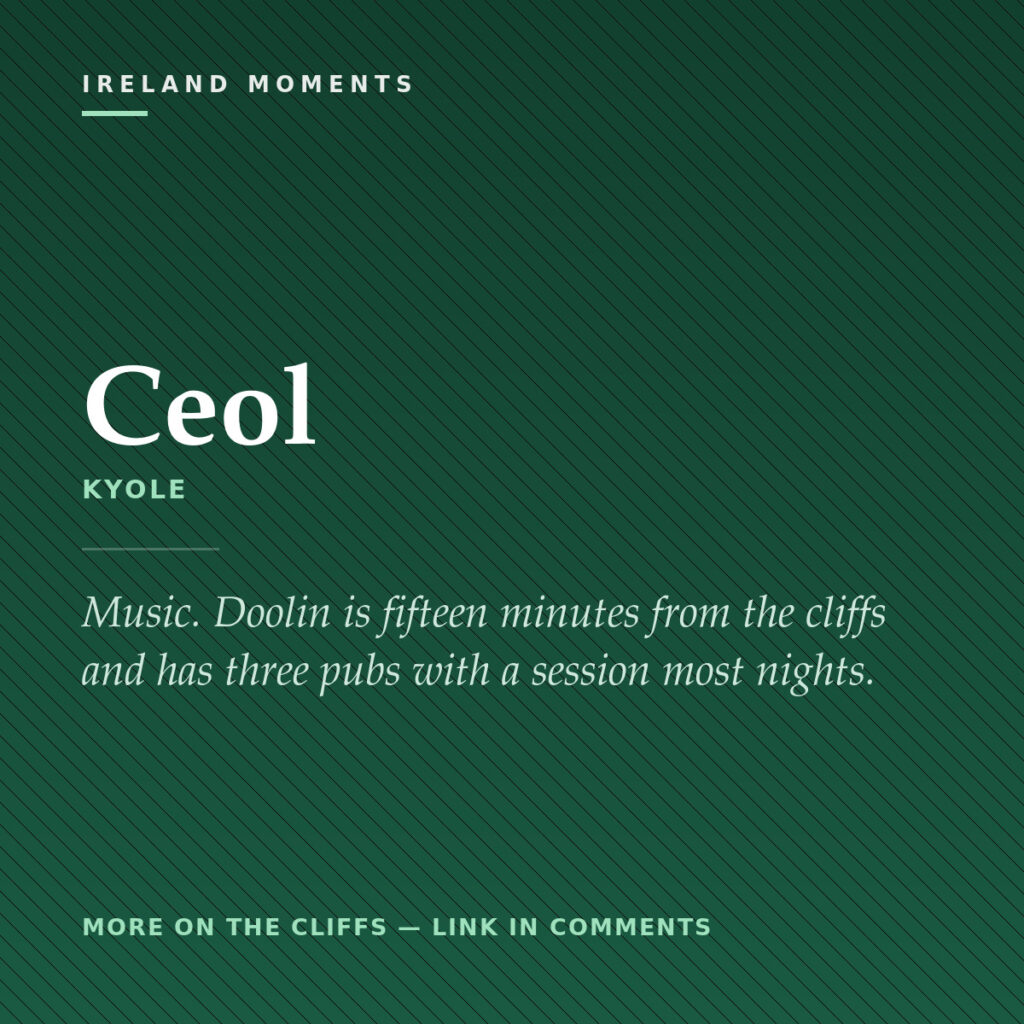
In the coastal village of Doolin, County Clare, O’Connor’s pub draws musicians and listeners from around the world. Not because of marketing or tourism boards, but because what happens inside this stone-walled pub most nights represents traditional Irish music at its most alive.
The sessions at O’Connor’s aren’t performances. They’re gatherings where musicians show up, take a seat, and play together in the loose, conversational style that defines Irish traditional music. No stage, no setlist, no separation between player and listener.
Why Doolin Became a Music Hub
Doolin sits on the Wild Atlantic Way, close to the Cliffs of Moher and the limestone expanse of the Burren. It’s always been a small place—barely a village by most standards—but its location at the crossroads of Clare and the Aran Islands made it a natural stopping point for travelers, including musicians.
By the 1970s, Doolin had become known as a place where traditional music thrived. Musicians like Micho Russell, a tin whistle player who lived in the village, helped establish its reputation. Russell played nightly, drawing others to join him. The tradition stuck.
O’Connor’s was one of the pubs where this happened. The family has run the place since 1832, and over generations it became a home for sessions. Today, three generations of O’Connors still work behind the bar.
What Makes the Sessions Special
Walk into O’Connor’s on a session night and you’ll find musicians gathered near the fireplace or along the back wall. Fiddles, flutes, accordions, bodhráns, guitars. Someone starts a tune—maybe “The Butterfly” or “The Kesh Jig”—and others join in, each adding their voice to the sound.
The beauty is in the spontaneity. Tunes flow from one to the next, chosen by feel rather than plan. A fiddler might nod to a flute player and launch into a slip jig. A guitarist might suggest a slower air to bring the energy down. The conversation happens through the music itself.
What you hear at O’Connor’s is local musicians playing for themselves and each other, not for an audience. Tourists are welcome, but they’re witnesses to something that would happen whether they were there or not. That authenticity is what makes it remarkable.
The Regulars and the Visitors
Some musicians have been playing at O’Connor’s for decades. Others are passing through—traveling players who’ve heard about the sessions and want to sit in. The unwritten rule is simple: if you can play, you’re welcome. If you’re learning, you listen until you’re ready.
The mix of regulars and visitors creates something dynamic. You might hear a tune passed down through generations in Clare played alongside a version learned in Donegal or Cork. The differences in ornamentation and phrasing become part of the richness.
Between sets, musicians talk, drink, and share stories. The social aspect matters as much as the music. This is how tunes get taught, how styles spread, how the tradition stays alive.
When to Go and What to Expect
Sessions at O’Connor’s happen most nights during the summer and several nights a week in winter. They typically start around 9:30 p.m. and can run well past midnight. Arrive early if you want a seat—the pub fills quickly.
There’s no cover charge. Buy a pint of Guinness or a whiskey, find a spot along the wall, and settle in. The music will start when it starts. Don’t clap between tunes in a set—wait until the musicians pause and put down their instruments.
If you play an instrument, bringing it along is a sign of respect, even if you don’t join in right away. Watch for a nod or an invitation before you start playing. Sessions have their own etiquette, and observing it matters.
O’Connor’s isn’t the only pub in Doolin with sessions—McGann’s and McDermott’s also host regular nights—but O’Connor’s has a reputation that stretches back further than most. It’s earned through consistency, respect for the music, and a family that’s kept the door open for nearly two centuries.
Why It Still Matters
In an age when so much Irish music has been packaged for tourists, O’Connor’s remains a place where the tradition continues on its own terms. The musicians aren’t hired. The tunes aren’t chosen for familiarity. The experience isn’t polished or predictable.
That rawness is the point. Irish traditional music was never meant to be a museum piece. It’s a living practice, passed from player to player, night after night, in pubs like this one.
If you want to understand what a real session feels like—the rhythm, the energy, the sense of community—O’Connor’s in Doolin is where to go. Bring your patience, your respect, and your ears. The music will do the rest.
Want more stories from the heart of Ireland? Subscribe to the Ireland Moments newsletter—a daily celebration of the places, music, food, and traditions that make the Emerald Isle unforgettable.