Twenty-seven miles off the coast of Galway lie three windswept limestone islands where time moves differently. Inis Mór, Inis Meáin, and Inis Oírr—the Aran Islands—are places where Irish is the first language, where stone walls built without mortar have stood for centuries, and where the Atlantic pounds against cliffs that have witnessed thousands of years of human settlement.
These aren’t museum pieces. People live here, farm here, fish here, and welcome visitors who make the ferry crossing from Rossaveal or Doolin, or the short flight from Connemara Airport. What you find when you arrive is an Ireland that feels both timeless and utterly alive.
The Landscape of Stone and Sea
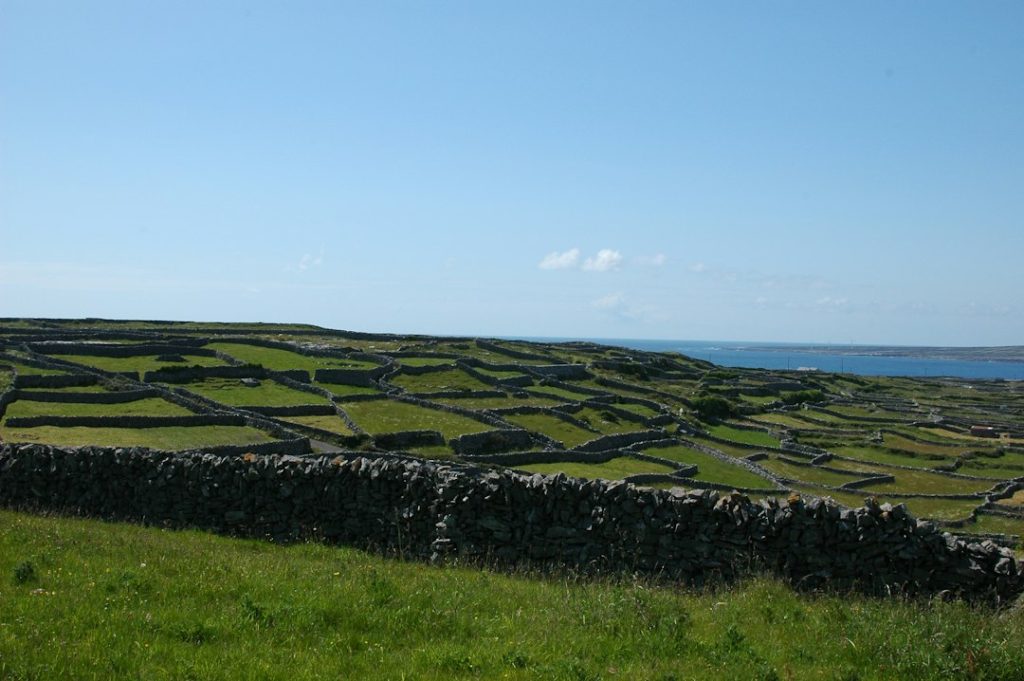
The first thing that strikes you about the Aran Islands is the stone. Not soft green hills, but exposed limestone pavement—the same karst landscape that defines the Burren across the bay. Early islanders cleared rocks from tiny fields and built them into walls, creating a patchwork that stretches across all three islands. These aren’t ordinary walls. They’re masterworks of dry stone construction, built to let wind through while protecting precious soil and crops from the Atlantic gales.
On Inis Mór, the largest island at about nine miles long, you can rent a bike and spend hours pedaling past these walls, stopping at beaches like Kilmurvey where white sand meets impossibly clear water. Inis Meáin, the middle island, is the quietest—less than 200 people live here year-round, and the Irish language is strongest. Inis Oírr, the smallest, has a shipwreck embedded in the rocks near its harbor, a rusting reminder of the sea’s power.
The cliffs on the western sides of these islands rise hundreds of feet above the ocean. At Dún Aonghasa on Inis Mór, a prehistoric stone fort sits perched on a 300-foot cliff edge with no barrier between you and the drop. It’s breathtaking and unsettling in equal measure—this is Ireland at its most dramatic and most ancient.
A Living Language and Culture
Walk into a shop or pub on any of the Aran Islands and you’ll hear Irish spoken as a living, working language. This is one of the strongest Gaeltacht regions in Ireland, where Irish isn’t a subject studied in school but the language of daily life. Signs are in Irish first, English second. Conversations flow in both, often switching mid-sentence.
The traditional Aran sweater—those cream-colored wool jumpers with complex cable patterns—originated here as practical fishing gear. Each family supposedly had its own pattern, though that’s partly romantic myth. What’s true is that these sweaters were knitted from unwashed wool that retained its lanolin, making them water-resistant and warm enough for men working on the Atlantic in open boats.
You’ll still see islanders wearing them, though most sweaters sold to visitors now come from workshops across Ireland. The authentic ones, hand-knitted on the islands, run about $200 to $300 and take weeks to make. They’re works of art as much as clothing.
Forts, Churches, and Ancient Settlement
Human beings have lived on the Aran Islands for at least 4,000 years. The evidence is everywhere. Dún Aonghasa isn’t the only prehistoric fort—there are several others, including Dún Dúchathair (the Black Fort) with its shattered walls tumbling into the sea, and Dún Eochla inland on Inis Mór.
Early Christian settlement left its mark too. The Seven Churches site on Inis Mór isn’t actually seven churches, but a monastic complex with ruins dating back to the 8th century. On Inis Oírr, the 10th-century Church of St. Caomhán is half-buried in sand dunes—locals dig it out periodically, and the sand buries it again. It’s a perfect metaphor for life on these islands: an endless negotiation between human effort and natural forces.
Getting There and Getting Around
Three ferry companies run regular services to the islands from spring through fall, with reduced schedules in winter. The crossing from Rossaveal takes about 40 minutes to Inis Mór, while boats from Doolin (seasonal) give you a view of the Cliffs of Moher on the way. Aer Arann Islands flies small planes from Connemara Airport—a ten-minute flight that offers stunning aerial views of the landscape.
On Inis Mór, most visitors rent bikes, take a minibus tour, or hire a pony and trap—yes, they’re touristy, but the islanders who drive them know every stone and story. Inis Meáin and Inis Oírr are small enough to explore on foot, though bikes are available on both.
There are guesthouses, B&Bs, and small hotels on all three islands, plus several good pubs where you might catch a session. Tigh Ned on Inis Oírr and Joe Watty’s Bar on Inis Mór are local favorites. The food is straightforward—fresh fish, hearty soups, brown bread—and portions are generous.
Why It Matters
The Aran Islands matter because they’re proof that a traditional way of life can survive in the modern world without becoming a theme park. Yes, tourism is important to the economy. But fishing continues, farming continues, and Irish continues as a first language. Children grow up here, families stay, and the culture isn’t preserved in amber—it evolves while staying rooted.
When you step off the ferry onto any of these three islands, you’re not just visiting a place. You’re entering a community that has figured out how to live on exposed rock in the Atlantic for thousands of years, and has done it with grace, humor, and stubborn resilience. That’s worth the crossing.
Love stories about Ireland’s most remarkable places? Subscribe to the Ireland Moments newsletter for a daily celebration of the Emerald Isle—delivered to your inbox each morning.