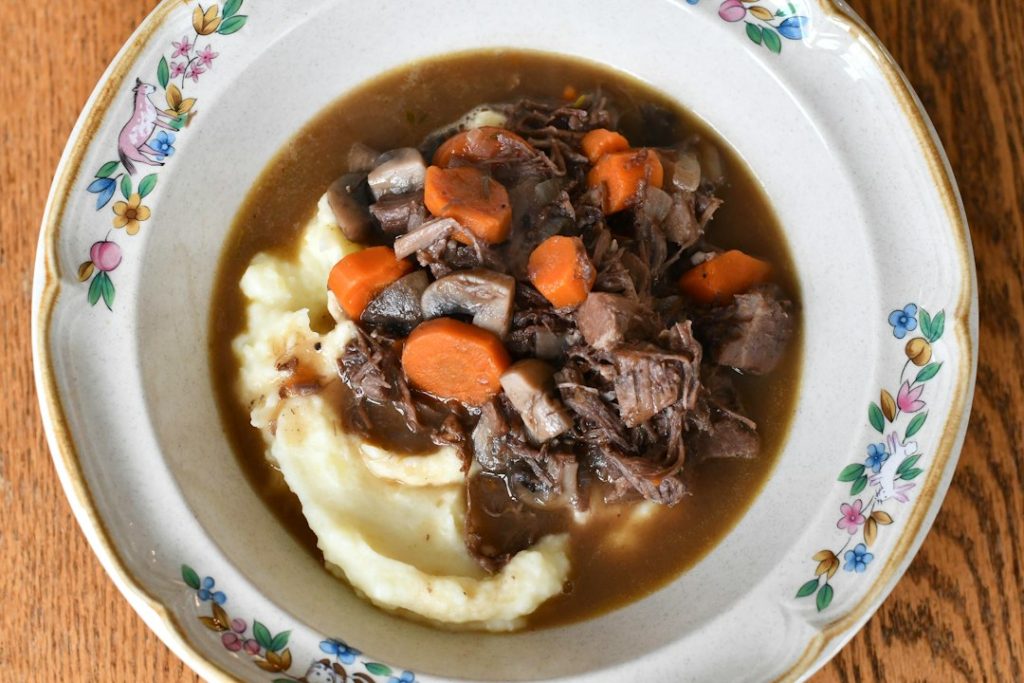
Irish stew doesn’t announce itself. There’s no sear, no sauté, no fancy technique. Just lamb, potatoes, onions, and water, layered in a pot and left to simmer until everything softens into something greater than its parts. It’s peasant food in the best sense—born of necessity, perfected by generations, and still capable of stopping conversation when the lid comes off.
This is the dish that fed rural Ireland for centuries, made in cottages and farmhouses where meat was scarce and potatoes were plenty. Today, it’s on menus from Dublin bistros to country pubs, but the best versions still taste like they came from a grandmother’s kitchen.
What Makes It Irish Stew
Authenticity in Irish stew comes down to simplicity. Traditional recipes use mutton or lamb—never beef—because sheep thrived on Ireland’s rocky hillsides where cattle couldn’t. The older the animal, the deeper the flavor, which is why mutton was preferred when it could be had.
Potatoes go in whole or quartered, never mashed. Onions add sweetness. Some cooks add carrots, though purists will tell you that’s a modern addition. The liquid is water, not stock, because the lamb provides all the richness needed. Salt, pepper, and time do the rest.
The technique is almost absurdly simple: layer everything in a heavy pot, cover it, and let it cook low and slow for two to three hours. The lamb becomes tender enough to fall apart with a spoon. The potatoes break down slightly, thickening the broth. The onions melt into the background, their sweetness rounding out the lamb’s gaminess.
Why It Worked Then and Now
In 19th-century Ireland, this was survival food. A farmer could make a pot that would feed a family for days using a cheap cut of meat, a handful of vegetables, and a fire that never went out. The dish required no skill, no ingredients beyond what was already in the larder, and no waste—even the broth was sopped up with soda bread.
But what made it practical also made it good. Slow cooking in a closed pot keeps everything moist and lets flavors build without burning off. The starch from the potatoes thickens the liquid into a silky, savory gravy that coats every bite. And because there’s nowhere for weak ingredients to hide, the quality of the lamb matters—which is why Irish stew made with spring lamb from the hills of Kerry or Connemara tastes like a different dish entirely.
Where to Eat It Today
Nearly every pub in Ireland serves some version of Irish stew, but quality varies wildly. The best comes from kitchens that treat it with respect rather than nostalgia.
In Galway, Tig Cóilí on Mainguard Street makes a version with tender Connemara lamb that’s been simmering since morning. In Dublin, The Brazen Head—Ireland’s oldest pub—serves it in deep bowls with brown bread on the side. Down in County Cork, Mary Ann’s Bar in Castletownshend offers a stew that locals return to year after year, made the way it’s always been made.
At home, it’s just as good. A basic recipe costs around $15 to $20 to make and feeds six. Use bone-in lamb shoulder or neck, leave the bones in for flavor, and resist the urge to add wine, herbs, or stock. Let the ingredients speak for themselves.
How to Serve It
Irish stew arrives at the table in the pot it was cooked in, steam rising, broth glossy with fat. Serve it in wide bowls with plenty of the liquid, and put a loaf of soda bread or crusty white bread within reach. The bread isn’t optional—it’s how you finish the bowl.
Some people add a handful of chopped parsley at the end for color. Others like a grind of black pepper. But the truth is, if the stew is made right, it needs nothing. It’s warm, filling, and honest in a way that few dishes manage to be.
This is food that knows what it is: simple, nourishing, and deeply Irish. The kind of meal that made it through famine and emigration and still shows up, unchanged, on tables across the country. If you want to understand Irish cooking, start here.
Want more stories like this delivered to your inbox? Subscribe to the Ireland Moments newsletter—a daily celebration of Ireland’s places, culture, music, food, and the moments worth savoring.