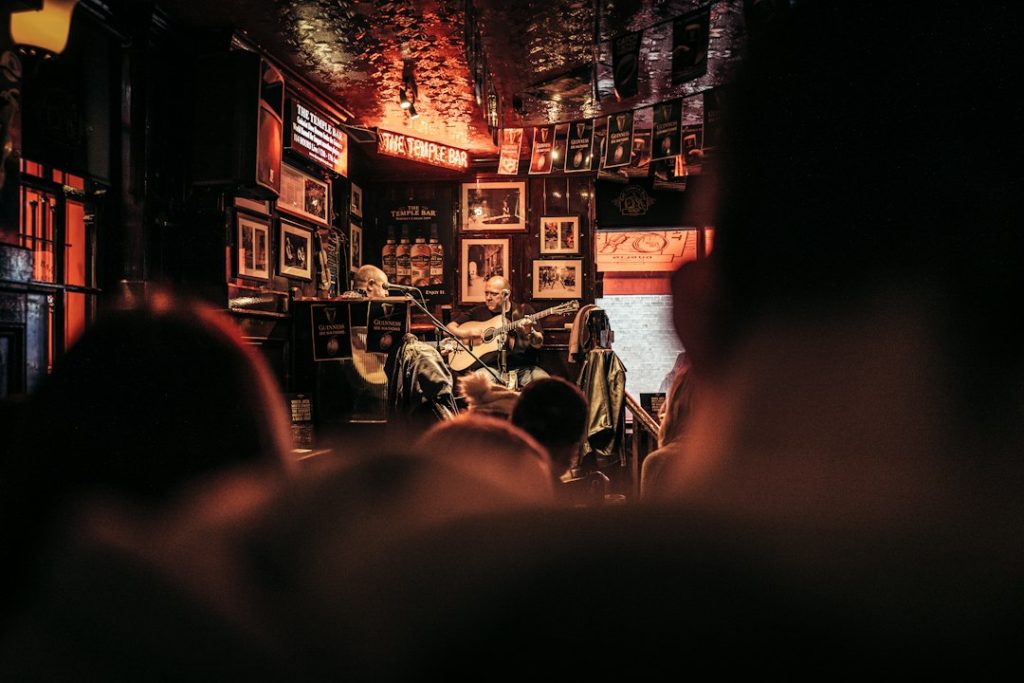
Walk into the right Irish pub on the right night, and you’ll find a corner crowded with musicians, pints balanced on stools, fingers flying across fiddle strings and tin whistle holes. No stage. No setlist. Just pure, unfiltered traditional Irish music unfolding in real time.
This is a trad session, and it’s one of the most authentic experiences Ireland has to offer. But if you’ve never been to one, it can feel mysterious. When do they happen? Can you just show up? What are the unspoken rules?
Here’s how to experience a real Irish trad session the right way.
What Actually Happens at a Trad Session
A traditional music session isn’t a performance. It’s a gathering of musicians who come together to play tunes they love, usually in sets of two or three reels, jigs, hornpipes, or polkas. There’s no conductor. One musician starts a tune, and the others join in if they know it. If they don’t, they listen and learn.
Sessions are social, participatory, and informal. The best ones happen in small pubs with good acoustics, low ceilings, and a crowd that knows when to listen and when to cheer. You’ll hear instruments like the fiddle, tin whistle, flute, uilleann pipes, accordion, concertina, and bodhrán. Sometimes there’s a singer who’ll offer up a sean-nós song or a ballad between sets.
Sessions can last for hours. Musicians come and go. Regulars know the repertoire. Visitors might sit in for a tune or two. It’s fluid, organic, and alive in a way that recorded music can never quite capture.
Where to Find the Real Thing
Not every pub with a fiddle on the wall hosts a real session. Some offer stage performances branded as “trad nights,” which can be enjoyable but aren’t the same thing. A true session is led by the musicians themselves, not a venue manager.
In County Clare, towns like Doolin, Ennis, and Miltown Malbay are legendary for sessions. Galway’s pubs — especially around Quay Street and Dominick Street — host nightly gatherings. In Dublin, head to The Cobblestone in Smithfield or Hughes’ Bar on Chancery Street. Cork, Dingle, Westport, and Belfast all have thriving session scenes too.
Ask locals. Check community boards. Look for hand-scrawled signs that say “Session Tonight, 9pm.” The best sessions aren’t always advertised online. They just happen, week after week, because the musicians show up.
h2>The Unspoken EtiquetteSessions have their own culture, and respecting it makes the experience better for everyone. First rule: listen. Don’t talk loudly over the music. If you want to chat, step outside or wait for a break between sets.
If you play an instrument and want to join in, wait to be invited or ask the session leader politely during a break. Don’t just sit down and start playing. Know your tunes. Sessions move fast, and musicians expect others to keep up or stay quiet until they learn the tune.
Don’t request songs like you’re at a jukebox. Sessions aren’t about crowd-pleasers or singalongs (unless it’s that kind of night). Let the musicians lead. And if a singer stands up to perform unaccompanied, give them absolute silence. Sean-nós singing is sacred.
Buy the musicians a pint if you want to show appreciation, but never expect them to play faster, louder, or longer because you did. They’re not there for tips. They’re there for the music.
Why It Matters
Trad sessions are one of the few living traditions that connect modern Ireland to its past. The tunes played tonight in a Galway pub are the same ones played a century ago in a cottage kitchen. The session keeps that thread alive, passed from player to player, generation to generation.
It’s also deeply communal. In a session, there’s no separation between performer and audience. Everyone’s in it together — the fiddler, the teenager learning tin whistle, the grey-haired accordion player who’s been coming for forty years, and the wide-eyed visitor hearing it all for the first time.
When you sit in a corner of a crowded pub, nursing a Guinness while a reel spirals into the rafters, you’re not watching Ireland. You’re inside it.
Want more stories like this delivered to your inbox? Subscribe to the Ireland Moments newsletter — a daily celebration of Ireland’s music, culture, landscapes, and traditions.