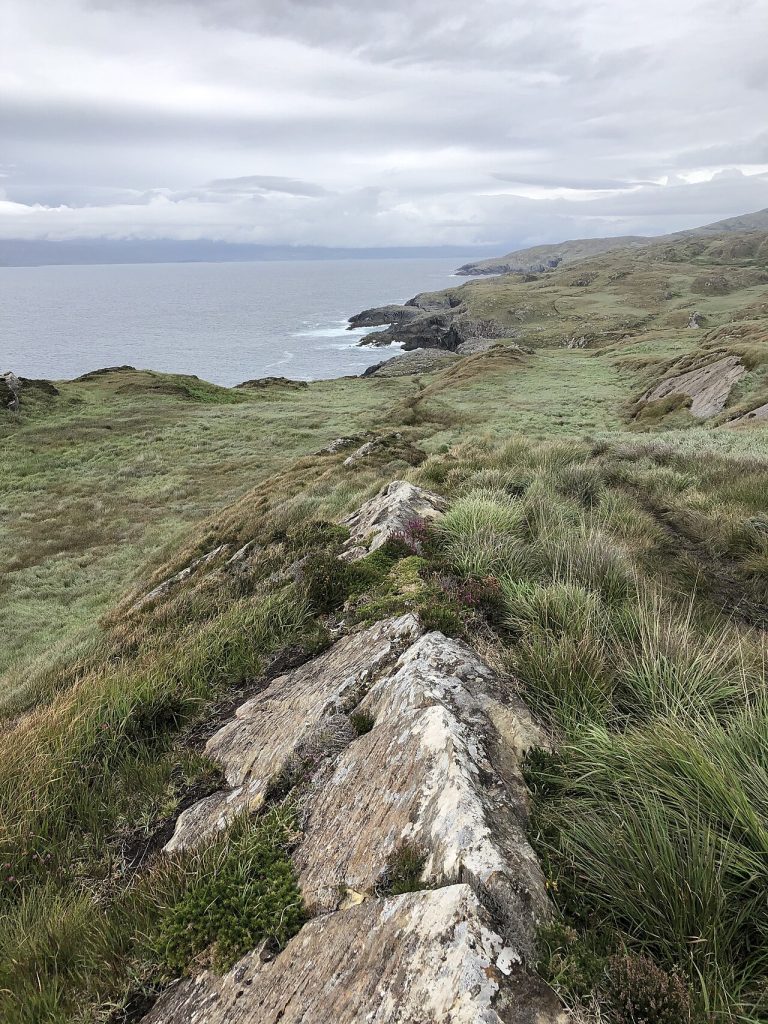
The Sheep‘s Head Peninsula juts into the Atlantic between Bantry Bay and Dunmanus Bay in West Cork, and it remains one of Ireland‘s best-kept secrets. While tour buses circle the Ring of Kerry and hikers flock to the Dingle Peninsula, Sheep’s Head offers something increasingly rare: solitude, authenticity, and some of the finest coastal walking in Ireland without the crowds.
The Sheep’s Head Way, an 88-kilometer waymarked loop trail, traces the peninsula’s dramatic coastline and quiet interior, passing through working farmland, ancient monuments, and villages where Irish is still spoken in daily conversation. This is Ireland at its most unspoiled—where you’re more likely to meet sheep than selfie sticks.
The Lighthouse Walk: Ireland’s Most Rewarding Short Hike
The jewel of the Sheep’s Head Way is the 7.5-kilometer out-and-back walk to the lighthouse at the peninsula’s tip. The trail follows an old road above sheer cliffs, with views across to the Mizen and Beara peninsulas. On clear days, you can see the Fastnet Rock lighthouse far to the southwest—Ireland’s teardrop, the last sight of home for millions of emigrants.
The Sheep’s Head Lighthouse itself sits 83 meters above the Atlantic on a headland that feels like the edge of the world. Built in 1968, it’s one of Ireland’s last manned lighthouses, automated only in 1996. The keeper’s houses now serve as holiday cottages, offering what might be Ireland’s most dramatic accommodation.
The walk takes about three hours round-trip at a leisurely pace. Bring layers—the wind at the headland can blow the words right out of your mouth, even on a calm day inland. Spring brings wildflowers: sea pinks, bluebells, and the yellow gorse that smells like coconut in the sunshine.
Stone Circles and Ancient Paths
The peninsula’s interior holds secrets dating back four thousand years. The stone circle at Kilcrohane, just off the main loop, stands in a farmer’s field with views across Dunmanus Bay. Unlike the more famous circles at Drombeg or Grange, you’ll likely have this one to yourself. Local tradition holds that the stones were giants turned to rock for dancing on the Sabbath—the kind of story that makes more sense when you’re standing among them at dusk.
Near Ahakista, the Bernie’s Cupboard stone row marks an ancient pathway, and several holy wells dot the landscape, still decorated with offerings despite centuries of use. The old mass path from Kilcrohane to Durrus follows routes walked by Catholics during the Penal Laws, when practicing the faith required secrecy and back roads.
Villages Worth the Detour
Sheep’s Head’s tiny villages feel lived-in rather than curated for tourists. Kilcrohane, the peninsula’s main settlement, has a church, community hall, and the Bernie’s Cupboard pub—named after the same stone row and serving sandwiches and pints to walkers. The grocery stocks essentials, but this isn’t a place for boutique shopping. That’s precisely the point.
Ahakista, smaller still, overlooks Dunmanus Bay and holds a poignant memorial to the victims of Air India Flight 182, which crashed off the Cork coast in 1985. The memorial garden, maintained by locals, offers a quiet place for reflection above the water.
Durrus, technically just off the peninsula proper, makes an excellent base. The Durrus Cheese shop produces farmhouse cheese that appears on menus across Ireland, and the weekly farmers market brings local producers together each Thursday morning in summer.
Walking Practicalities
The full Sheep’s Head Way takes four to five days to walk at a comfortable pace, with accommodation in B&Bs, farmhouses, and small guesthouses along the route. Several operators offer baggage transfer services, letting you walk with just a daypack. Unlike more famous trails, you rarely need to book months ahead—another advantage of Ireland’s quiet peninsula.
March through October offers the most reliable weather, though even summer days can turn wet without warning. The trail is well-marked with the standard yellow walking figure on black, and while some sections cross farmland (close all gates behind you), most of the route follows quiet roads and established paths.
Spring brings newborn lambs and migrating seabirds. Autumn colors the hills with purple heather and golden bracken. Winter offers dramatic storm-watching and the lowest prices, though some B&Bs close from November to February.
Why Walk Sheep’s Head Now
The peninsula won’t stay secret forever. As Ireland’s more famous destinations strain under visitor numbers, walkers seeking authenticity are discovering West Cork’s charms. But for now, Sheep’s Head retains its character: working farms, Irish-speaking communities, and coastal views without crowds.
This is walking for its own sake, not for the Instagram shot—though the views will fill your camera roll anyway. It’s Ireland as it was before the tour buses, where a day on the trail might include conversations with farmers moving cattle, tea in a village kitchen, and the kind of silence that lets you hear waves breaking on rocks half a kilometer below.
The Sheep’s Head Peninsula proves that Ireland still holds pockets of wildness and welcome, places where the journey matters more than the destination, and where the best reward for a day’s walking is a pint in a quiet pub where everyone knows everyone—except you, at least until you introduce yourself.
Love stories like this? Subscribe to the Ireland Moments newsletter for a daily celebration of Ireland—its places, culture, music, history, and the magic worth sharing. Delivered to your inbox each morning, like a postcard from the Emerald Isle.