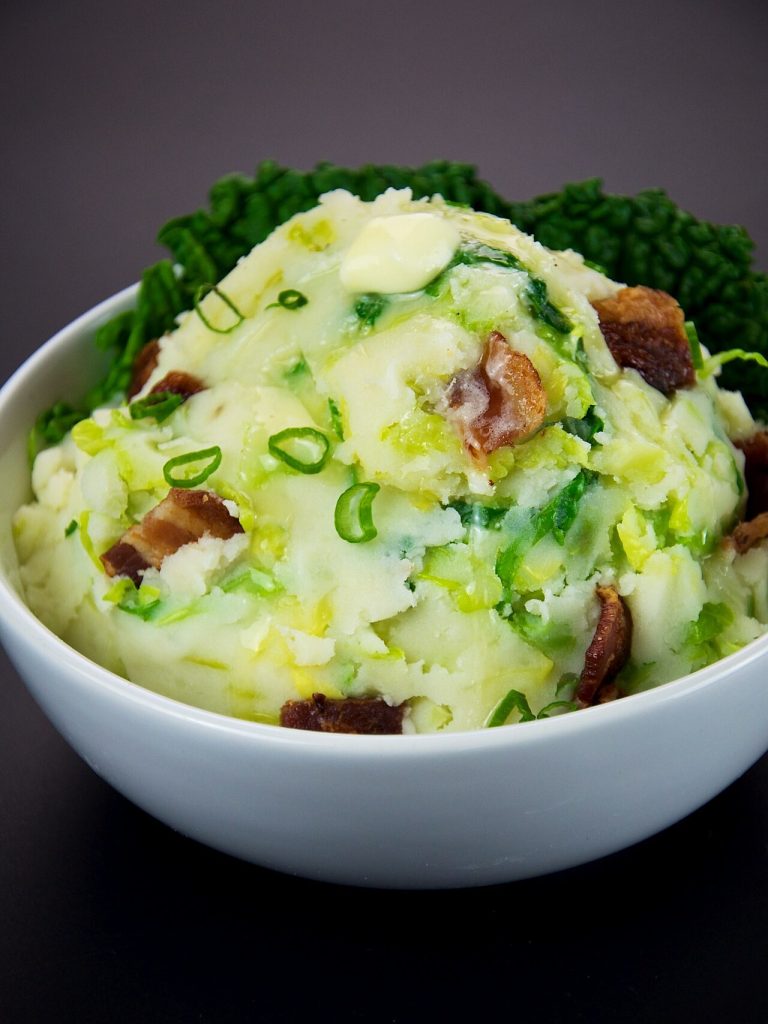
There are few dishes as deeply Irish as colcannon. Made from mashed potatoes, cabbage or kale, butter, milk, and scallions, this humble creation has sustained generations through cold winters and hard times. But colcannon is far more than survival food—it’s a celebration of simplicity, quality ingredients, and the Irish knack for turning the ordinary into something extraordinary.
Walk into any farmhouse kitchen across Ireland, and chances are someone’s granny made colcannon at least once a week. It’s the kind of dish that tastes like home, no matter where you’re from.
The Origins of Colcannon
The name “colcannon” likely comes from the Irish cál ceannann, meaning white-headed cabbage. The dish dates back centuries, born from Ireland’s reliance on potatoes and cabbage—two crops that thrived in Irish soil and could be stored through winter.
Colcannon was traditionally associated with Halloween, or Samhain, when it was served with hidden charms inside: a ring for marriage, a coin for wealth, a thimble for spinsterhood. Families would gather around the table, and whoever found a charm in their serving would have their fortune told for the year ahead.
In many homes, a bowl of colcannon was left out on Halloween night for the souls of the dead—a gesture of hospitality that extended beyond the living.
What Makes Colcannon Special
Colcannon’s magic lies in its restraint. There are no fancy techniques, no exotic ingredients. Just potatoes, greens, butter, milk, and scallions, each playing its part perfectly.
The potatoes—preferably floury varieties like Roosters or Kerr’s Pinks—are boiled until tender, then mashed until smooth. The cabbage or kale is finely chopped and cooked until just tender, retaining a bit of bite. Scallions are sautéed in butter until fragrant, then everything is folded together with generous amounts of butter and a splash of milk or cream.
The result is creamy, rich, and deeply satisfying. The sweetness of the cabbage balances the earthiness of the potatoes, while the scallions add a gentle sharpness. And the butter—well, the butter makes everything better.
Some families add a pinch of nutmeg or white pepper. Others use curly kale instead of cabbage, which gives the dish a slightly more robust flavor. In parts of Ulster, you’ll find versions made with wild garlic or leeks.
How to Make Traditional Colcannon
Start with two pounds of floury potatoes, peeled and cut into chunks. Boil them in salted water until completely tender, about 20 minutes. While they’re cooking, finely shred half a head of green cabbage or chop a bunch of curly kale.
In a large pan, melt two tablespoons of butter and cook the cabbage or kale until tender but still bright green, about five minutes. Set aside.
Drain the potatoes well and mash them until smooth. In a small pot, warm one cup of whole milk with four tablespoons of butter until the butter melts. Pour this into the potatoes and mash until creamy.
Fold in the cooked cabbage and four finely chopped scallions (both white and green parts). Season generously with salt and freshly ground black pepper. Taste and adjust—colcannon should be rich, well-seasoned, and impossible to stop eating.
Serve it in a mound on warmed plates, with a well of melted butter in the center. The traditional way to eat it is to dip each forkful into the butter pool.
Colcannon Today
While colcannon remains a staple in Irish homes, it’s also found new life in restaurants across the country. Chefs serve it alongside lamb shanks, roasted salmon, or as part of a modern take on boxty. Some add crispy bacon or pancetta for extra richness, while others fold in roasted garlic or Irish cheddar.
But the best colcannon is still the kind made at home, where the recipe lives in muscle memory rather than on a page. It’s the dish you make when the weather turns cold, when you need something that fills both stomach and soul.
You’ll find it on tables from Donegal to West Cork, each family convinced theirs is the definitive version. And they’re all right.
Want more stories celebrating Ireland’s food, culture, and traditions? Subscribe to the Ireland Moments newsletter—a daily celebration of the Emerald Isle, delivered to your inbox each morning.