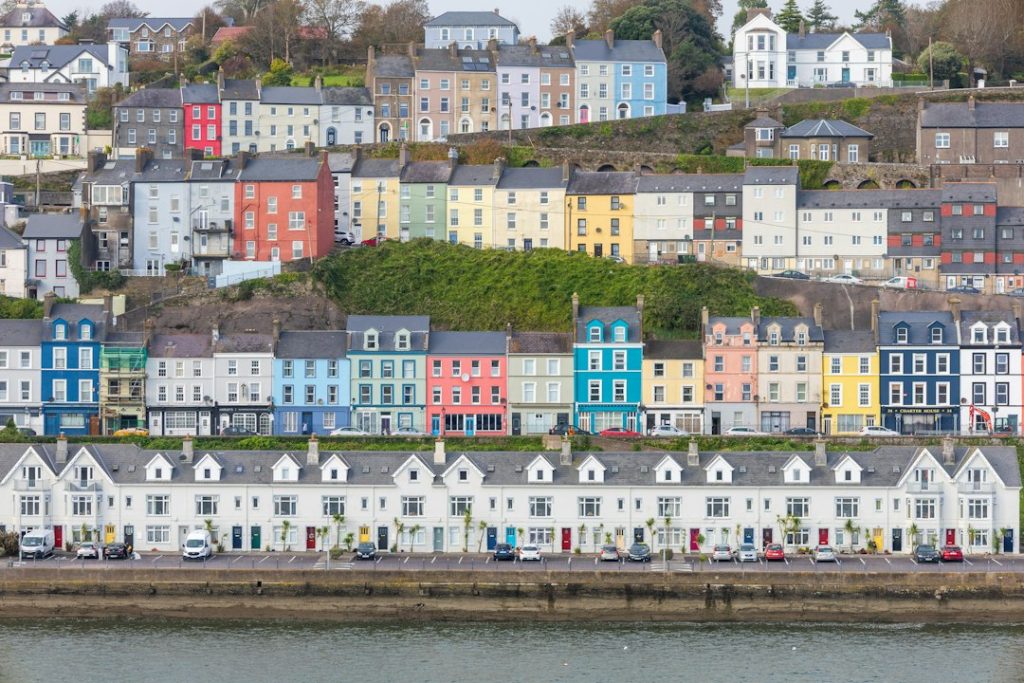
Stand on the waterfront in Cobh, County Cork, and look up. Rising in steep rows above the harbor, hundreds of Victorian houses painted in vivid yellows, pinks, blues, and greens create one of Ireland’s most photographed scenes. But these aren’t just pretty facades. They’re the backdrop to one of the most powerful chapters in Irish history—a farewell painted in color.
Between 1848 and 1950, more than 2.5 million people left Ireland through Cobh, known then as Queenstown. It was the country’s primary emigration port, the last piece of Irish soil under the feet of families fleeing famine, poverty, and heartbreak. Those colorful houses were the final image they carried across the Atlantic.
The Port That Said Goodbye to Millions
Cobh wasn’t just a departure point—it was a threshold between worlds. Families would walk down from the surrounding countryside, carrying everything they owned, to board ships bound for New York, Boston, and beyond. Many would never return. The town became synonymous with departure, loss, and the bittersweet hope of a better life.
The houses that line the steep streets—West View, West Beach, and the terraces climbing toward St. Colman’s Cathedral—were built in the mid-1800s to accommodate the town’s growing population. Ship agents, provision merchants, boarding house keepers, and dock workers all lived and worked here. As emigrants passed through, these homes became part of the last landscape of Ireland they’d ever see.
No one knows exactly when or why the tradition of painting them in bright colors began, but the effect is unmistakable: against the gray Irish sky and the steel-blue harbor, the houses seem to glow. Some say it was to help sailors and fishermen identify their homes from the water. Others believe it was simply an act of joy and defiance—a refusal to let sadness define the town.
The Titanic’s Last Port of Call
Cobh’s role in emigration history reached its most famous moment on April 11, 1912, when the RMS Titanic made its final stop here before heading into the Atlantic. One hundred and twenty-three passengers boarded in Cobh—most of them third-class emigrants seeking new lives in America. Only 44 survived the sinking three days later.
Today, the Cobh Heritage Centre, located in the old Victorian railway station on the waterfront, tells the full story. The Titanic Experience Cobh, housed in the original White Star Line ticket office, brings visitors into the very building where those passengers bought their tickets and dreamed of America.
Walking through the exhibitions, you’re confronted with the scale of it: the names, the faces, the trunks packed with everything they owned. The colorful houses outside suddenly feel heavier with meaning.
A Town Reclaiming Its Story
Cobh today is a thriving town of around 13,000 people, and it wears its history with pride. St. Colman’s Cathedral, a soaring neo-Gothic masterpiece completed in 1919, dominates the skyline. Its 49-bell carillon is the largest in Ireland, and the sound echoes across the harbor every day.
The waterfront promenade is lined with cafés, pubs, and galleries. Kennedy Pier, where the tenders once ferried passengers to the great liners anchored in the deep harbor, is now a peaceful place to watch sailboats and cruise ships pass. And those painted houses? They’re still homes, still lived in, still as vivid as ever.
Photographers and visitors come from all over the world to capture the rows of color climbing the hillside. But locals will tell you the real beauty isn’t in the Instagram shot—it’s in understanding what those houses witnessed. Every bright door and window frame is a monument to resilience, to the people who left and the people who stayed.
Visiting Cobh Today
Cobh is just 15 miles southeast of Cork City, easily reached by car or train. The scenic rail line hugs the harbor and delivers you right to the waterfront. Plan to spend at least a few hours—longer if you want to visit both heritage centers and take in the cathedral.
Start at the Cobh Heritage Centre to ground yourself in the emigration story, then walk up through the Deck of Cards—a famous row of houses on West View that seem to tumble down the hillside. Climb the steps to St. Colman’s Cathedral for sweeping views over the harbor, then wander back down for lunch at one of the harborfront spots.
If you time it right, you might see a cruise ship anchored offshore, its tenders bringing passengers ashore just as they did more than a century ago. The difference now is that people come to visit, not to leave forever.
The colorful houses of Cobh aren’t just charming—they’re a living reminder that beauty and sorrow can exist in the same frame, and that memory, painted bright, refuses to fade.
Love stories like this? Subscribe to the Ireland Moments newsletter and get a daily celebration of Ireland—its places, culture, music, and history—delivered to your inbox every morning.