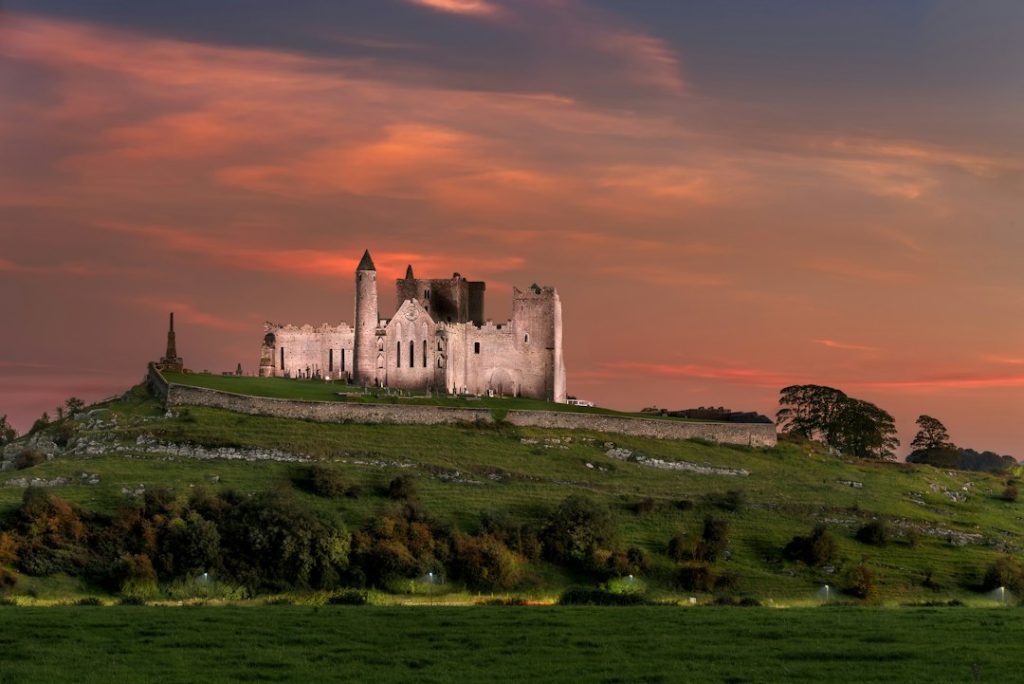
Stand on the banks of the River Boyne in County Meath and look up. Trim Castle rises before you like something from a storybook—massive stone walls, a towering keep, and defensive gates that have stood watch for more than eight centuries. This is Ireland’s largest Norman castle, and walking through its ancient halls feels like stepping straight into the Middle Ages.
Built by Hugh de Lacy in the 1170s, Trim Castle wasn’t just a fortress. It was a statement of power, a military stronghold, and the administrative heart of Norman Ireland. Today, it stands as one of the finest examples of medieval architecture in Europe and one of Ireland’s most impressive heritage sites.
The Keep That Dominates the Skyline
The twenty-sided keep at Trim’s center is unlike any other in Ireland. Rising three stories high with walls up to eleven feet thick, this cruciform tower was designed to be both impregnable and imposing. You can climb the narrow stone stairways to the upper floors, where arrow slits offer views across the town and countryside—the same vantage points Norman soldiers used to watch for approaching enemies.
The keep’s unusual shape wasn’t just for show. Each projection created blind spots that defenders could cover, making it nearly impossible to attack unseen. Standing inside, you can still see the original fireplaces, garderobes, and the grooves worn into stone doorways by centuries of footsteps.
The Outer Walls and Defensive Genius
Beyond the keep, Trim Castle’s outer curtain walls stretch for nearly 500 yards, enclosing more than three acres. Five defensive towers—including the Dublin Gate and the impressively preserved Trim Gate—punctuate these walls. Each was positioned to provide overlapping fields of fire, a testament to medieval military engineering.
Walk the perimeter and you’ll find the remains of the great hall, where medieval lords once feasted, and the ruins of a chapel built into the castle walls. The moat, now dry and grassy, once formed a formidable water barrier fed by the River Boyne. On the far bank sits Talbot Castle, a later manor house built within an Augustinian abbey—proof that Trim remained strategically important for centuries.
From Medieval Power to Movie Star
Trim Castle’s story didn’t end with the Normans. It served as a royal mint, survived sieges during the Irish Confederate Wars, and gradually fell into ruin before being restored in the late twentieth century. In 1995, director Mel Gibson chose Trim as the primary Irish filming location for Braveheart, and the castle’s imposing walls stood in for medieval England and Scotland.
Today, you can tour the castle with knowledgeable guides from the Office of Public Works who bring its history to life—from the Norman conquest through medieval power struggles to its modern preservation. The guided tour takes you into areas you can’t explore alone, including the upper levels of the keep and along the wall-walks.
Visiting Trim Castle
Trim is an easy 45-minute drive from Dublin, making the castle a perfect day trip. The town of Trim itself is worth exploring, with narrow medieval streets, the ruins of the Yellow Steeple, and traditional pubs where you can enjoy lunch after your castle visit.
Guided tours run daily from spring through fall, with weekend tours in winter. Admission is around $7 for adults, with discounts for seniors and children. The grounds are open for free if you just want to walk the exterior and admire the scale of the place. Wear good walking shoes—those medieval stairs are steep and uneven.
The castle sits right in the center of Trim, so you can combine your visit with a walk along the Boyne, a stop at Trim Visitor Centre to learn more about the town’s history, or a pint at one of the local pubs where the castle towers above the roofline.
Trim Castle isn’t just Ireland’s largest Norman fortress. It’s a place where history feels tangible, where you can run your hands along 800-year-old stone and imagine the lords, soldiers, and craftsmen who built something meant to last forever. And it has.
Want more stories about Ireland’s castles, landscapes, and hidden corners? Subscribe to the Ireland Moments newsletter—a daily celebration of Ireland delivered to your inbox.