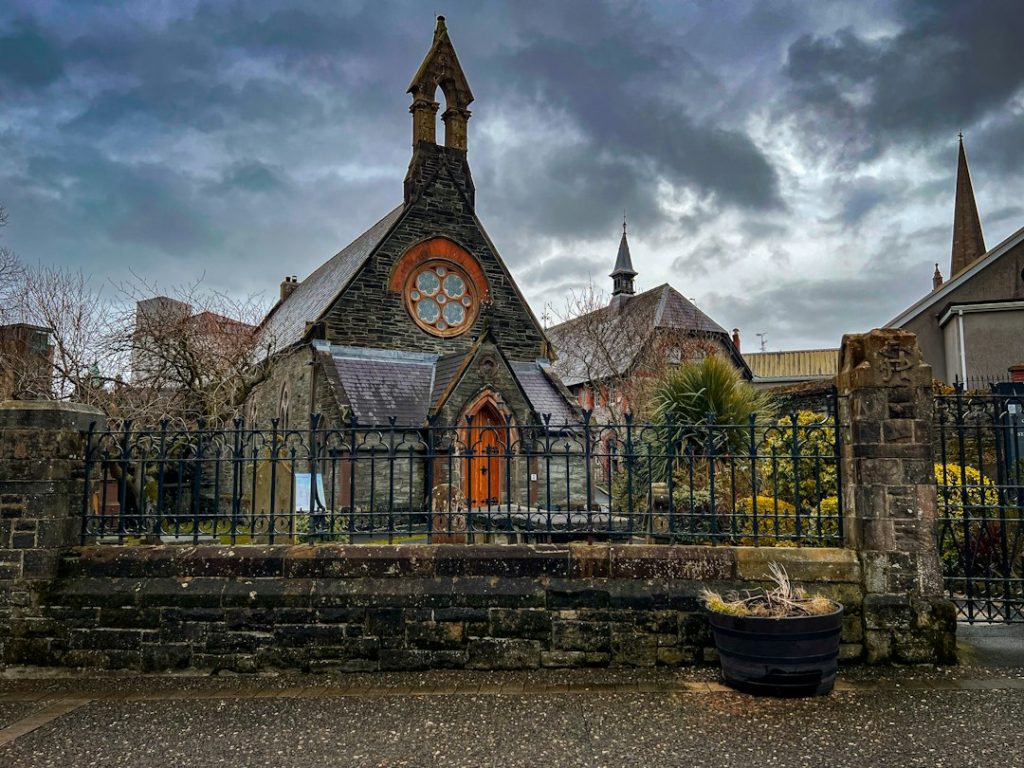
Derry is the only city in Ireland—and one of the few in Europe—where you can walk a complete circuit of the original city walls. Built between 1613 and 1618, these perfectly preserved fortifications stretch nearly a mile around the old city center, rising up to 26 feet high and as wide as 30 feet in places. They’ve never been breached, earning Derry the nickname “the Maiden City.”
Walking these walls isn’t just a stroll through history—it’s a journey through four centuries of Irish and European stories, all told in stone, cannon, and sweeping views over the River Foyle.
The Last Walled City Built in Europe
Derry’s walls were among the last major city fortifications constructed in Europe, built by the Honourable The Irish Society as part of the Plantation of Ulster. The original structure included seven gates—four originals (Shipquay, Butcher, Bishop, and Ferryquay) and three added later (Castle, New, and Magazine).
What makes these walls extraordinary is their completeness. While other Irish cities like Limerick and Galway once had walls, most were demolished in the 18th and 19th centuries to allow for expansion. Derry’s survived because they were simply too well-built to tear down—and because the city grew outward instead.
The walls enclose 16 acres of the original planned city, with streets laid out in a perfect grid that hasn’t changed since the 1600s. Walking them today, you’re following the exact same path that soldiers, merchants, and citizens have walked for more than 400 years.
Cannons, Gates, and Stories in Stone
The wall walk is studded with 24 original cannons, including the famous Roaring Meg, a massive siege gun from 1642. Many of these cannons have never been fired in anger, though they’ve stood ready for centuries. You’ll also find replica Spanish cannons and mortars that tell the story of Derry’s most famous moment—the Siege of Derry in 1689.
During that 105-day siege, the city’s 30,000 residents held out against the Jacobite army, surviving on horseflesh, rats, and tallow. The walls held, and the siege was finally lifted when relief ships broke through a wooden boom across the Foyle. You can still see the section of wall where defenders watched for those ships—and the exact spot where the cry “No Surrender” first rang out.
Each gate has its own character and history. Shipquay Gate once led directly to the river quays below. Bishop’s Gate, rebuilt in 1789, is the most elegant, with a triumphal arch design. Magazine Gate sits near the old powder magazine, where ammunition was stored during times of conflict.
Views That Stretch Across Centuries
The walls offer some of the finest views in any Irish city. From the western ramparts, you look down over the Bogside and across to the hills of Donegal. From the east, the River Foyle spreads below, with the Peace Bridge and the Waterside beyond. To the north, St. Columb’s Cathedral rises just inside the walls, its tower a landmark since 1633.
You’ll also see the striking Guildhall, a neo-Gothic masterpiece with stained glass windows that tell Derry’s entire story. The Tower Museum, just inside the walls, houses artifacts from the Spanish Armada shipwreck La Trinidad Valencera, which went down off the Donegal coast in 1588.
The complete wall walk takes about an hour at a gentle pace, though most visitors linger much longer. There are plaques and interpretive panels at key points, but the best way to understand the walls is simply to walk them slowly, pausing at bastions and gates to take in the layers of history.
A Living Monument
What makes Derry’s walls special isn’t just their preservation—it’s that they’re still part of daily life. Locals walk them for exercise, tourists pause for photos, and on summer evenings, they’re filled with families and friends taking in the views. Cafés and restaurants nestle against the inner wall, and the gates still serve as the main entrances to the old city center.
The best time to visit is early morning or late afternoon, when the light is soft and the walls are quieter. Start at Magazine Gate, walk clockwise, and you’ll end at Shipquay Gate, perfectly positioned to descend into the bustling heart of the city for a coffee or a pint.
Derry’s walls aren’t a museum piece—they’re a living, breathing part of Ireland’s most intact historic city. Walking them is free, the views are priceless, and the stories are endless.
Love stories like this? Subscribe to the Ireland Moments newsletter—a daily celebration of Ireland delivered straight to your inbox.