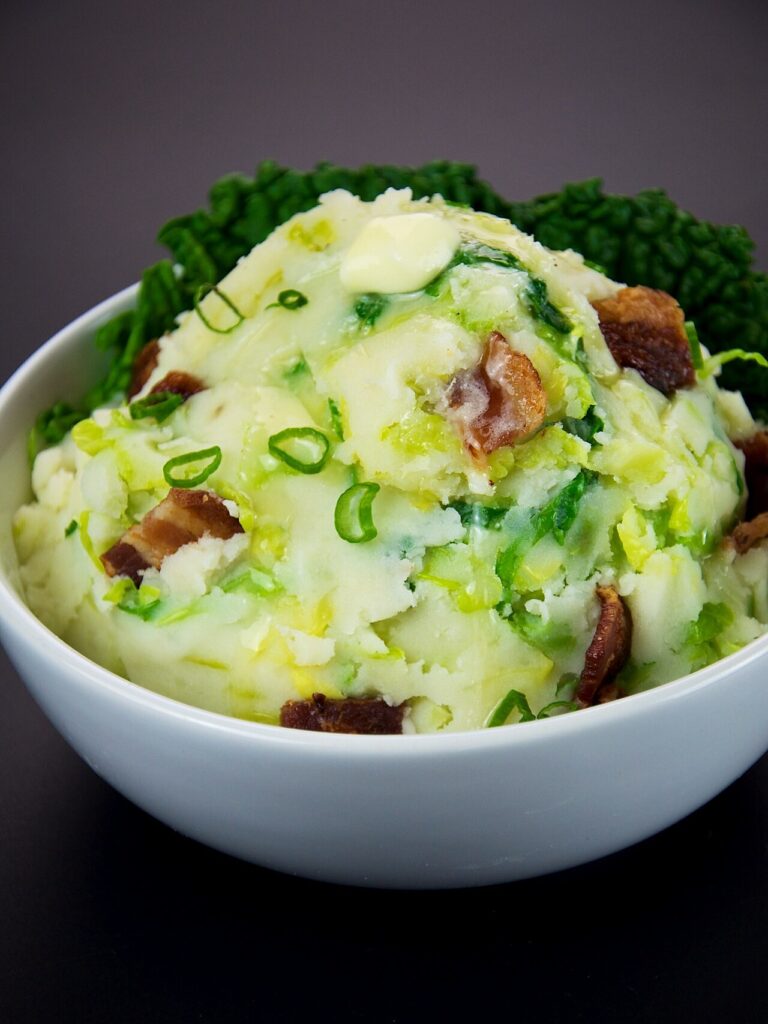
There are few things more comforting than a bowl of colcannon on a cold evening. This traditional Irish dish — a simple mix of mashed potatoes, cabbage or kale, butter, and milk — has been a staple on Irish tables for centuries. It’s humble, nourishing, and deeply satisfying in a way that only the best Irish food can be.
Colcannon is more than just mashed potatoes with greens stirred in. It’s a dish that tells the story of Irish resourcefulness, turning the most basic ingredients into something that feels like a warm hug. And once you’ve tasted a proper bowl of it, you’ll understand why generations of Irish families have passed the recipe down.
What Makes Colcannon Different
At its core, colcannon is a combination of fluffy mashed potatoes and finely chopped cabbage or kale, bound together with generous amounts of butter and milk or cream. Some cooks add scallions (spring onions) for a bit of sharpness, while others keep it simple with just the greens.
The key is in the texture. The potatoes should be smooth and creamy, not gluey or over-worked. The cabbage or kale needs to be cooked just enough to soften but still have a bit of bite. And the butter — well, there’s no such thing as too much butter in colcannon. A well in the center of the bowl filled with melted butter is traditional, and each forkful gets dragged through it.
What sets colcannon apart from other mashed potato dishes is its balance. The slight bitterness of the greens cuts through the richness of the butter and cream, while the potatoes provide the comforting base that makes you want to keep eating long after you’re full.
A Dish Rooted in Irish Tradition
Colcannon has been a fixture of Irish cuisine since at least the 18th century, though it’s likely much older. It was especially popular around Halloween, or Samhain, when it was traditionally served with hidden charms baked inside — a ring for marriage, a coin for wealth, a thimble for spinsterhood. The tradition has mostly faded, but colcannon remains a Halloween favorite in many Irish homes.
The dish was born from practicality. Potatoes became the cornerstone of the Irish diet after they were introduced in the late 16th century, and cabbage and kale were among the few vegetables that could be grown year-round. Colcannon made use of what was available, stretching simple ingredients into a filling meal that could feed a family.
In rural Ireland, colcannon was often the main dish, served alongside bacon or salt pork. Today, it’s more commonly a side dish, but it’s substantial enough to stand on its own, especially when paired with a thick slice of soda bread and a knob of butter.
How to Make It Right
Making colcannon isn’t complicated, but it does require good ingredients and a bit of care. Start with floury potatoes — varieties like Rooster, Kerr’s Pink, or Maris Piper are ideal. Peel and boil them until tender, then drain well and mash until smooth. Don’t use a food processor or you’ll end up with wallpaper paste.
While the potatoes are cooking, simmer chopped cabbage or kale in milk or cream until soft. Some cooks prefer the milder flavor of cabbage, while others swear by the earthier taste of kale. Either works beautifully.
Once both are ready, fold the greens and their cooking liquid into the mashed potatoes, along with plenty of butter — at least a quarter cup, though half a cup is better. Season generously with salt and white pepper. The result should be creamy, flecked with green, and rich enough to coat a spoon.
Serve it hot, with a well of melted butter in the center. Each person drags their fork through the butter as they eat, adding richness to every bite.
Where to Taste the Best
You’ll find colcannon on menus across Ireland, from traditional pubs to fine dining restaurants. In Dublin, The Woollen Mills serves a particularly good version alongside their roast dinners. In Cork, The Farmgate Café at the English Market makes theirs with local kale and Clonakilty butter. And in Galway, Ard Bia at Nimmos offers a refined take that’s still true to the spirit of the dish.
But the best colcannon is often homemade. If you’re staying in a B&B or guesthouse, ask your host if they’ll make it for you. Most Irish cooks are happy to share their version, and you’ll likely hear stories about how their grandmother made it, or the charms they found in their colcannon as children.
Colcannon is proof that Irish food doesn’t need to be fancy to be extraordinary. It’s simple, honest, and deeply rooted in the rhythms of Irish life. And once you’ve tried it, you’ll crave it every time the weather turns cold.
Want more stories about Irish food, traditions, and the places that make Ireland unforgettable? Subscribe to the Ireland Moments newsletter — a daily celebration of Ireland delivered to your inbox.