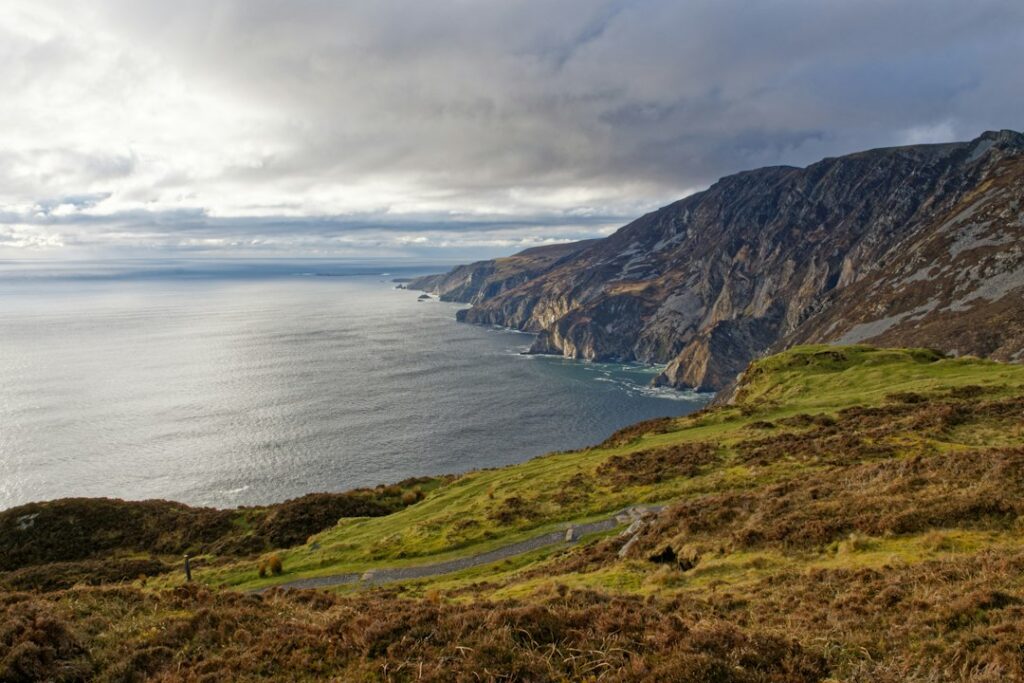
When most visitors think of Ireland‘s sea cliffs, the Cliffs of Moher come to mind. But venture northwest to County Donegal, and you’ll discover Slieve League — a towering wall of rock that rises nearly 2,000 feet from the Atlantic Ocean, making it among the highest sea cliffs in Europe and nearly three times the height of its more famous southern cousin.
What sets Slieve League apart isn’t just its staggering height. It’s the raw, untamed beauty of this corner of Ireland, where the cliffs streak with bands of rust, ochre, and silver, and the view stretches from the Sligo mountains to the peaks of Achill Island on clear days. This is Ireland at its wildest and most magnificent.
The Climb to One Man’s Pass
There are two main ways to experience Slieve League. The easier route takes you by car along a narrow, winding road to Bunglas, where a viewing platform offers stunning panoramas without breaking a sweat. From here, you can see the full sweep of the cliffs plunging into the churning Atlantic below, with seabirds wheeling on the updrafts.
For the more adventurous, the Pilgrim’s Path starts from the village of Teelin and climbs steadily toward the summit. This ancient route was once walked by pilgrims heading to a small chapel at the top. The trail passes through heathered slopes dotted with grazing sheep before reaching One Man’s Pass — a narrow ridge with sheer drops on both sides that’s not for the faint of heart. The reward? Standing at the summit cairn with nothing between you and America but ocean and sky.
A Landscape Painted by Geology
What makes Slieve League visually stunning is its geology. The cliffs are composed of quartzite, schist, and limestone that have been tilted and folded over millions of years, creating dramatic bands of color that shift with the light. At sunrise and sunset, the rock face glows copper and gold. After rain, silver streaks cascade down the cliff face in temporary waterfalls.
The cliffs are also home to peregrine falcons, choughs, and razorbills. On the lower slopes, you might spot wild goats navigating impossible ledges. Below, Atlantic grey seals haul out on rocky platforms, and dolphins occasionally patrol the waters offshore.
Why Slieve League Feels Different
Unlike the Cliffs of Moher, which see thousands of visitors daily, Slieve League remains relatively quiet. There are no tour buses idling in massive parking lots, no visitor centers with gift shops. What you get instead is space, silence, and the feeling that you’ve discovered something truly special.
The local community in Teelin has worked hard to maintain this balance — welcoming visitors while preserving the wild character of the place. Ti Linn Café at the base serves hot soup and brown bread that tastes even better after a cliff walk, and the staff are generous with directions and local knowledge.
The best time to visit is early morning or late afternoon, when the light is most dramatic and you’re likely to have the cliffs largely to yourself. Weather can change quickly here, so bring layers, good boots, and be prepared to turn back if conditions deteriorate. The cliffs command respect.
Getting There and What to Know
Slieve League is located near the village of Teelin in southwest Donegal, about a 90-minute drive from Sligo or three hours from Galway. The signposted road from Teelin leads to the Bunglas viewpoint. If you’re walking the Pilgrim’s Path, allow three to four hours for the round trip and check conditions locally before setting out.
There’s no entrance fee, though a small donation box helps maintain the paths. The Slieve League Cliffs Centre in Teelin offers information, refreshments, and occasionally hosts traditional music sessions in the evening — a perfect end to a day spent among some of Ireland’s most magnificent scenery.
Slieve League doesn’t shout for attention. It doesn’t need to. It simply stands, vast and ancient, where the land meets the sea in one of the most powerful encounters anywhere on the island. See it once, and you’ll understand why those who know Donegal speak of these cliffs with something close to reverence.
Want more stories that celebrate the wild beauty of Ireland? Subscribe to the Ireland Moments newsletter — a daily celebration of Ireland delivered to your inbox.