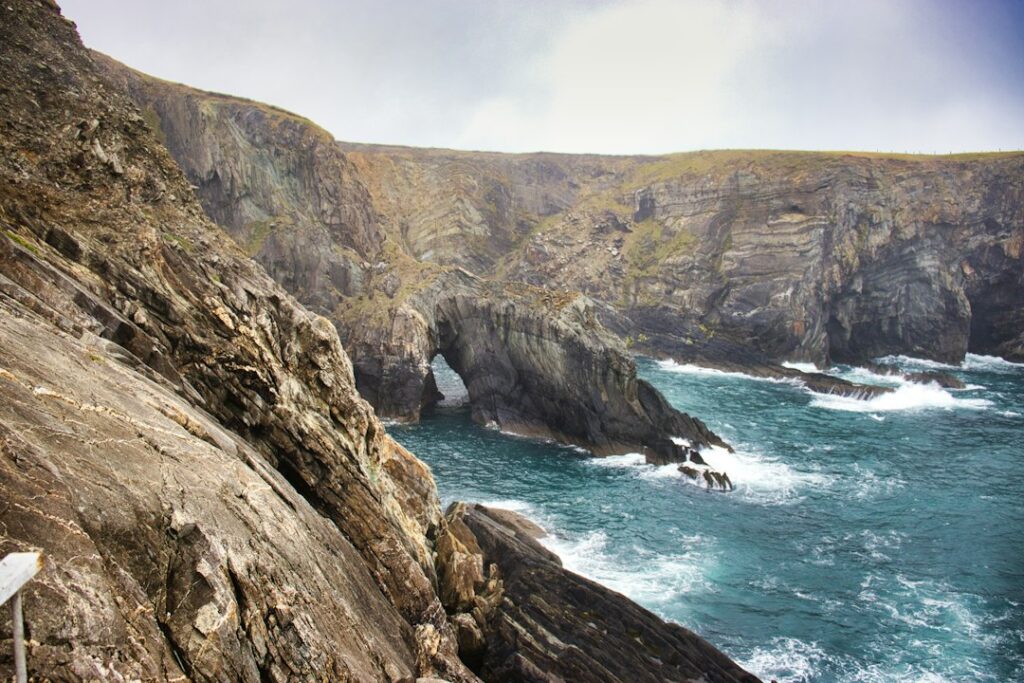
At the very tip of Ireland‘s southwest coast, where Cork meets the open Atlantic, Mizen Head juts into the ocean like a ship’s prow cutting through waves. This is where the land runs out — a place of towering cliffs, roaring surf, and a lighthouse keeper’s station perched on a rocky island that’s seen centuries of storms roll in from America.
Mizen Head isn’t as famous as the Cliffs of Moher, but those who make the journey here often call it the more dramatic experience. The wildness is closer, the history more tangible, and the sense of standing at the edge of everything more profound.
The Bridge That Crosses the Abyss
The highlight of any visit to Mizen Head is the suspension bridge that spans the chasm between the mainland cliff and the signal station island. Built in 1909 to give keepers safe passage, it arcs 150 feet above the churning Atlantic below. On calm days, it’s a gentle walk. When the wind picks up — and it often does — crossing becomes an adventure you’ll feel in your legs and your chest.
The bridge replaced an earlier cable car system that hauled keepers and supplies across in a basket. Standing on the modern span, looking down at the white water boiling over black rocks, you understand why isolation pay was part of the keeper’s wage.
Inside the Signal Station
Once across the bridge, you enter the keeper’s world. The signal station, automated since 1993, is now a museum that tells the story of the men and their families who kept the light burning and the fog signal sounding through gales, fog, and the long winters when supply boats couldn’t land for weeks.
The exhibits include the original fog signal mechanism, navigation instruments, and photographs of keepers standing in their oilskins against seas so high they washed over the station itself. There’s a radio room where distress calls were received, and displays about shipwrecks along this unforgiving coast — including the nearby Fastnet Rock, known as the “Teardrop of Ireland” because it was the last sight of home for emigrants sailing west.
Climb the 99 steps to the top of the station and you’re rewarded with views that stretch to the Fastnet lighthouse on clear days, and across the peninsula’s patchwork of green fields dropping away to the sea.
The Cliffs and Coastal Walks
Beyond the station, a network of trails runs along the cliff tops. The main coastal walk takes you past dramatic headlands, sea stacks, and blowholes where the Atlantic sends spray fifty feet into the air. In spring and summer, the cliffsides bloom with sea thrift, campion, and wild fuchsia, and the air is alive with seabirds — kittiwakes, razorbills, and the occasional peregrine falcon riding the updrafts.
The geology here tells Ireland’s story in rock: ancient sandstone and slate folded and twisted by forces that built mountains and then wore them down again. You can see the layers tilted at impossible angles, the work of 400 million years compressed into a single cliff face.
On the walk back toward the visitor center, look for the Three Castle Head ruins visible to the west — another dramatic peninsula worth its own visit if you have time.
Practical Details for Your Visit
Mizen Head is about 90 minutes from Cork city, through Bantry and Ballydehob — a beautiful drive along the Wild Atlantic Way. The visitor center and bridge are open year-round, though hours vary by season. Admission is around $8 for adults, with family rates available.
Dress for wind regardless of the forecast — this is one of Ireland’s most exposed points. Good walking shoes are essential, especially if you plan to explore the coastal paths beyond the main station.
The on-site café serves soup, sandwiches, and excellent coffee with those million-dollar views. There’s also a small shop with local crafts and books about the peninsula’s maritime history.
If you’re exploring West Cork, combine Mizen Head with visits to nearby Schull, Crookhaven, or Barleycove Beach. The entire Mizen Peninsula rewards slow travel — narrow roads, hidden coves, and villages where the pace hasn’t changed in generations.
Want more stories from Ireland’s wild edges and hidden corners? Subscribe to the Ireland Moments newsletter — a daily celebration of Ireland delivered to your inbox each morning.