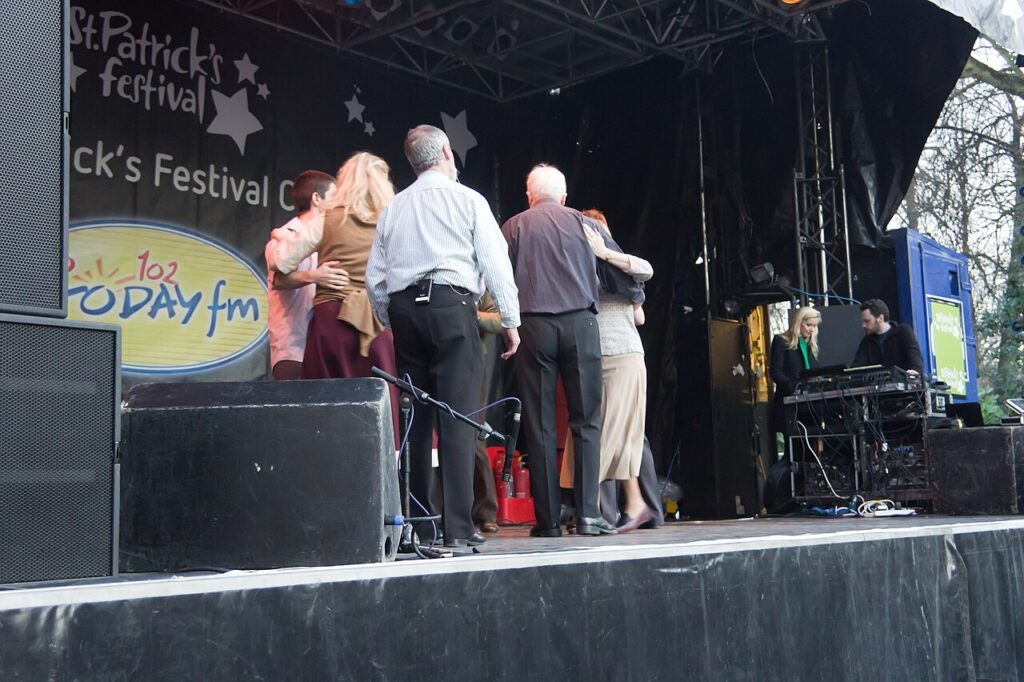
Walk into any céilí, wedding reception, or community hall across Ireland, and sooner or later you’ll hear the caller shout: “Take your partners for the Siege of Ennis!” What follows is organized chaos in the best possible way—lines of dancers advancing and retreating, arches forming overhead, and an energy that turns strangers into partners and wallflowers into participants.
This is Ireland’s most democratic dance. You don’t need years of training, fancy footwork, or even a partner when you arrive. You just need to show up, listen to the caller, and let the music carry you through.
A Dance Born From Rebellion and Community
The Siege of Ennis takes its name from the 1690 siege of Ennis, County Clare, during the Williamite War. But the dance itself is far younger—it was devised in the 20th century as part of the céilí dance revival, when traditional Irish social dancing was formalized and taught across the country.
Unlike set dances that developed organically in specific regions, the Siege of Ennis was created intentionally as a progressive dance where couples form two lines and advance through a series of figures. It’s designed to be learned quickly, remembered easily, and danced by everyone from children at their first céilí to grandparents who haven’t danced in years.
The result is a dance that feels both ancient and accessible—rooted in Irish tradition but welcoming to anyone willing to join the line.
How the Dance Unfolds
The Siege of Ennis is danced to jigs in 6/8 time—lively, bouncing tunes that set the pace for everything that happens. Dancers form two lines facing each other, partners across the way. The caller guides everyone through a series of figures that repeat and build:
- Advance and retire: both lines walk forward three steps, then back three steps
- Advance and pass through: lines pass through each other and turn to face again
- Ladies chain: women weave through the opposite line, giving right hands in the center
- Arches: couples on the ends form arches while others dance through
- Swing your partner: the moment everyone’s been waiting for, when the dance erupts into spins
Each time the sequence completes, couples progress up or down the line, so you dance with new partners as the set continues. It’s social, it’s kinetic, and it’s impossible not to smile.
Why It’s the Gateway Dance
The Siege of Ennis works because it removes every barrier to participation. You don’t need to know the steps before you start—the caller talks everyone through. You don’t need a partner—you’ll be matched up in the line. And you don’t need to be graceful—half the joy is in the stumbles, the missed cues, and the laughter when the lines collide.
It’s taught in primary schools across Ireland as part of physical education, so generations of Irish children grow up knowing the basic figures. But it’s also the dance that gets requested at weddings, community fundraisers, and festival céilís, because it brings everyone to the floor—young and old, locals and visitors, dancers and non-dancers alike.
In Irish dance halls from Milltown Malbay to Glencolmcille, the Siege of Ennis is the great equalizer. It’s the dance that says: everyone is welcome here, everyone belongs in the set.
Where to Dance It Today
If you want to experience the Siege of Ennis yourself, you don’t have to wait for a wedding invitation. Céilís happen year-round across Ireland, often in community halls, festival tents, and cultural centers.
In County Clare, the Willie Clancy Summer School in Milltown Malbay hosts nightly céilís during the festival in July, where hundreds of dancers fill the floor to live traditional music. The Oireachtas na Gaeilge festival, held in a different Irish city each year, features céilí events that draw dancers from across the country.
Many towns hold regular céilí nights in the winter months—check with local comhaltas branches or community centers. Expect to pay around $10 to $15 for admission, which usually includes live music and a caller to guide the dances.
And if you’re attending an Irish wedding, just wait. When the band strikes up a jig and the caller takes the mic, you’ll know exactly what’s coming.
The Dance That Never Ends
The Siege of Ennis endures because it does what the best Irish traditions do: it brings people together without fuss or formality. It doesn’t matter if you’re a champion set dancer or someone who just wandered in from the bar—once you’re in the line, you’re part of the dance.
That’s the real siege: not of a town in Clare centuries ago, but of hearts and floors and halls, one jig at a time.
Want more stories celebrating Ireland’s music, traditions, and the moments that make the island unforgettable? Subscribe to the Ireland Moments newsletter—a daily celebration of Ireland delivered to your inbox.