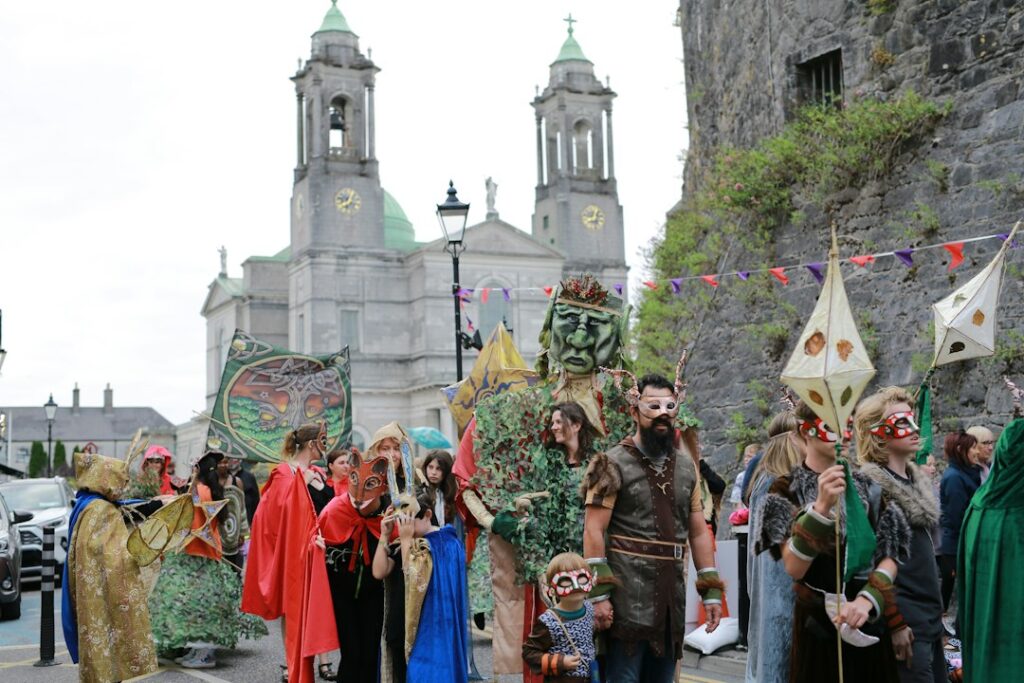
Long before carved pumpkins and trick-or-treating crossed the Atlantic, Ireland celebrated Samhain—the Celtic festival marking summer’s end and the thinning of the veil between worlds. At the heart of this ancient tradition stands the púca, a shape-shifting spirit of Irish folklore known for mischief, transformation, and wild magic.
In Trim, County Meath, that ancient spirit has found its modern home. The Púca Festival, held each year around Halloween, transforms this historic Norman town into Ireland’s most spectacular celebration of Celtic heritage, drawing thousands who come to experience fire, music, storytelling, and the kind of ancient magic that still pulses through Irish soil.
Where Ancient Meets Electric
Trim isn’t a random choice. This Royal County town sits in the heart of Ireland’s Ancient East, shadowed by the country’s largest Norman castle and steeped in layers of history that reach back millennia. The Hill of Ward (Tlachtga), just outside Trim, is where ancient druids lit the first Samhain fires, making this landscape the genuine birthplace of Halloween.
The Púca Festival embraces that heritage with a three-day program that blends authenticity with jaw-dropping spectacle. Enormous illuminated sculptures line the streets—mythical creatures from Irish legend rendered in light and steel. The Great Procession sees hundreds of performers in elaborate costumes parade through medieval lanes, led by the púca itself in one of its many forms: horse, goat, or something altogether more mysterious.
Fire performances light up Trim Castle’s imposing walls after dark, while traditional musicians fill pubs and outdoor stages with reels, jigs, and haunting airs that echo the season’s eerie beauty.
Stories, Feasts, and Ancient Flames
What sets Púca apart from typical festivals is its commitment to substance alongside spectacle. Storytellers gather in intimate venues throughout town, sharing tales of the Tuatha Dé Danann, the banshee’s cry, and encounters with the púca himself—sometimes helpful, sometimes troublesome, always unpredictable.
Food takes center stage too, with Samhain Feasts featuring dishes rooted in Celtic tradition: colcannon heavy with butter and scallions, slow-roasted meats, apple cake sweetened with honey, and barmbrack still baked with the traditional charms hidden inside. Local producers showcase mead, craft beers, and Irish whiskey, warming hands and spirits as November’s chill settles in.
The highlight comes on the festival’s final night, when a ceremonial fire is lit on the Hill of Ward, recreating the ritual that marked Samhain for countless generations. Standing on that hill, surrounded by flames and ancient stones, you understand viscerally why this season mattered so deeply—why the Celts gathered to honor darkness before welcoming back the light.
A Festival That Honors Its Roots
Unlike Halloween celebrations that lean heavily on commercial imports, Púca stays true to its Irish origins. There are no plastic decorations or mass-market costumes. Instead, you’ll find handcrafted masks inspired by Celtic art, workshops teaching ancient crafts, and conversations about Irish mythology that leave you wanting to dive deeper into the old stories.
The festival also works hard to be accessible. Many events are free, and the entire town becomes a canvas, meaning you can experience the magic simply by wandering Trim’s medieval streets. Ticketed events like the Samhain Feast and special performances range from $25 to $75, but the atmosphere—the true spirit of the festival—costs nothing but your presence.
Families find plenty to love, from storytelling sessions designed for younger ears to craft workshops where children create their own púca masks. As darkness falls and the more adult celebrations take over, there’s a natural progression that mirrors Samhain itself: playful by day, profound by night.
Beyond the Festival
Trim itself deserves more than a festival weekend. The town’s castle, where Braveheart was filmed, offers tours that bring medieval Ireland to life. The Yellow Steeple, a striking 14th-century ruin, stands as a testament to centuries of turbulent history. And the River Boyne flows past, the same river that runs by Newgrange and ties this landscape together in a ribbon of ancient significance.
Just minutes away, you can explore the Hill of Tara, seat of Ireland’s High Kings, or visit Bective Abbey, a beautiful 12th-century Cistercian monastery. The Púca Festival becomes a gateway to understanding this region’s extraordinary depth—a place where every field and stone has witnessed thousands of years of Irish story.
If you’re drawn to Ireland’s authentic traditions, to celebrations that honor rather than commercialize ancient heritage, the Púca Festival offers something genuinely rare: a modern gathering that connects you directly to the oldest threads of Irish culture, in a place where those threads have never been broken.
Want more stories celebrating Ireland’s festivals, traditions, and the magic woven through the Emerald Isle? Subscribe to the Ireland Moments newsletter—your daily celebration of everything that makes Ireland unforgettable.