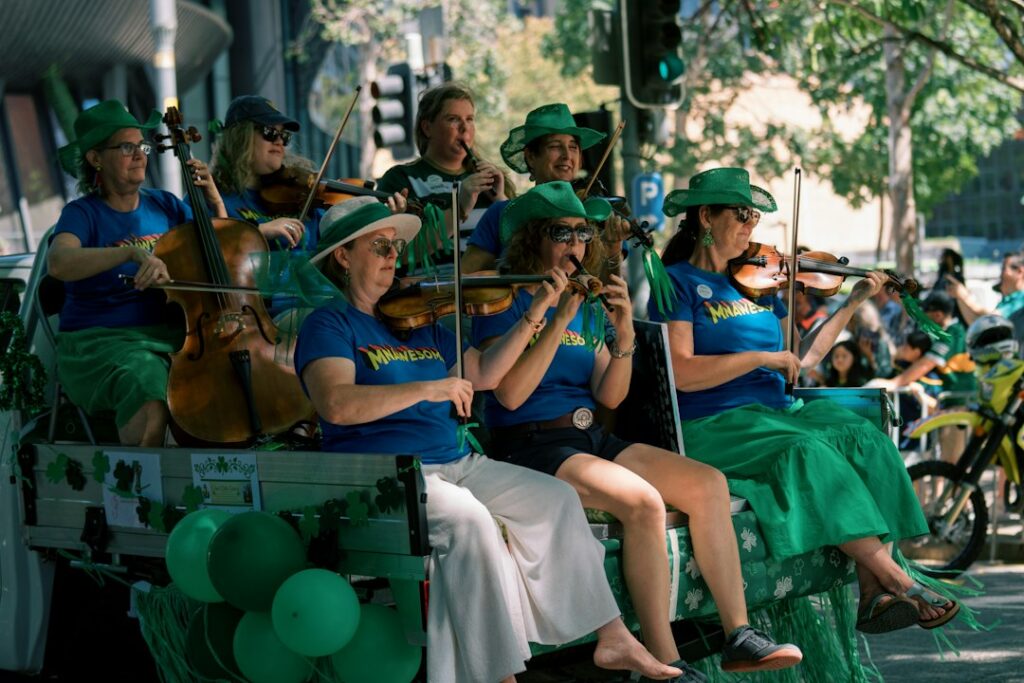
Walk into any pub across Ireland where traditional music is playing, and you’ll hear it first: the bright, singing line of the fiddle cutting through the conversation and the clink of glasses. It’s the voice that carries the melody, the instrument that can make a reel dance or a slow air weep. The Irish fiddle isn’t just part of the session—it often is the session.
The Same Instrument, a Dozen Different Styles
The fiddle and the violin are the same instrument, but when it’s tucked under an Irish musician’s chin, it becomes something else entirely. The way it’s played—fast, ornamented, rhythmic, and deeply expressive—turns classical technique into something wild and rooted in the land.
What makes Irish fiddle playing so captivating is its regional diversity. In County Clare, fiddlers favor a driving, rhythmic style that locks in tight with the concertina. Up in Donegal, the playing is faster, more Scotland-influenced, with a raw energy that feels like wind off the Atlantic. Sligo fiddlers are known for their smooth, flowing ornamentation and lyrical phrasing—thanks in large part to the legendary Michael Coleman, whose 1920s recordings shaped generations of players. Meanwhile, in Sliabh Luachra on the Cork-Kerry border, you’ll hear a distinctive polka-driven repertoire with a rolling, syncopated bow.
Each style is unmistakable once you know what to listen for, and each one tells you where the music—and the musician—comes from.
From Kitchen Floors to Festival Stages
The fiddle has been the backbone of Irish music for centuries. Long before there were pub sessions or concert halls, there were kitchen céilís, barn dances, and crossroads gatherings where a fiddler provided the soundtrack for the night. The instrument was portable, loud enough to fill a room, and versatile enough to handle jigs, reels, hornpipes, polkas, and slow airs with equal grace.
In the hands of masters like Paddy Glackin, Martin Hayes, Liz Carroll, and Mairéad Ní Mhaonaigh of Altan, the fiddle becomes a storyteller. A slow air like “The Lament for Limerick” can silence a room, each note pulled long and mournful. Then, without missing a beat, the same player can launch into a reel like “The Merry Blacksmith” and set feet flying.
Today, you’ll find fiddles everywhere Irish music is played—from the intimate corners of Gus O’Connor’s in Doolin to the main stage at the Willie Clancy Summer School in Milltown Malbay, from fleadh competitions to living rooms in Boston, Melbourne, and beyond.
Learning the Tune, Finding the Lift
The beauty of the Irish fiddle is that it’s both accessible and endlessly deep. A beginner can learn a simple reel in an afternoon. But spending a lifetime exploring ornamentation—rolls, cuts, slides, trebles, and that elusive quality called lift—still won’t exhaust what the instrument can do.
Irish fiddle playing isn’t about reading dots on a page. It’s an aural tradition, passed down tune by tune, session by session. You learn by listening, by sitting beside someone who knows the music, by making mistakes and finding your own voice within the tradition. There’s no one “correct” way to play a tune—just your way, informed by the players and regions that shaped you.
If you’re visiting Ireland and hear a fiddle in a session, pay attention to the subtle differences: how one player decorates a phrase, how another drives the rhythm forward, how the fiddle converses with the flute or accordion beside it. That interplay—musical and social—is where the magic happens.
Why It Still Leads the Session
The fiddle remains the most popular melody instrument in Irish traditional music for good reason. It’s expressive, portable, and capable of an enormous emotional range. It can whisper or shout, mourn or celebrate. And in a session, where musicians take turns leading tunes, the fiddle’s clear, bright tone makes it easy for others to follow.
But beyond the practicalities, there’s something about the fiddle that just feels Irish. Maybe it’s the centuries of history embedded in every tune. Maybe it’s the way a great fiddler can make the instrument sing like a human voice. Or maybe it’s simply that, when you hear a reel played well on the fiddle in a dimly lit pub with a pint in hand and good company around you, you know exactly where you are—and there’s nowhere else you’d rather be.
Want more stories celebrating the music, places, and spirit of Ireland? Subscribe to the Ireland Moments newsletter and get a daily dose of the Emerald Isle delivered to your inbox.