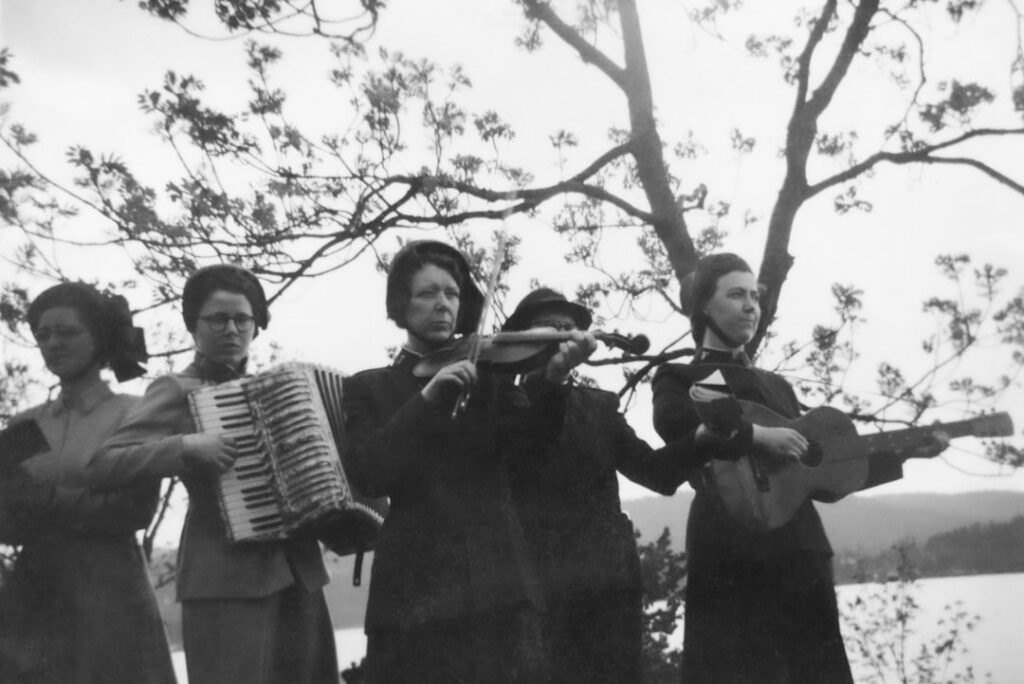
Walk into any pub in Doolin, Dingle, or Dublin on a Tuesday night and you’ll likely find a circle of musicians tucked into a corner, instruments balanced on knees, pints within arm’s reach. This is the trad session—an informal gathering where Irish traditional music comes alive through shared repertoire and collective energy.
If you’ve ever wanted to join in, or simply understand what makes these sessions tick, knowing a handful of core tunes is your passport to participation. Here are five traditional melodies that appear in sessions from Galway to New York, from Clare to Sydney.
The Kesh Jig
Perhaps the most recognized jig in the Irish tradition, “The Kesh” takes its name from a small village in County Fermanagh. This double jig in D major is often the first tune a beginner learns—its melody is singable, its structure straightforward, and its rhythm infectious.
You’ll hear it played at a moderate tempo in beginner sessions and at breakneck speed among seasoned players. The two eight-bar parts repeat with room for ornamentation: rolls, cuts, and slides that give each player’s version its own voice. Learn “The Kesh” and you’ve got your foot in the door at nearly any session on the island.
The Siege of Ennis
Named after the famous set dance, “The Siege of Ennis” is a single jig in D major that doubles as both a tune and a ceilidh dance. The melody has a bright, marching quality that makes it perfect for bringing energy to the middle of a set.
What makes this tune essential is its versatility. Fiddle players love it for the bow patterns, flute players for the breathing, and accordion players for the rhythmic drive. It’s commonly paired with other jigs like “The Geese in the Bog” or “Trip to Athlone,” so knowing it opens the door to entire tune sets.
The Swallowtail Jig
If “The Kesh” is the beginner’s jig, “The Swallowtail” is the intermediate player’s rite of passage. Composed in the 1980s by Martin Mulhaire, this tune in E minor has become a modern standard, beloved for its sweeping, soaring melody that mimics the flight of its namesake butterfly.
Despite its relative youth, “The Swallowtail” has earned a permanent place in the session repertoire. Its distinctive opening phrase is instantly recognizable, and the tune’s flow makes it a favorite among melodeon and concertina players. You’ll hear it in sessions from Miltown Malbay during Willie Week to the back room of Matt Molloy’s in Westport.
The Road to Lisdoonvarna
This slip jig in E minor carries the wistful, winding character of the Clare countryside it’s named for. Lisdoonvarna, famous for its matchmaking festival and spa heritage, lends its name to one of the most beautiful tunes in the tradition.
Slip jigs, with their 9/8 time signature, have a lilting, uneven rhythm that can trip up newcomers—but “The Road to Lisdoonvarna” is forgiving and melodic. It’s often played slower than reels or double jigs, giving musicians space to breathe and ornament. Pair it with “The Butterfly” or “The Kid on the Mountain” and you’ve got a classic session set.
The Silver Spear
Every session needs a good reel, and “The Silver Spear” in D major is one of the most enduring. This tune has been recorded by everyone from The Chieftains to Planxty, and its driving rhythm and clear structure make it ideal for keeping a session moving.
The two parts of “The Silver Spear” are balanced and symmetrical, with enough melodic interest to stay engaging through multiple rounds. It’s often played in sets with “The Teetotaler” or “The Raveled Hank of Yarn,” forming the backbone of many a session’s reel selection. Master this one and you’ll never be lost when the tempo picks up.
Learning the Language
These five tunes aren’t just melodies—they’re a shared language spoken across generations and geographies. Learning them by ear, the traditional way, helps you understand not just the notes but the variations, the breathing, and the unspoken communication that makes a session work.
Start with slow recordings, repeat small phrases until they sit in your fingers or your breath, and don’t worry about perfection. The beauty of the trad session is that it welcomes learners alongside masters, as long as you’re listening, respecting the tradition, and contributing to the collective sound.
Whether you’re planning your first trip to Ireland or deepening your connection from afar, these tunes are your invitation to join the circle. Learn them, carry them with you, and when the moment comes, you’ll be ready.
Want more stories from Ireland’s musical heart? Subscribe to the Ireland Moments newsletter—a daily celebration of the Emerald Isle, delivered to your inbox each morning.