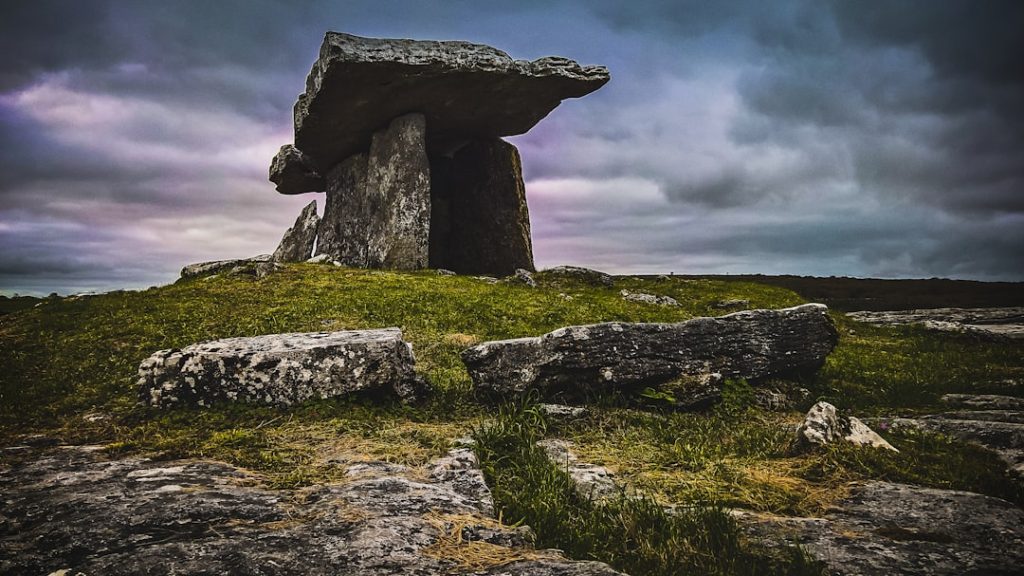
Few figures in Irish folklore inspire as much fear and fascination as the banshee. Her name—bean sídhe in Irish, meaning “woman of the fairy mound”—suggests something far more complex than the shrieking specter of Hollywood legend. In the old stories, passed down through generations across Ireland, the banshee was never a simple monster. She was a messenger, a mourner, and sometimes a protector of ancient families.
Understanding the banshee means understanding how the Irish have always approached death: not with denial, but with ceremony, respect, and the knowledge that some things exist between worlds.
The Keening Woman at the Edge of Night
In traditional Irish belief, the banshee appears—or more often, is heard—before a death in certain old families. Her cry, described variously as a wail, a keen, or a mournful song, served as a warning that someone in the bloodline would soon pass. This wasn’t random haunting. The banshee attached herself to families with Gaelic surnames, particularly those beginning with “O'” or “Mac”—the O’Neills, the O’Briens, the MacCarthys, the O’Gradys, and the O’Connors among them.
Her appearance varied by region and tale. Sometimes she was described as a young woman with long red hair, dressed in green. Other accounts painted her as an old crone in a gray cloak, combing her hair with a silver comb. In some stories from County Kerry and Cork, she appeared as a washerwoman by a stream, cleaning the burial clothes of the person about to die. What remained constant was her role: she mourned for those about to leave this world.
The Keener’s Ancient Role
The banshee’s cry wasn’t random noise—it was keening, an ancient Irish funeral tradition. Professional keeners, women who led the vocal lamentation at wakes and funerals, were once common throughout Ireland. They sang caoineadh (keen), improvised laments that honored the dead and gave voice to grief.
The banshee, in folklore, represented a supernatural version of this practice. She was the otherworldly keener for families too old, too connected to the land, to pass without notice from the Otherworld. Her appearance suggested that the family still mattered to forces beyond the ordinary—that their dead deserved to be mourned by more than mortal voices.
This connection to keening explains why the banshee was feared but not always hated. She brought bad news, yes, but she also honored the dying. In Counties Clare and Limerick, some families spoke of their banshee almost with pride, as evidence of their ancient lineage.
Where the Stories Still Live
You’ll find banshee tales throughout Ireland, but certain places hold them more tightly. In County Tipperary, the Dunkerrin area has long been associated with banshee sightings, particularly near old family estates. The wilds of Connemara in County Galway, where Gaelic culture remained strongest longest, preserve some of the most detailed accounts.
County Mayo’s folk tradition includes stories of the banshee appearing near ancient ring forts and raths—the fairy forts that dot the landscape. These earthworks, often Bronze Age or Iron Age in origin, were believed to be entrances to the Otherworld. The banshee, as a bean sídhe, belonged to that realm, crossing over only when death thinned the boundary between worlds.
In Waterford and Wexford, coastal families told of hearing the banshee’s cry carried on storm winds before fishermen were lost at sea. The cry became confused with the wind itself, a natural sound given supernatural meaning by grief and tradition.
Why She Still Matters
The banshee endures in Irish culture not because people still literally believe a spirit woman wails outside windows, but because she represents something essential about Irish attitudes toward death and memory. She’s a reminder that death was once—and in some ways still is—a communal event, something to be announced, witnessed, and mourned collectively.
The banshee also speaks to the Irish sense of place and family. She doesn’t follow individuals; she follows bloodlines tied to specific landscapes. In this, she’s less a ghost story and more a way of saying that some families belong to Ireland so completely that even the Otherworld keeps watch over them.
Today, you’ll still hear people in rural Ireland mention the banshee, usually with a half-smile that doesn’t quite dismiss the possibility. The old surnames persist. The old places remain. And whether the banshee still cries or not, the stories ensure that the tradition of honoring the dead—and the families who came before—continues.
Want more stories from Ireland’s rich folklore and living traditions? Subscribe to the Ireland Moments newsletter—a daily celebration of Ireland, delivered to your inbox.