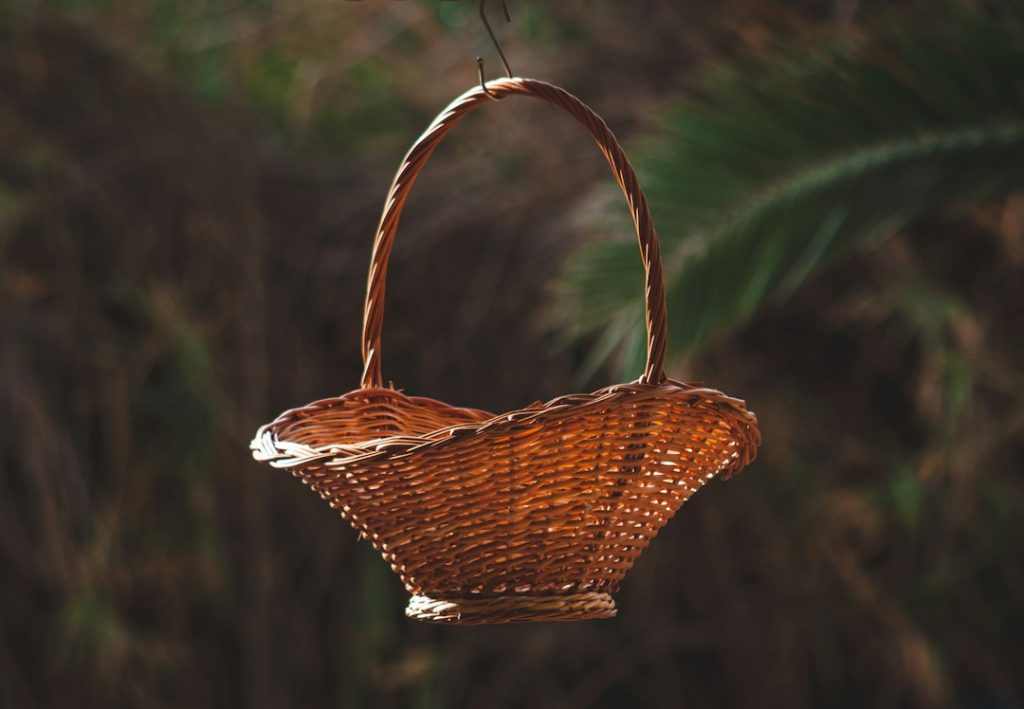
Long before plastic bins and cardboard boxes, Ireland’s countryside hummed with the rhythm of basket makers. Using willow, rushes, and sally rods harvested from riverbanks and boglands, skilled weavers created everything from bread baskets and potato skips to lobster pots and cattle panniers. This craft, passed down through generations, wasn’t just utilitarian — it was an art form that connected Irish communities to the land.
Today, that connection is being woven anew. Across Ireland, a quiet revival is bringing basket weaving back from the edge of extinction, and with it, a deeper appreciation for sustainable craft and traditional knowledge.
The Materials That Grew Ireland’s Baskets
Irish basket weaving relied on what the land provided. Willow — called sally in Ireland — thrived along riverbanks and was coppiced annually to produce flexible rods perfect for weaving. Different varieties offered different qualities: black sally for strength, white sally for fine work. Rushes gathered from wetlands made softer, lighter baskets for storing wool or carrying eggs.
In coastal areas, weavers fashioned lobster pots from hazel and willow, intricate dome-shaped traps that could last years in saltwater. Along the western seaboard, particularly in Connemara and County Mayo, currach builders used willow frames before stretching tarred canvas over them. The basket weaver’s skills extended far beyond the kitchen.
Straw rope — súgán — was another essential material, twisted into thick cords and woven into chair seats, door mats, and harvest baskets. The súgán chair, with its woven straw seat, became an Irish icon, found in nearly every cottage hearth until the mid-twentieth century.
How Baskets Shaped Daily Life
In rural Ireland, baskets weren’t decorative — they were essential infrastructure. The potato basket, or skib, could hold a hundredweight of spuds and lasted decades with proper care. Turf baskets carried fuel from the bog. Donkey panniers, woven to fit perfectly on either side of the animal, transported everything from seaweed for fertilizer to milk churns headed to the creamery.
Market women in Dublin, Cork, and Galway carried their wares in shallow rectangular baskets balanced on their heads, a skill that required both strength and grace. Fishermen’s wives in coastal villages used smaller baskets to gather periwinkles and mussels at low tide.
Even Irish whiskey distilleries relied on basket weavers. Large willow baskets were used to catch barley during malting, and smaller ones carried turf to fire the stills. The craft touched nearly every aspect of Irish life.
The Revival Taking Root Today
By the 1980s, Irish basket weaving had nearly vanished. Plastic and mass production made traditional baskets seem obsolete. But something shifted in recent years. Craft schools across Ireland now offer basket weaving courses that fill up months in advance. The National Craft Gallery in Kilkenny has featured contemporary Irish basket makers whose work bridges ancient technique and modern design.
In County Louth, the Basketry and Willow Growers Association Ireland works to preserve traditional methods while encouraging innovation. Weavers are experimenting with native Irish plants beyond willow — including dogwood, bramble, and even invasive species like Japanese knotweed, turning ecological problems into beautiful objects.
Joe Hogan, based in County Leitrim, is among Ireland’s most respected basket makers. His work, harvested from hedgerows and woven without nails or glue, appears in museums internationally. Yet he still teaches workshops in rural community centers, passing skills to a new generation hungry for connection to craft and landscape.
Where to See the Craft Alive
The Irish National Heritage Park in Wexford demonstrates traditional basket weaving techniques as part of its living history exhibits. Bunratty Folk Park in County Clare features working basket makers in period cottages, showing how the craft fit into everyday nineteenth-century life.
The Museum of Country Life in Castlebar, County Mayo, holds one of Ireland’s finest collections of traditional baskets — from eel traps to harvest baskets — each telling a story about how people worked the land and water.
Several contemporary makers welcome visitors by appointment. Willow weaving workshops have become popular experiences at heritage centers and craft schools, with one- or two-day intensive courses typically running between $120 and $180. Students leave with their own basket and newfound respect for the patience this craft demands.
The revival isn’t just nostalgic. In an age of disposable everything, a well-made willow basket represents something radical: an object that improves with age, returns to the earth when its usefulness ends, and connects the maker to centuries of Irish hands doing the same work.
Want more stories celebrating Ireland’s crafts, traditions, and culture? Subscribe to the Ireland Moments newsletter — a daily celebration of Ireland delivered to your inbox.