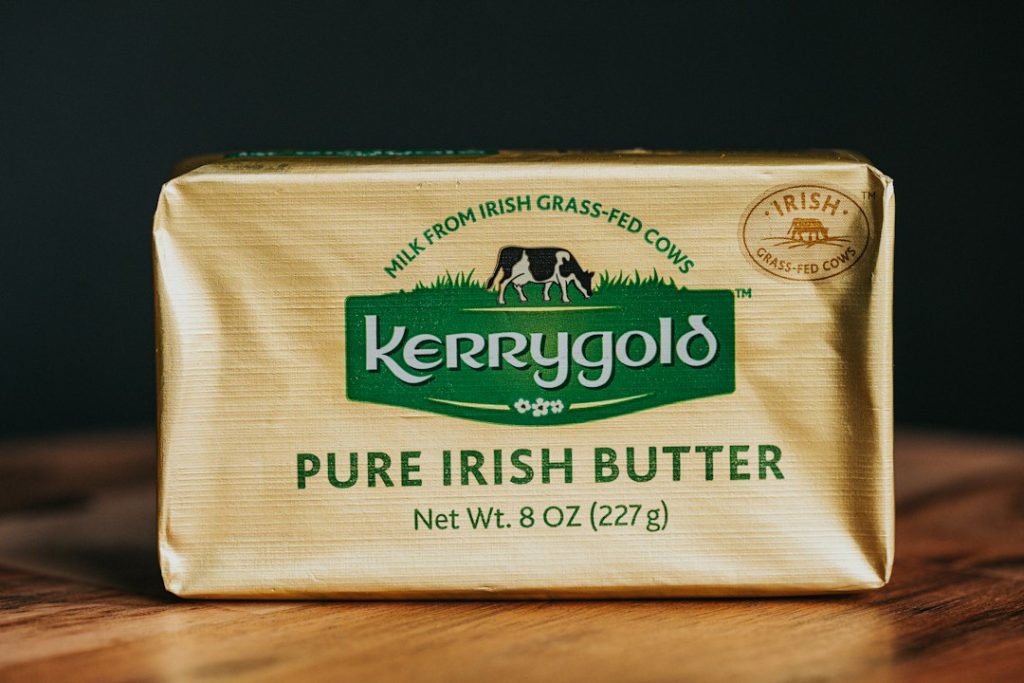
Walk into any supermarket across America and you’ll spot the foil-wrapped blocks with shamrocks on the label. Irish butter commands premium shelf space and premium prices, and for good reason. This isn’t marketing hype — it’s the result of geography, grass, and generations of dairy tradition that make Irish butter fundamentally different from what most of the world produces.
The difference starts the moment you unwrap it. Irish butter is deeper gold, almost amber in summer months. It spreads easily even when cold. And the flavor — rich, slightly sweet, with a complexity that makes you understand why people use words like “grassy” and “nutty” without a trace of pretension.
It’s All About the Grass
Ireland’s secret weapon is rain. The island gets plenty of it, which means grass grows thick and green nearly year-round. Irish dairy cows spend up to 300 days a year grazing on pasture, not standing in feedlots eating grain. This outdoor, grass-fed diet changes everything about the milk they produce.
Grass-fed cows produce milk with higher levels of beta-carotene — that’s what gives Irish butter its distinctive golden color. The milk also contains more omega-3 fatty acids and conjugated linoleic acid (CLA) than grain-fed milk. But beyond nutrition, it’s the flavor that sets it apart. Fresh grass imparts a sweetness and depth that grain simply can’t match.
The Gulf Stream keeps Ireland’s climate temperate and wet. Counties like Kerry, Cork, and Limerick have perfected the conditions for dairy farming over centuries. Small family farms still dot the landscape, many working land their families have farmed for generations. The cows know these fields, and the farmers know their cows.
The Kerrygold Standard
When most people think of Irish butter, they think of Kerrygold, founded in 1962 as a cooperative of Irish dairy farmers. The brand exports to over 30 countries and has become synonymous with quality. But Kerrygold isn’t alone — brands like Ornua, Dubliner, and smaller artisan producers from Cork and Waterford all benefit from the same Irish advantages.
Irish butter is typically made using a cultured method, where cream is fermented with bacterial cultures before churning. This adds a subtle tanginess and complexity. Most Irish butter is also what’s called “European-style,” containing at least 82% butterfat compared to the 80% standard for American butter. Those two percentage points make a real difference in texture and flavor.
At the Kerrygold visitor center in County Cork, you can watch the process from grass to gold foil. The cream arrives from local farms, gets cultured, churned, and packaged within days. The operation is industrial scale, but the fundamentals haven’t changed — good milk from grass-fed cows, carefully cultured and churned.
Butter in Irish Cooking and Culture
In Ireland, butter isn’t just an ingredient — it’s a cultural touchstone. Traditional Irish soda bread gets its tender crumb from generous amounts of buttermilk and butter. Colcannon and champ aren’t complete without a well of melting butter in the center. Even a simple slice of fresh brown bread becomes something special with proper Irish butter.
Visit any farmhouse B&B from Donegal to Dingle and breakfast will feature real butter, often from a local creamery. No foil-wrapped portions or spreadable substitutes. Just butter in a dish, at room temperature, ready to lavish on warm scones or toast.
Irish chefs have built reputations on the quality of local ingredients, and butter is foundational. At restaurants like Ballymaloe House in County Cork or Aniar in Galway, the butter service alone is worth the visit — often served with sea salt from the Atlantic coast or honey from nearby hives.
Where to Find the Real Thing
In Ireland, every grocery and corner shop stocks multiple butter options. SuperValu, Tesco, and Dunnes Stores all carry both major brands and local varieties. If you’re touring, stop at farmers’ markets in Cork, Galway, or Kenmare to find small-batch butters from individual creameries. Prices typically run €2–4 (roughly $2.20–4.40) for a standard block.
Cork’s English Market has several stalls selling artisan butter and cultured cream. The Mahon Point Farmers Market, held every Thursday, often features producers from West Cork who’ll happily explain their process while you sample.
Outside Ireland, Irish butter has become widely available. In the U.S., expect to pay $4–6 for an 8-ounce package of Kerrygold. It’s more than generic butter, but once you’ve tasted the difference, it’s hard to go back. Store it properly — wrapped tight in the fridge, or frozen in portions if you stock up.
Why It Matters
Irish butter represents something bigger than dairy fat. It’s evidence that traditional methods, quality ingredients, and respect for the land produce results you can taste. In an age of industrial agriculture and cost-cutting, Irish butter proves that doing things the slower, harder way still matters.
The next time you spread Irish butter on warm bread or melt it into mashed potatoes, you’re tasting centuries of Irish farming tradition, the limestone-rich soil of the Golden Vale, the Atlantic rain that keeps the grass growing, and the farmers who still believe that grass-fed means better.
Want more stories celebrating Ireland’s food, traditions, and places worth knowing? Subscribe to the Ireland Moments newsletter — a daily celebration of the Emerald Isle delivered to your inbox.