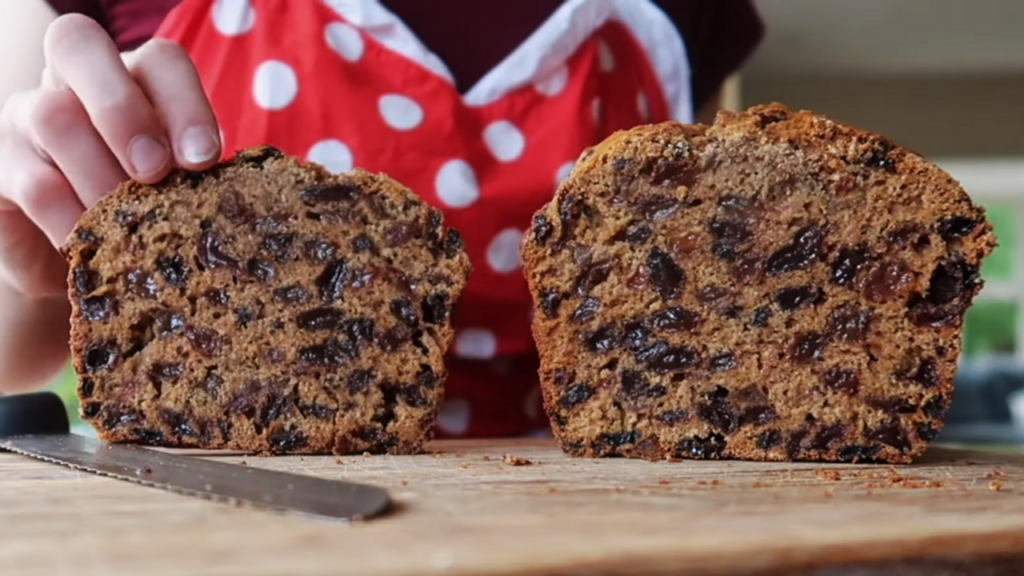
There’s a moment in every Irish Halloween when someone slices into a dark, fragrant loaf and the room goes quiet. Everyone watches. Because what’s hidden inside that slice of barmbrack—a ring, a coin, a piece of cloth—will tell you something about the year to come.
Barmbrack, or báirín breac in Irish (meaning “speckled loaf”), is Ireland‘s traditional Halloween bread. It’s dense, sweet, and studded with raisins and sultanas that have been soaked overnight in tea. But it’s the hidden charms baked inside that make it unforgettable.
The Tokens and What They Mean
Traditionally, five items were wrapped in parchment and folded into the dough before baking. Each one carried a prophecy:
- The ring: You’ll be married within the year.
- The coin: Wealth and prosperity are coming your way.
- The pea: You won’t marry this year—another twelve months of freedom.
- The stick: An unhappy marriage or a year of disputes.
- The cloth (or rag): Poverty or bad luck ahead.
In modern bakeries across Ireland, you’ll still find barmbracks with a single ring baked inside, sold in every supermarket and corner shop from mid-October onward. Some families keep the tradition alive at home, baking their own and hiding charms they’ve saved for years. It’s half superstition, half theater—and entirely Irish.
How Barmbrack Is Made
The key to a great barmbrack is patience. The dried fruit—raisins, sultanas, and sometimes mixed peel—sits overnight in strong black tea, often with a splash of whiskey. By morning, the fruit is plump and glossy, ready to be folded into a batter made with flour, brown sugar, a beaten egg, and warm spices like cinnamon and nutmeg.
The dough is thick and sticky, more like a heavy cake batter than bread dough. It’s poured into a loaf tin, smoothed flat, and baked slowly until the top is dark and slightly cracked. The smell that fills the kitchen—sweet, spiced, toasted—is as much a part of Halloween as pumpkins and bonfires.
Once cooled, barmbrack is sliced thick and served with butter. Some people toast it. Others eat it plain with a cup of tea. Either way, the texture is moist and chewy, the fruit soft and sweet, the crust dark and slightly bitter.
From Samhain to Today
Barmbrack’s roots stretch back to Samhain, the ancient Celtic festival that marked the end of harvest and the beginning of winter. It was a time when the veil between worlds was thinnest, and divination rituals were common. Hiding tokens in food was one way to glimpse the future.
The tradition carried forward through centuries, woven into Irish Halloween customs. In rural kitchens, barmbracks were baked in wood-fired ovens. In towns, bakers sold them by the dozen. The charms changed slightly over time—modern versions might include a button (bachelorhood) or a thimble (spinsterhood)—but the idea stayed the same: your slice reveals your fate.
Today, barmbrack isn’t just for Halloween. You’ll find it year-round in Irish bakeries, especially in places like Aran Bakery in Galway or the Gallic Kitchen in Cork, though it’s most popular in late October. It’s also a favorite with the Irish diaspora, baked by grandmothers in Boston and Sydney and London, keeping the tradition alive thousands of miles from home.
Where to Find (or Bake) the Best Barmbrack
If you’re in Ireland around Halloween, every grocery store will have barmbracks stacked near the checkout. Brennans and Cuisine de France are the most common brands, usually priced around $4 to $6 per loaf. For something handmade, visit a local bakery—many still bake them fresh daily in October.
If you’re baking your own, the recipe is forgiving. Soak your fruit the night before, mix everything in one bowl, and bake at 350°F for about an hour. Wrap your charms in parchment (and warn your guests before they bite down). Serve it sliced, with salted Irish butter and a pot of strong tea.
Barmbrack isn’t fancy. It won’t win awards for presentation. But it’s warm, it’s communal, and it connects you to centuries of Irish kitchens, where a slice of spiced bread could tell you whether love, luck, or hardship was waiting just around the corner.
Love stories like this? Subscribe to the Ireland Moments newsletter—a daily celebration of Ireland’s places, culture, music, food, and the traditions that make the island unforgettable.