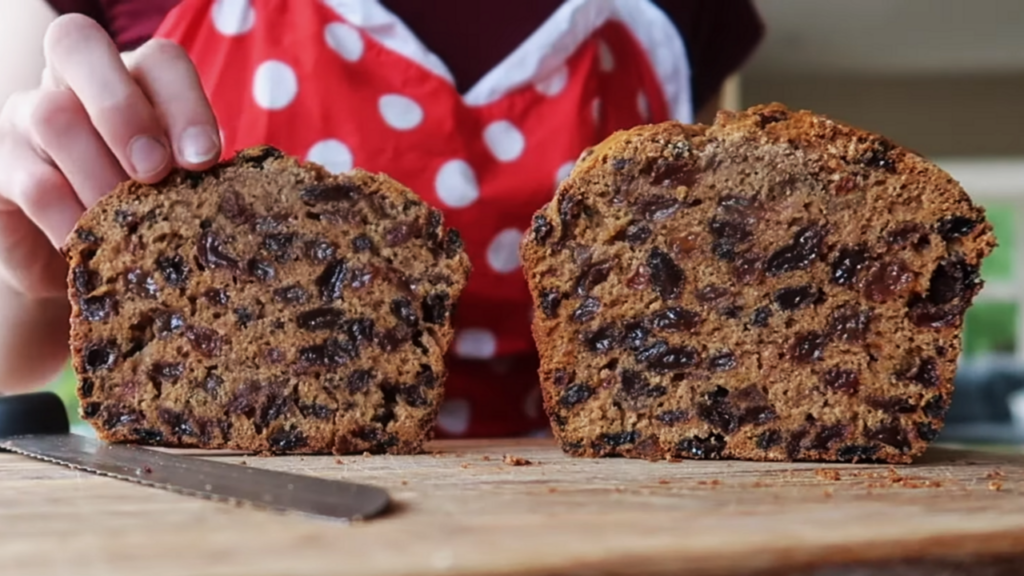
Barmbrack—or báirín breac, meaning “speckled loaf“—is Ireland’s answer to the question: what if your dessert could tell your future? This dense, fruity bread studded with raisins and sultanas has been a fixture of Irish tables for generations, especially around Samhain and Halloween. But what makes it truly special isn’t just the flavor—it’s what’s hidden inside.
Baked with tokens wrapped in parchment paper, barmbrack turns every slice into a small act of divination. Find the ring, and you’ll be married within the year. The coin means wealth is coming. The pea warns of poverty, the stick foretells an unhappy marriage, and the rag signals hard times ahead. Modern versions sometimes include a button (bachelorhood) or a thimble (spinsterhood), though those have largely fallen out of favor.
A Loaf Steeped in Tea and Tradition
The magic of barmbrack begins the night before baking. Dried fruit—raisins, sultanas, currants, and candied peel—is soaked overnight in strong black tea, often with a splash of whiskey for good measure. This softens the fruit and infuses it with flavor, so the loaf stays moist for days.
The dough itself is lightly sweetened and spiced with cinnamon, nutmeg, and sometimes a pinch of allspice. It’s not quite a cake and not quite a bread—barmbrack sits somewhere in between, with a tender crumb that holds together beautifully under a generous smear of salted Irish butter.
Traditionally, barmbrack was baked at home in a cast-iron pot over an open fire, the loaf achieving a dark, burnished crust. Today, most home bakers use a standard loaf pan, and the bread is widely available in Irish bakeries and supermarkets, especially in October. But homemade barmbrack—still warm, sliced thick, and buttered—remains the gold standard.
Fortune-Telling in Every Slice
The ritual of slicing barmbrack and discovering your token is part parlor game, part superstition, and entirely beloved. At Halloween gatherings, families would cut the loaf ceremoniously, each person claiming their slice and unwrapping their fate with laughter or mock horror.
The ring was always the most coveted token—proof that romance was on the horizon. The coin brought hope of financial luck, while the rag and pea were met with groans. Some families added their own tokens: a medal for religious devotion, a horseshoe for luck, or a tiny book symbolizing scholarly success.
Though fewer people hide tokens in their barmbrack today (choking hazards and all), the tradition hasn’t entirely disappeared. Some bakeries still sell versions with the ring baked inside, and plenty of home bakers keep the custom alive, wrapping small charms in wax paper before folding them into the dough.
How to Enjoy Barmbrack Year-Round
While barmbrack is most closely associated with Halloween, there’s no reason to wait until October. It’s a perfect companion to a pot of strong tea any time of year—toasted and buttered for breakfast, served plain with afternoon tea, or even grilled and topped with marmalade.
Some people prefer their barmbrack fresh and soft, while others let it sit for a day or two to develop a denser, chewier texture. Either way, it keeps well wrapped in parchment and stored in an airtight tin, making it an ideal treat to bake ahead for visitors or to share with neighbors.
If you’re feeling adventurous, leftover barmbrack makes an excellent base for bread pudding or can be sliced thin and served with Irish cheese—particularly a sharp cheddar or creamy Cashel Blue.
Where to Find the Best Barmbrack
Homemade is always best, but if you’re traveling through Ireland in autumn, you’ll find barmbrack everywhere—from artisan bakeries in Dublin to village shops in Kerry. Avoca cafés serve thick slices with butter, and SuperValu and Tesco stock ready-made loaves from brands like Cuisine de France and Boyne Valley.
In County Meath, The Cake Café in Dublin’s Portobello neighborhood bakes a stellar version using organic ingredients and plenty of whiskey-soaked fruit. In Cork, Arbutus Bread offers a traditional barmbrack that locals swear by, dense with fruit and lightly spiced.
If you’re baking at home, the key is patience. Let the fruit soak overnight, don’t skimp on the butter, and resist the urge to slice it too soon—barmbrack improves after a few hours of cooling, when the flavors have had time to settle.
Whether you’re slicing it for fortune or simply for pleasure, barmbrack is a loaf that connects you to generations of Irish kitchens, Halloween hearths, and the quiet thrill of not knowing what your next slice will bring.
Love stories like this? Subscribe to the Ireland Moments newsletter—a daily celebration of Ireland’s food, folklore, music, and magic, delivered straight to your inbox.