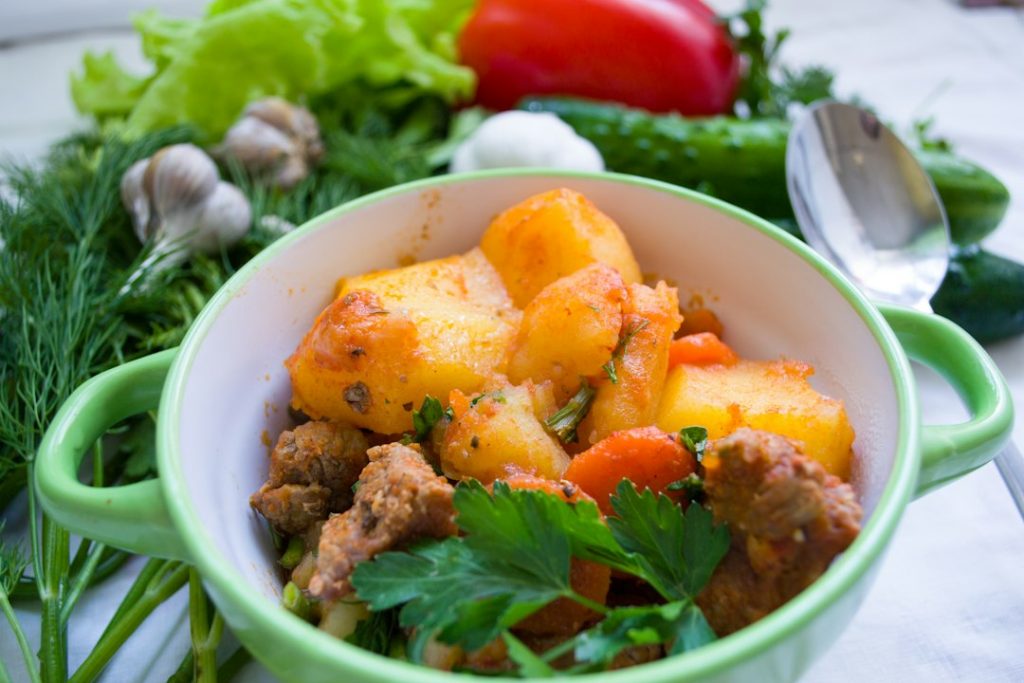
There’s no dish more Irish than a proper pot of stew. Not the fancy kind with wine reductions or exotic spices, but the real thing: mutton or lamb, potatoes, onions, and time. It’s the meal that fed generations through hard winters, quiet kitchens, and Sunday afternoons when the fire stayed lit and the house smelled like home.
Irish stew doesn’t need much, and that’s the point. It’s peasant food in the best sense—humble, honest, and built to nourish. But when you make it right, with good meat and patience, it becomes something more: a celebration of what happens when simple ingredients are treated with care.
What Makes a True Irish Stew
Traditionally, Irish stew was made with mutton—the tougher, more flavorful meat of older sheep. Lamb is more common today, especially outside Ireland, but mutton still shows up in farmhouse kitchens and country pubs where cooks know the difference. The meat is cut into chunks, browned if you like (though purists skip this step), and layered in a heavy pot with sliced potatoes, onions, and sometimes carrots.
Some add a handful of pearl barley or a sprig of thyme. Some use only water, letting the ingredients speak for themselves. Others might add a splash of Guinness or a knob of butter at the end. There’s no single gospel, but there are a few rules: don’t rush it, don’t drown it, and don’t get clever with ingredients that don’t belong.
The magic happens low and slow. Two hours minimum, three if you’ve got mutton. The potatoes break down into the broth, thickening it naturally. The onions melt into sweetness. The meat turns tender enough to pull apart with a spoon.
Why It Matters Beyond the Plate
Irish stew is more than a recipe—it’s a reminder of what Irish cooking has always been about. Resourcefulness. Making the most of what you have. Taking cheap cuts and turning them into something that fills the table and keeps people coming back for more.
In cottages across the west of Ireland, stew was a one-pot meal cooked over an open hearth. The pot hung from a crane over the turf fire, and the stew bubbled gently all afternoon. Families ate it straight from the pot with hunks of soda bread to soak up the broth. It was fuel for farmers, fishermen, and anyone working long days in the cold.
Today, you’ll find Irish stew on menus from Dublin to Doolin, often listed as a heritage dish or a nod to tradition. The best versions are still the ones made without fuss: a cast-iron pot, good ingredients, and someone who knows when to leave well enough alone.
How to Make It at Home
Start with about two pounds of lamb shoulder or neck, cut into chunks. If you can find mutton, even better—ask a butcher who sources from local farms. Layer the meat in a heavy pot with four or five medium potatoes, peeled and thickly sliced, and two large onions, also sliced. Season each layer with salt and white pepper.
Add just enough water or light stock to barely cover everything. Bring it to a gentle simmer, then drop the heat as low as it will go. Cover the pot and let it cook for at least two hours, stirring occasionally and adding a splash of water if it gets too thick. The potatoes should start to dissolve into the liquid, and the meat should be fall-apart tender.
Some cooks add a handful of chopped parsley at the end. Others finish it with a pat of butter stirred through the broth. Serve it in wide bowls with plenty of the thickened liquid and a slice of warm soda bread on the side.
Where to Taste the Best
If you’re traveling through Ireland and want to try stew made the old way, head to any pub or restaurant that takes its traditional menu seriously. Places like Nancy’s Bar in Ardara, County Donegal, or The Winding Stair in Dublin serve versions that honor the dish’s roots. In smaller towns and villages, ask locals where they go for a bowl—you’ll often end up in a cozy spot where the stew has been on the menu for decades.
Farmhouse B&Bs are another good bet. Many hosts still make stew the way their grandmothers did, using meat from nearby farms and vegetables from the garden. It’s the kind of meal that makes you slow down, stay awhile, and remember why you came to Ireland in the first place.
Irish stew doesn’t need to be dressed up or reinvented. It just needs to be made with respect for what it is: simple, sustaining, and deeply Irish. Master it once, and you’ll make it forever.
Want more stories from Ireland’s kitchens, hearths, and tables? Subscribe to the Ireland Moments newsletter—a daily celebration of Ireland, delivered to your inbox.