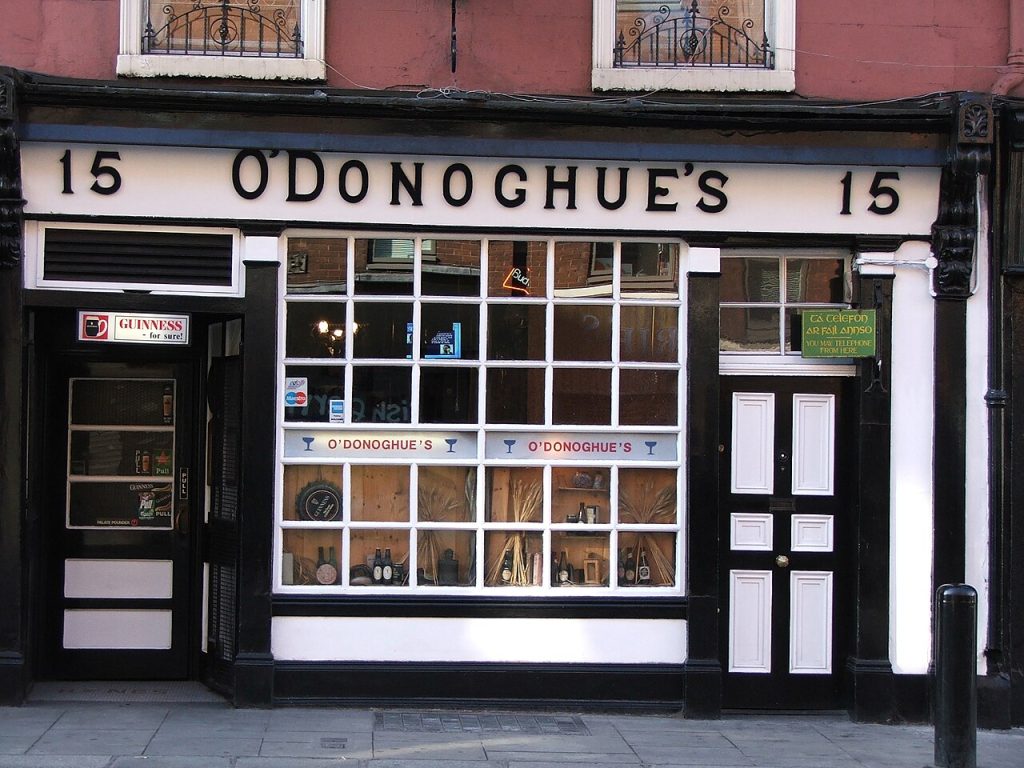
In a city filled with fine pubs and great music, O’Donoghue’s on Merrion Row holds a place all its own. This is the pub where the Dubliners first gathered in the early 1960s, where Ronnie Drew’s gravelly voice and Barney McKenna’s banjo turned a regular spot into the epicenter of Dublin’s folk revival. More than six decades later, the music hasn’t stopped.
Step inside on any night of the week and you’ll find what made this place legendary: musicians packed into corners, pints balanced on windowsills, and the kind of spontaneous energy that turns strangers into session partners. O’Donoghue’s didn’t just host music—it helped define what Irish traditional music could become in a modern city.
The Dubliners’ Living Room
When Ronnie Drew, Luke Kelly, Barney McKenna, Ciarán Bourke, and John Sheahan started playing together at O’Donoghue’s in 1962, they weren’t planning to become Ireland’s most famous folk group. They were simply doing what musicians did—gathering after hours, sharing tunes, and building something bigger than themselves.
The pub’s original owner, Paddy O’Donoghue, gave them free rein. The back room became their rehearsal space, the bar their stage. As word spread, crowds followed. By 1963, the Dubliners had a recording contract. By the end of the decade, they were international stars, but O’Donoghue’s remained their spiritual home.
Walk past the front door today and you’ll see the brass plaque commemorating their connection to the pub. Inside, photographs line the walls—black-and-white images of the band in their prime, surrounded by pints and smoke, doing exactly what still happens here every night.
Where Sessions Are Sacred
O’Donoghue’s runs traditional music sessions seven nights a week, but Monday night is when the magic really happens. Musicians arrive early to claim their spots, instruments emerge from cases, and by 9:30 p.m., the room is alive with reels, jigs, and hornpipes played at full tilt.
What makes these sessions special is their authenticity. This isn’t a show put on for tourists—though visitors are always welcome. These are working musicians, music students from the nearby colleges, and seasoned players who’ve been coming here for decades. The repertoire runs deep: “The Maid Behind the Bar,” “The Sailor’s Bonnet,” “Drowsy Maggie,” “The Bucks of Oranmore.” Standards, yes, but played with the kind of fire that reminds you why these tunes have survived centuries.
The fiddles lead, the bodhrán drives the rhythm, and guitars and bouzoukis fill out the sound. New players slip in when they know the tune, drop out when they don’t. There’s no setlist, no stage, no announcement. Just music moving through a crowded room like a living thing.
The Pub Itself
O’Donoghue’s occupies a narrow Georgian building just off St. Stephen’s Green, with the kind of well-worn intimacy that only decades of use can create. The main bar is small and dark, all wood and brass and bottles backlit against mirrors. The snug remains perfectly preserved. The back room, where the Dubliners once held court, still packs in musicians shoulder to shoulder on session nights.
Behind the bar, you’ll find a solid selection of Irish whiskeys—Jameson, Powers, Redbreast—and Guinness poured the proper way, with the settle and the second pour. The food menu keeps it simple: smoked salmon, Irish stew, toasted sandwiches. This is a drinking and listening pub, not a dining destination.
The crowd skews local during the week, with a healthy mix of students, musicians, and regulars who’ve been claiming the same corner stool for twenty years. Weekends bring more visitors, drawn by the pub’s reputation, but the atmosphere holds. O’Donoghue’s has a way of absorbing everyone into the session, making witnesses into participants.
Getting There and What to Know
O’Donoghue’s sits at 15 Merrion Row, a five-minute walk from St. Stephen’s Green and easy to reach from anywhere in Dublin’s city center. The pub opens daily at 10:30 a.m., but the music starts in the evening—check ahead for exact session times, though Monday nights are your surest bet.
Arrive early if you want a seat, especially on weekends. Space is tight, and once the session starts, it’s standing room only. Bring cash—it’s a traditional pub, and the ATM queue can get long. Most importantly, bring your ears and your respect. Sessions follow their own etiquette: no requests, no talking over the music, and if you play an instrument, wait to be invited in.
A pint of Guinness runs about $7, whiskey from $8 to $15 depending on your choice. There’s no cover charge, no minimum, just the expectation that you’ll buy a drink and let the music do its work.
More than sixty years after the Dubliners first plugged in their amps and tested the limits of Paddy O’Donoghue’s patience, this pub remains what it’s always been: a place where Irish music lives, breathes, and refuses to sit still. Every session is a continuation of something that started long before you walked in and will keep going long after you leave.
Want more stories from Ireland’s best sessions, pubs, and traditions? Subscribe to the Ireland Moments newsletter—a daily celebration of the Emerald Isle, delivered to your inbox each morning.