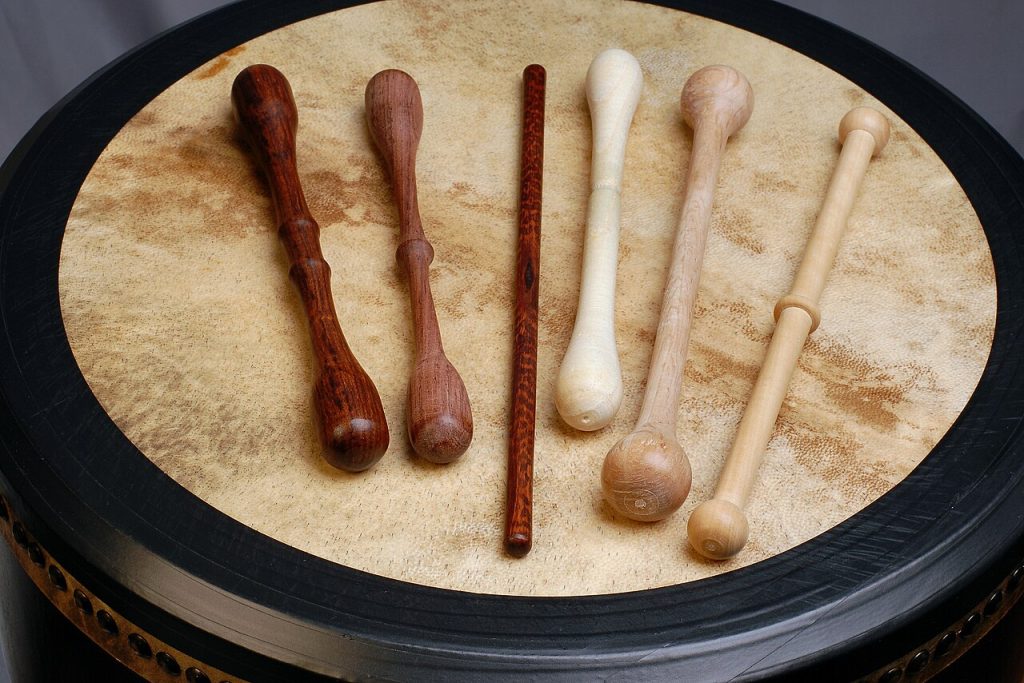
Walk into any Irish pub where a trad session is underway and you’ll hear it before you see it: the deep, resonant thump of the bodhrán, driving the rhythm beneath fiddles, flutes, and whistles. This circular frame drum, held in one hand and struck with a wooden beater called a tipper or cipín, is the heartbeat that holds traditional Irish music together.
The bodhrán (pronounced “bow-rawn”) may look simple, but in the hands of a skilled player, it becomes a living, breathing force that can lift a jig, anchor a reel, or add a mournful pulse to a slow air. It’s one of Ireland’s most distinctive instruments, and its story is as layered as the rhythms it creates.
A Drum Born of the Land
The bodhrán’s origins are humble and practical. For centuries, Irish farmers and fishermen used shallow frame drums made from goatskin stretched over wood for tasks like winnowing grain or carrying turf. Some were used in Wren Day processions on St. Stephen’s Day, when groups of mummers traveled from house to house with music and song.
It wasn’t until the 1960s folk revival that the bodhrán was fully embraced as a serious musical instrument. Pioneering players like Seán Ó Riada and later Johnny “Ringo” McDonagh of De Dannan brought the drum into the spotlight, proving it could do far more than keep time. They showed that the bodhrán could swing, syncopate, and add texture, transforming it into an essential voice in the traditional ensemble.
Today, the bodhrán is synonymous with Irish music worldwide, played everywhere from intimate kitchen sessions in County Clare to concert stages across the globe.
How the Bodhrán Is Played
Unlike many drums, the bodhrán is played with one hand inside the drum, pressing against the skin to change pitch and tone, while the other hand strikes the surface with a double-ended stick. The player’s inner hand does much of the work, dampening or releasing the skin to create a variety of sounds: sharp cracks, rolling bass tones, and everything in between.
Good bodhrán playing is about restraint as much as rhythm. The best players know when to drive the music forward and when to pull back, letting the melody instruments breathe. In a session, the bodhrán should support, not dominate. A sensitive player listens closely, matching the energy of the tune and adding accents that lift the music without overpowering it.
Master players like John Joe Kelly, Colm Murphy, and Caroline Corr have each brought their own styles to the drum, from intricate triplet rolls to driving, percussive grooves. Watching a skilled bodhrán player is mesmerizing: their hands move in a blur, yet every strike is deliberate, musical, and full of feeling.
Where to Hear the Bodhrán
The best place to hear the bodhrán is in a live trad session. Head to pubs like Gus O’Connor’s in Doolin, County Clare, or Tigh Coilí in Galway, and you’ll find bodhrán players sitting shoulder to shoulder with fiddlers, flute players, and accordionists, all locked into the groove of a fast-paced reel or the lilt of a jig.
In County Kerry, the pubs of Dingle often feature bodhrán-driven sessions that run late into the night, while in Dublin, spots like The Cobblestone in Smithfield host some of the finest traditional musicians in the country, many of whom bring the bodhrán’s pulse into the heart of the music.
If you’re lucky enough to catch a session during a festival like the Willie Clancy Summer School in Milltown Malbay or Fleadh Cheoil na hÉireann, you’ll hear bodhrán playing at its finest, surrounded by generations of musicians who understand its power and its place.
Learning the Bodhrán
For those inspired to try their hand, the bodhrán is one of the more accessible Irish instruments to start, though mastering it takes years. A beginner-level drum costs around $80 to $150, while professional models with tunable frames and carefully selected goatskin heads can run $300 to $600 or more.
Many music shops across Ireland, including Waltons in Dublin and Custy’s Music Shop in Ennis, offer lessons and advice for beginners. Online tutorials and workshops have also made learning easier, but nothing beats sitting in on a session and feeling the rhythm firsthand.
The key is to listen. The bodhrán is not a solo instrument. It thrives in community, in conversation with other musicians, and in the shared energy of a tune played together.
The Soul of the Session
The bodhrán may be made of wood and skin, but its real material is rhythm, memory, and connection. It carries the pulse of the land, the roll of the sea, and the footfalls of dancers long gone. In the right hands, it doesn’t just keep time—it creates it, bending and stretching to match the mood of the music and the moment.
Whether you’re tapping your foot in a Galway pub or closing your eyes to a recording of Planxty or The Chieftains, the bodhrán is there, steady and alive, reminding you that Irish music is meant to be felt as much as heard.
Want more stories celebrating the music, places, and culture of Ireland? Subscribe to the Ireland Moments newsletter and get a daily dose of the Emerald Isle delivered to your inbox.