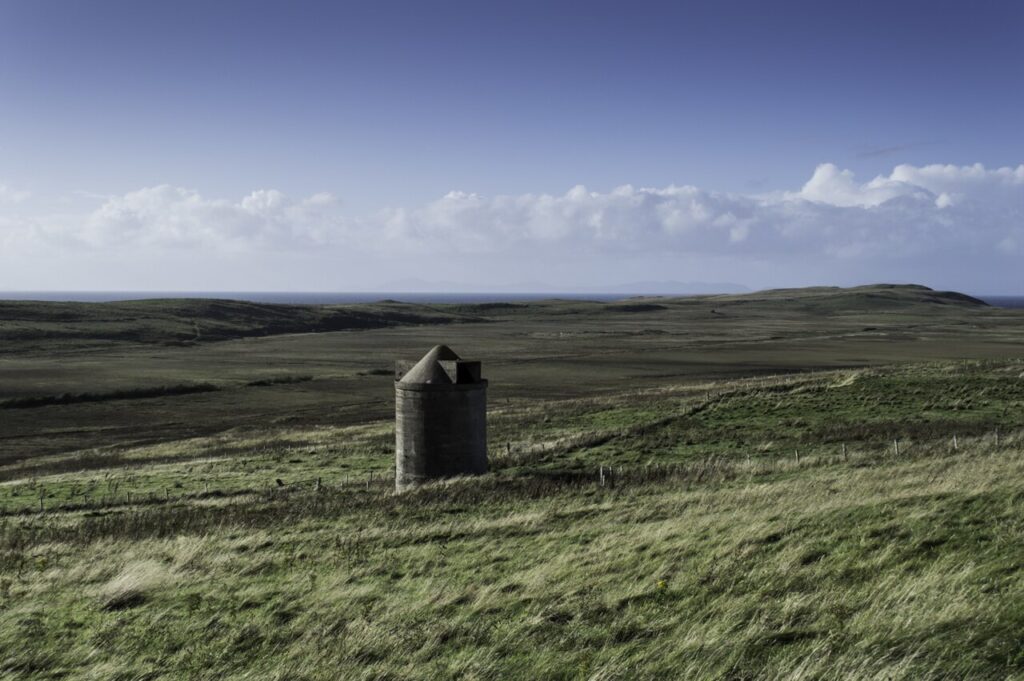
The Burren doesn’t look like Ireland. It looks like the moon decided to grow wildflowers.
Stretching across northwest County Clare, this 250-square-kilometer limestone plateau is one of Europe’s strangest and most beautiful landscapes — a place where Arctic, Alpine, and Mediterranean plants grow side by side, where ancient tombs rest on bare stone hills, and where the rock itself seems to breathe.
The name comes from the Irish Boíreann, meaning “great rock” — and that’s exactly what it is. Miles of cracked grey limestone pavement, fissured into geometric blocks called clints and grykes, spread beneath enormous skies. It’s stark, surreal, and utterly mesmerizing.
A Landscape Carved by Ice and Time
The Burren was formed over 350 million years ago when this part of Ireland lay beneath a tropical sea. Layer upon layer of shell and coral built up, compressed into limestone. Then the ice came. Glaciers scraped the land clean, leaving behind the bare, fissured pavement we see today.
But the Burren is far from barren. Those deep cracks — the grykes — shelter more than 700 species of wildflowers, including 23 of Ireland’s 27 native orchid species. In spring and early summer, the grey stone erupts with color: gentians, bloody cranesbill, mountain avens, and the rare dense-flowered orchid all bloom here, often within inches of each other.
It’s a botanical paradox. Plants that normally grow thousands of miles apart thrive together because the Burren’s microclimates — created by those limestone cracks — shelter them from wind and cold while holding warmth from the Gulf Stream.
Ancient Stones and Sacred Sites
The Burren has been home to humans for more than 6,000 years, and their marks are everywhere. More than 70 megalithic tombs dot the plateau, including the stunning Poulnabrone Dolmen — a 5,000-year-old portal tomb balanced on slender limestone legs. Standing alone against the sky, it’s one of Ireland’s most iconic ancient monuments.
There are ring forts, stone churches, and holy wells hidden among the rocks. The 12th-century Corcomroe Abbey sits in a green valley surrounded by limestone hills, its stonework carved with floral designs that mirror the wildflowers growing outside. And high above Ballyvaughan, the Cathair Dhún Iorghuis stone fort commands views across Galway Bay.
Walking here feels like moving through layers of time. Every stone has a story.
How to Experience the Burren
The best way to understand the Burren is on foot. The Burren Way is a 123-kilometer waymarked trail that runs from Ballyvaughan to Liscannor, passing through the heart of the plateau. Even a short walk along any section reveals the landscape‘s magic — the crunch of limestone underfoot, the sudden burst of color in a crevice, the silence broken only by wind and skylarks.
Stop at the Burren Visitor Centre in Kilfenora to learn about the geology, wildlife, and human history. The nearby Poulnabrone Dolmen is a must-see, especially at sunrise or sunset when the light turns the stone gold.
For wildflowers, visit between May and August. For solitude and drama, come in autumn or winter when mist rolls across the hills and the stone gleams silver in the rain.
Don’t miss the villages that ring the Burren: Ballyvaughan for seafood and hospitality, Doolin for traditional music, and Lisdoonvarna for its quirky charm. The Wild Atlantic Way runs along the Burren’s western edge, linking the plateau to the Cliffs of Moher and the coastal drama of County Clare.
Why the Burren Matters
The Burren is a reminder that Ireland contains multitudes. It’s a place that refuses easy categories — neither mountain nor plain, neither fertile nor barren, neither ancient nor modern. It simply is, and it asks you to slow down, look closer, and see the beauty in the cracks.
It’s also fragile. Walk only on marked paths or bare rock to protect the delicate plants and archaeological sites. The Burren has survived ice ages and millennia of human presence — it deserves our care.
If you’ve never been, go. If you have, go again. The Burren changes with every season, every hour, every shift of light. It’s a landscape that gets under your skin and stays there.
Want more stories like this delivered to your inbox? Subscribe to the Ireland Moments newsletter — a daily celebration of Ireland’s places, music, food, history, and the moments that make the island unforgettable.