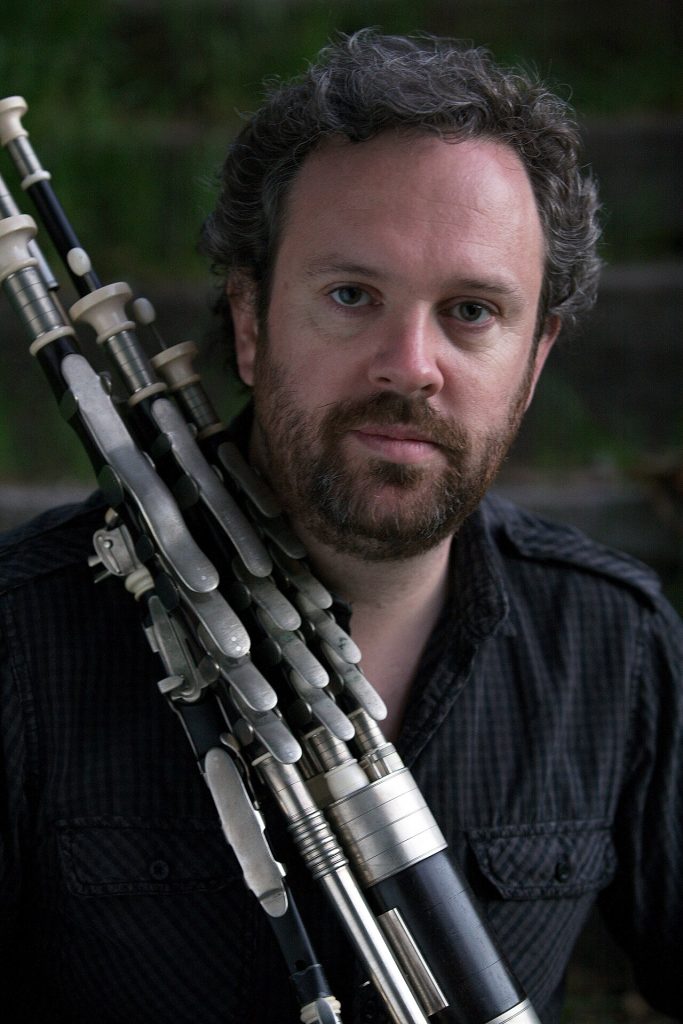
If the fiddle is the soul of an Irish session, the uilleann pipes are its heart laid bare. No other instrument in the Irish tradition carries the same emotional weight, technical complexity, or capacity to stop a room mid-conversation. Pronounced “ILL-in,” from the Irish word for “elbow,” these bellows-driven bagpipes are Ireland‘s national instrument—and hearing them played well is an experience you don’t forget.
Unlike their louder Scottish cousins, uilleann pipes are designed for intimacy. They’re played sitting down, powered by a bellows strapped under the elbow rather than by mouth. The result is a quieter, sweeter tone that can express everything from wild joy to the kind of sorrow that settles deep in your chest.
The Most Complex Bagpipe in the World
The full set of uilleann pipes includes a chanter for melody, drones for harmonic backdrop, and regulators—keyed pipes played with the wrist that add rhythmic chords. Altogether, a piper controls nine separate sound sources. It’s not unusual for players to spend a decade mastering the basics before attempting the regulators.
The chanter alone covers two full octaves, allowing pipers to play complex ornamentation—rolls, cuts, crans, and triplets—that give Irish music its distinctive lilt. In the hands of masters like Liam O’Flynn, Paddy Keenan, or Davy Spillane, the pipes can sound like a full ensemble. One moment they’re dancing through a reel; the next, they’re wringing your heart with a slow air.
You’ll find uilleann pipes featured on some of Ireland’s most iconic recordings. O’Flynn’s work with Planxty and The Bothy Band in the 1970s brought the instrument to international attention, while Spillane’s haunting opening to “A Place Among the Stones” showcased the pipes’ cinematic power.
Where the Tradition Lives
The pipes nearly vanished in the early twentieth century. By the 1960s, fewer than a dozen makers remained. Today, thanks to dedicated pipers, teachers, and organizations like Na Píobairí Uilleann in Dublin, the tradition is thriving again. Their Henrietta Street headquarters houses one of the world’s finest collections of historical pipes and serves as a teaching center, archive, and performance space.
If you want to hear the pipes live, a few places stand out. Teach Ceoil in Miltown Malbay, County Clare, during Willie Clancy Week each July becomes the global epicenter of piping. Matt Molloy’s in Westport often features pipers among its stellar session lineups. And while sessions at Hughes’ Bar in Dublin’s Chancery Street lean toward fiddles and flutes, uilleann pipes occasionally grace the corner on Sunday afternoons.
The annual Tionól gathering, hosted by Na Píobairí Uilleann each January, draws pipers from around the world for workshops, lectures, and late-night sessions. Even if you’re not a player, the concerts are open to the public and offer a rare chance to hear multiple masters in one weekend.
Why They Sound Like That
The uilleann pipes’ distinctive voice comes partly from their construction. Most chanters are made from African blackwood, though some older sets used boxwood or ebony. The drones and regulators add layers of complexity—imagine a tiny chamber orchestra wrapped around one person.
But the real magic is in the player’s touch. Because the chanter rests on the knee, a piper can create silence by lifting it, then bring notes back with perfect control. This staccato style, combined with the instrument’s wide range, allows for an expressive subtlety impossible on most bagpipes. A good piper doesn’t just play notes; they breathe phrases, shaping each tune with space, dynamics, and ornamentation that feels almost vocal.
Slow airs—mournful, unmetered melodies often adapted from Irish sean-nós singing—showcase this best. Pieces like “The Coolin” or “An Cláirseach” become meditations in a master’s hands, each note hanging in the air like morning mist over a Clare hillside.
Learning and Listening
Taking up the uilleann pipes requires patience and investment. A practice set (chanter and drones only) starts around $1,500, while a full concert set from a respected maker can exceed $15,000. Most pipers begin on the tin whistle or flute, building their ornamentation skills before transitioning to pipes.
For listeners, the best introduction is through recordings. Start with Liam O’Flynn’s “The Piper’s Call,” Paddy Keenan’s self-titled album, or the classic “The Drones and the Chanters” compilations. Each offers a window into different styles—O’Flynn’s classical restraint, Keenan’s raw power, the elegant phrasing of Seamus Ennis.
When you finally hear the pipes live—in a quiet pub corner or a festival tent—you’ll understand why they’ve held their place in Irish hearts for centuries. There’s nothing quite like them: ancient and immediate, technically demanding yet emotionally direct, capable of capturing everything Ireland feels but can’t always say.
Want more stories celebrating Ireland’s music, culture, and traditions? Subscribe to the Ireland Moments newsletter—a daily celebration of the Emerald Isle, delivered to your inbox each morning.