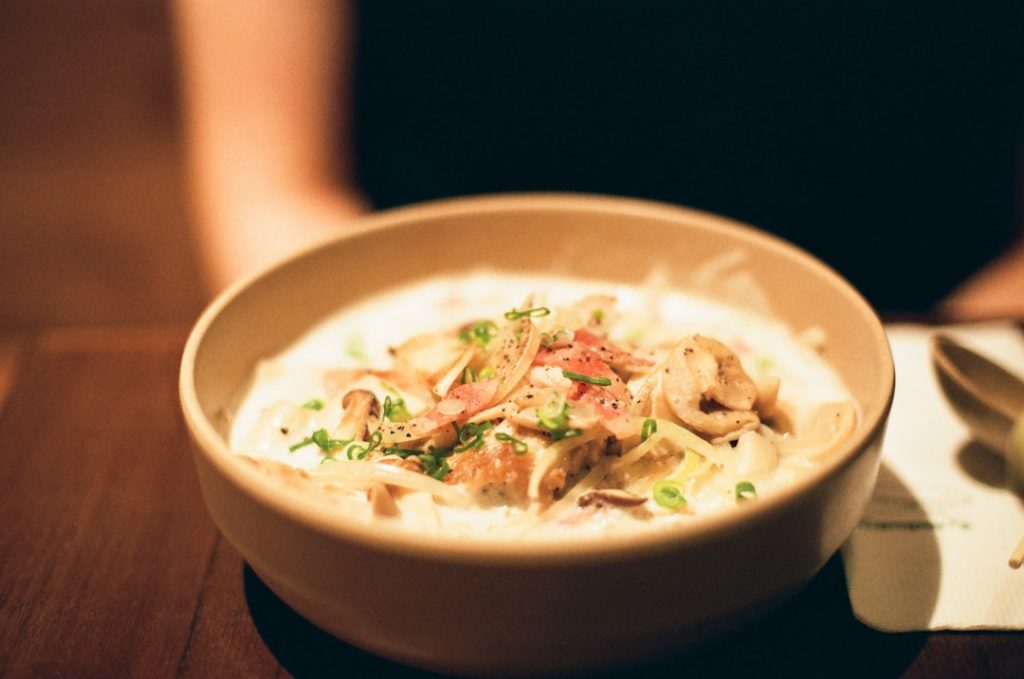
There’s a moment, somewhere between the first spoonful and the last crusty bite of brown bread, when Irish seafood chowder stops being just soup. It becomes something warmer—a taste of the Atlantic, a reflection of Ireland’s coastal soul, and proof that simple ingredients, done right, can be transcendent.
Walk into any seaside pub from Dingle to Dunfanaghy, and you’ll find it: thick, creamy, brimming with chunks of salmon, cod, mussels, and prawns, finished with a whisper of smoked haddock and fresh parsley. This is chowder the Irish way, and it’s worth every moment of your search.
What Makes Irish Seafood Chowder Different
Irish chowder isn’t trying to be New England clam chowder or Manhattan’s tomato-based cousin. It stands apart, shaped by Ireland’s cold Atlantic waters and a tradition of using what comes off the boat that morning.
The base is rich—cream and butter, sometimes a splash of white wine or a hint of leek. But it’s never heavy. The seafood stays tender, never rubbery. You’ll find flaky white fish like haddock or cod, pink salmon, plump mussels still in their shells, and sweet prawns. Some versions add scallops. The best bowls include a bit of smoked fish for depth, and always fresh herbs—parsley or chives—to cut through the richness.
What ties it all together is restraint. Irish chowder doesn’t drown the seafood. It celebrates it. Every spoonful should taste like the sea, softened by cream but never masked.
Where to Find the Real Thing
If you’re chasing the perfect bowl, head to the coasts. In Kinsale, County Cork, pubs like Fishy Fishy serve chowder that’s become legendary—thick, generous, and paired with their own brown bread. On the western edge, Moran’s Oyster Cottage near Kilcolgan in County Galway offers chowder made with shellfish pulled from Dunbulcaun Bay just outside the door.
Further north, Nancy’s Barn in Ballyliffin, County Donegal, ladles out steaming bowls to hikers coming off the Inishowen Peninsula. Down in Dingle, Out of the Blue focuses entirely on what’s been landed that day—chowder changes with the catch, and it’s all the better for it.
Even Dublin delivers. The Oar House in Howth, perched above the harbor, serves chowder with a view of the fishing boats that supplied it. It’s the kind of meal that makes you linger, even when the wind picks up.
Making It at Home
You don’t need to be on the coast to make a respectable Irish seafood chowder, but you do need good fish. Start with a mix—cod, salmon, and smoked haddock if you can find it. Add shellfish for sweetness: mussels, prawns, even a few scallops if you’re feeling generous.
Sauté diced onion, celery, and a leek in butter until soft. Add diced potatoes and cover with fish stock. Simmer until the potatoes are tender, then stir in heavy cream. Add your fish in stages—firm white fish first, then salmon, then shellfish last so nothing overcooks. Season carefully with salt, white pepper, and a bay leaf. Finish with chopped parsley.
Serve it with thick slices of Irish brown bread, butter on the side. The bread isn’t optional—it’s there to soak up every last bit of the creamy broth.
Why It Matters
Irish seafood chowder is more than comfort food. It’s a living connection to the fishing communities that have fed Ireland for centuries. It’s a dish shaped by geography—cold waters, rocky coasts, and a climate that makes a hot bowl something close to essential.
It’s also a dish that welcomes you. Whether you’re sitting in a Connemara pub after a day on the Wild Atlantic Way, or warming up in a Howth harbor café, chowder is the taste that says you’ve arrived. It’s generous, honest, and utterly Irish.
Ready to taste more of Ireland, one story at a time? Subscribe to the Ireland Moments newsletter—a daily celebration of the places, flavors, and traditions that make the Emerald Isle unforgettable.