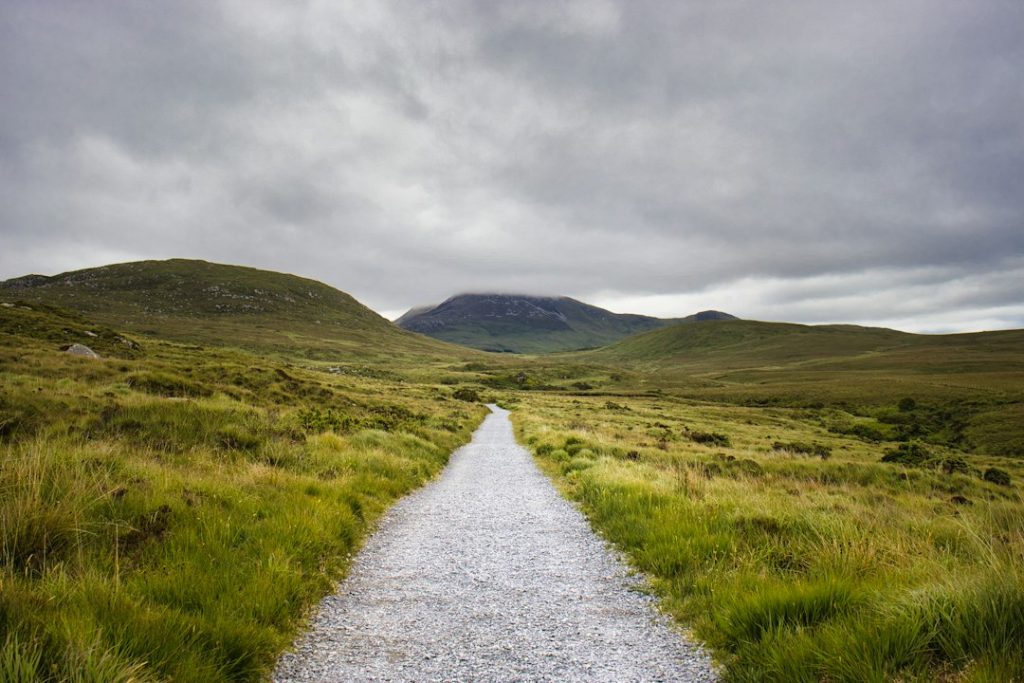
Less than an hour south of Dublin, the Wicklow Way begins in the suburb of Marlay Park and stretches 81 miles through some of Ireland‘s most stunning upland scenery. It’s the oldest waymarked trail in Ireland, established in 1980, and remains one of the most walked—and for good reason.
Unlike remote coastal routes or clifftop paths requiring careful logistics, the Wicklow Way is accessible, well-marked, and offers everything from gentle woodland strolls to challenging mountain crossings. You can walk it in sections over weekends, tackle the whole thing in five to seven days, or simply dip in for a single afternoon.
What You’ll Walk Through
The trail winds through the Wicklow Mountains, often called the “Garden of Ireland,” though that nickname undersells the wildness you’ll encounter. Early sections lead through pine forests and along old military roads built by the British after the 1798 Rebellion. You’ll cross open moorland thick with heather, skirt the edges of blanket bogs, and pass through valleys carved by glaciers thousands of years ago.
Highlights include Djouce Mountain, with its sweeping views over the Irish Sea, and the eerie beauty of the JB Malone Memorial on White Hill, honoring the founder of the trail. You’ll walk past Lough Tay, known locally as the Guinness Lake for its dark water ringed by a pale sandy beach—property of the Guinness family for generations.
One of the trail’s most iconic stretches takes you through Glendalough Valley, home to the 6th-century monastic settlement with its round tower and twin lakes. It’s a natural stopping point, with pubs, guesthouses, and the chance to rest your feet while soaking in over a thousand years of history.
Why Walkers Keep Coming Back
The Wicklow Way strikes a rare balance. It’s challenging enough to feel like an achievement—expect steep climbs, boggy patches, and weather that can shift from sunshine to mist in minutes—but it’s forgiving enough for walkers without expedition experience. The trail is clearly waymarked with yellow arrows and wooden posts, and you’re never far from a village or road if you need to bail out or resupply.
Accommodation is plentiful. You’ll find everything from budget hostels to farmhouse B&Bs where the hosts know the trail inside out and will happily dry your boots overnight or pack you a lunch. Many walkers use baggage transfer services, letting them hike with just a daypack while their gear is shuttled ahead.
The trail also offers flexibility. Popular sections include the Marlay Park to Knockree stretch (about 12 miles) or the Glendalough to Glenmalure leg, which takes you deep into the valley along the Glenealo River. If you only have a day, the Glendalough circuit—though not technically part of the Way—gives you a taste of the same landscape.
What to Know Before You Go
The Wicklow Way is walkable year-round, but spring through early fall offers the best conditions. Summer brings long daylight hours and blooming heather; autumn paints the hills gold and bronze. Winter is quieter and dramatic, but expect shorter days, colder temperatures, and muddier trails.
Pack layers. Even in summer, temperatures drop quickly at elevation, and rain is a frequent companion. Waterproof boots are non-negotiable—sections of the trail cross boggy ground, and after a wet spell, you’ll be grateful for the grip and protection. Bring a map or download the trail onto a GPS app; while waymarking is generally good, it’s easy to lose your bearings in mist.
Most walkers start in Marlay Park and finish in Clonegal, County Carlow, heading south. This puts the prevailing wind at your back and saves some of the most scenic sections for the latter half. Public transport links both ends to Dublin, making it easy to return to the city without arranging a shuttle.
Budget around $50–$80 per night for guesthouses and B&Bs, though hostel options start closer to $25. If you’re arranging baggage transfer, expect to pay around $15–$20 per bag per day.
Why It Matters
The Wicklow Way proves you don’t need to travel to the far edges of Ireland to find wild beauty. It’s there, waiting just beyond the capital, on trails that have been walked for centuries. The old military roads you’ll follow were built to suppress rebellion; today, they’re routes to freedom, solitude, and connection with the land.
Whether you’re after a weekend escape, a weeklong adventure, or just a single day walking among mountains older than memory, the Wicklow Way delivers. It’s Ireland at its most accessible and its most raw—close enough to touch, wild enough to remember.
Love stories like this? Subscribe to the Ireland Moments newsletter for a daily celebration of Ireland’s places, culture, music, and traditions—delivered straight to your inbox.