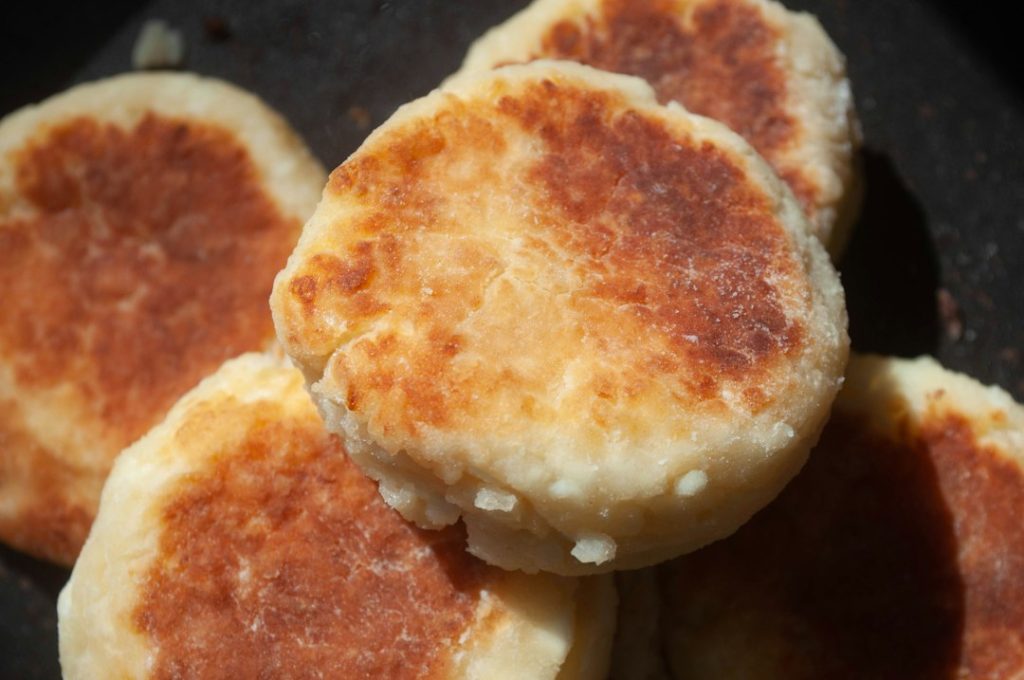
There’s a reason Irish potato cakes have survived centuries without fuss or fanfare. They’re not fancy. They don’t require exotic ingredients or complicated technique. What they do require is respect for simplicity—and an appreciation for food that tastes like home.
Made from mashed potatoes, flour, butter, and salt, potato cakes (sometimes called potato farls in the North or boxty cakes in parts of the midlands) are the kind of dish that emerges from necessity and becomes tradition. They’re what you make when there’s leftover mash in the pot and hunger at the table. And once you’ve had one hot off the griddle, slathered with butter, you’ll understand why generations have kept making them.
What Makes a Proper Potato Cake
The foundation is leftover mashed potatoes—preferably from the night before, when they’ve had time to firm up. You work in a handful of flour, a knob of butter, and a pinch of salt, kneading just enough to bring it together without overworking the dough. Roll it out to about a quarter-inch thick, cut into rounds or wedges, and cook them on a hot, dry griddle or cast-iron pan until they’re golden and crisp on the outside, soft and fluffy within.
The key is heat control. Too hot and they’ll scorch before cooking through. Too cool and they turn leaden. You want that sizzle when they hit the pan, a slight puff as the steam escapes, and those telltale brown spots that signal they’re ready to flip.
Some cooks add a bit of chopped scallion or chive. Others stick to the bare essentials. Either way, the result is the same: a round of pure comfort that pairs with almost anything.
Where They Fit on the Irish Table
Potato cakes show up everywhere in Ireland. They’re a cornerstone of the full Irish breakfast, sitting alongside rashers, sausages, black pudding, and eggs. In County Antrim and Down, potato farls are griddled fresh each morning and served in stacks, ready to soak up runny yolks and bacon fat.
But they’re not just for breakfast. Potato cakes make an excellent side for lamb stew, a base for smoked salmon and crème fraîche, or a quick snack on their own with a smear of butter and a cup of strong tea. In farmhouses across Munster and Connacht, they’ve long been a way to stretch a meal, fill hungry bellies, and make sure nothing goes to waste.
Walk into any good café in Cork, Galway, or Sligo and you’ll likely find them on the menu—sometimes called griddle cakes, sometimes just “spud cakes.” They’re never the star, but they’re always welcome.
Why They’re Worth Making at Home
The beauty of potato cakes is their flexibility. Got leftover mash? You’re halfway there. No leftovers? Boil a few floury potatoes—Rooster, Kerr’s Pink, or Golden Wonder work beautifully—mash them with a bit of butter, and let them cool while you clean up.
The dough comes together in minutes. There’s no rising, no resting, no fussing. Within twenty minutes of deciding to make them, you can be eating them. And unlike bread or pastry, there’s little risk of failure. Even a slightly thick or uneven cake still tastes good.
They’re also forgiving with add-ins. A handful of grated cheddar turns them into cheese cakes. A spoonful of mashed leek or caramelized onion adds sweetness. Some home cooks fold in cooked cabbage for a twist on colcannon cakes. The template is sturdy enough to handle improvisation.
Serving Them the Irish Way
The simplest approach is often the best. Serve them hot, with a thick slick of Irish butter melting into the surface. If you’re having them for breakfast, stack them alongside your fry-up. For lunch, top them with smoked mackerel, a poached egg, or just a drizzle of honey if you’re feeling adventurous.
In the evenings, potato cakes work beautifully as a side to roast chicken, pan-fried trout, or a bowl of bacon and cabbage. They soak up gravies and broths without falling apart, and their mild flavor lets stronger ingredients shine.
If you’re serving them to guests, consider making smaller, silver-dollar-sized cakes and topping them with crème fraîche and smoked salmon, a bit of pickled beetroot, or even apple compote. They’re humble enough for a weeknight and adaptable enough for a gathering.
Why They Endure
Irish potato cakes endure because they solve a problem and deliver satisfaction in equal measure. They’re resourceful without being stingy, traditional without being rigid, and delicious without trying too hard. In a world of complicated recipes and hard-to-find ingredients, they remind us that some of the best food comes from knowing what to do with what you already have.
Make a batch this week. Use yesterday’s potatoes. Keep it simple. And when you take that first bite—crisp edges, tender middle, butter melting through—you’ll know exactly why Irish cooks have been making them for generations.
Love stories like this? Subscribe to the Ireland Moments newsletter and get a daily celebration of Ireland delivered to your inbox—its places, people, traditions, and the little things that make the island unforgettable.