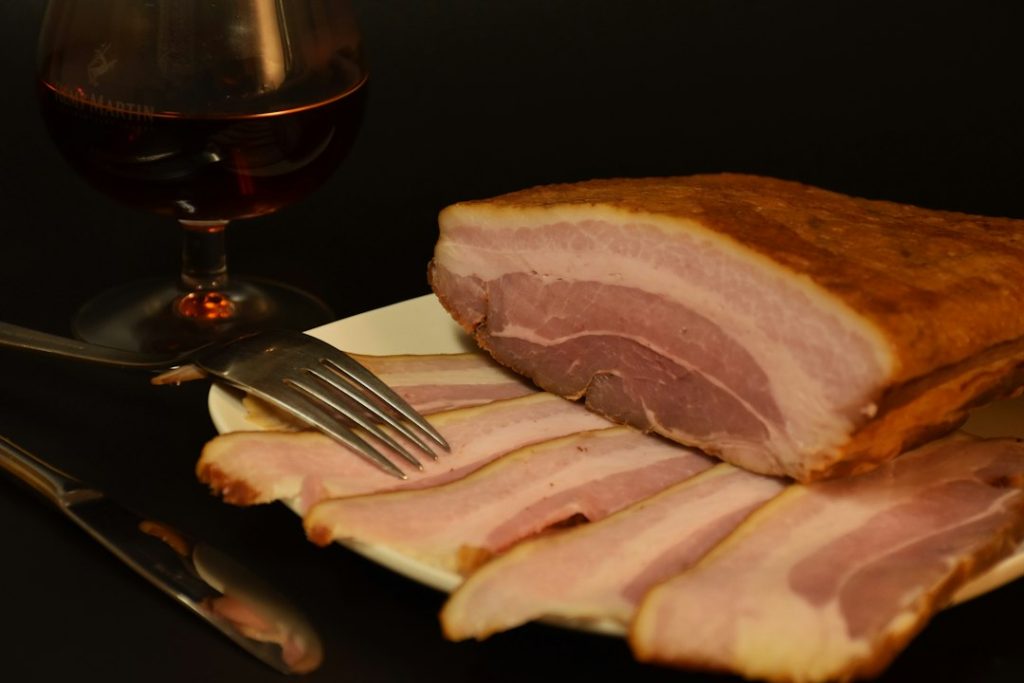
If you’ve ordered a full Irish breakfast in Dublin, Cork, or any café across the island, you’ve likely noticed something different about the bacon. It doesn’t look like the crispy strips Americans know. It’s thicker, rounder, and far meatier. That’s because Irish bacon—known locally as rashers—comes from an entirely different part of the pig.
Understanding this difference isn’t just culinary trivia. It’s central to appreciating what makes an Irish breakfast authentically Irish, and why rashers hold a beloved place on breakfast tables across the country.
What Makes Irish Rashers Different
American bacon is cut from pork belly, a fatty section that crisps up into thin, salty strips. Irish rashers, by contrast, are cut from the back of the pig—a section that includes both the loin and a bit of belly. The result is a longer, leaner piece of meat with a small tail of fat on one side.
This back bacon is cured but not smoked as heavily as its American cousin. The flavor is more savory than sweet, with a tender, almost ham-like texture in the loin portion and a slight crispness where the fat renders. It’s heartier, more substantial, and designed to anchor a plate rather than garnish it.
In Ireland, rashers are typically sold in two styles: streaky (closer to American bacon but still different) and back rashers, which dominate breakfast menus. The back rasher is what you’ll find sizzling on griddles in guesthouses from Dingle to Donegal.
The Role of Rashers in Irish Breakfast Culture
The full Irish breakfast—often called a fry or a fry-up—is a national institution. It includes rashers, sausages, black and white pudding, eggs, grilled tomato, mushrooms, and toast or soda bread. The rasher is the anchor of this plate, providing protein and flavor that balances the richness of the puddings and the earthiness of the mushrooms.
Rashers are usually fried or griddled until the fat is golden and slightly crisp, while the meat stays juicy. They’re never overcooked to the point of brittleness. The goal is tenderness with just enough chew—a texture that holds up when paired with a runny yolk or a slice of buttered toast.
Walk into any traditional Irish café—like Bewley’s on Grafton Street in Dublin or the Farmgate Café in Cork’s English Market—and you’ll see rashers cooked this way. It’s a technique passed down through generations, perfected in kitchens where breakfast is taken seriously.
Where to Find Real Irish Rashers
In Ireland, rashers are available at any butcher or supermarket. Brands like Denny, Galtee, and Clonakilty are household names, with Clonakilty earning particular respect for its traditionally cured rashers made in West Cork.
For visitors, the best way to experience authentic Irish bacon is to order a full Irish breakfast at a family-run café, a traditional hotel, or a B&B. Places like Galway’s Ard Bia at Nimmo’s, Kinsale’s Fishy Fishy Café, or any small-town guesthouse will serve rashers done right—crisp on the edges, tender in the center, and never greasy.
If you’re cooking at home outside Ireland, sourcing real Irish rashers can be tricky. Some specialty Irish food importers ship Clonakilty and Denny products internationally, though prices run higher due to shipping. Canadian bacon is sometimes suggested as a substitute, and while it’s closer than American bacon, it’s still not quite the same. True Irish rashers have that balance of loin and belly that Canadian bacon lacks.
Why It Matters
Food is identity, and in Ireland, rashers are part of the morning ritual that connects people to place and tradition. Whether it’s a farmer starting the day before heading out to the fields, a musician recovering after a late-night session, or a family gathering around the table on a Sunday, the rasher is there.
It’s not fancy. It’s not reinvented. It’s just done well, with respect for the cut, the cure, and the role it plays on the plate. That’s the Irish way—simple, honest, and rooted in what works.
Next time you’re in Ireland, take a moment to appreciate the rasher on your breakfast plate. It’s a small thing, but it tells a bigger story about how the Irish eat, what they value, and why breakfast here feels like more than just a meal.
Love stories like this? Subscribe to the Ireland Moments newsletter—a daily celebration of Ireland delivered straight to your inbox.