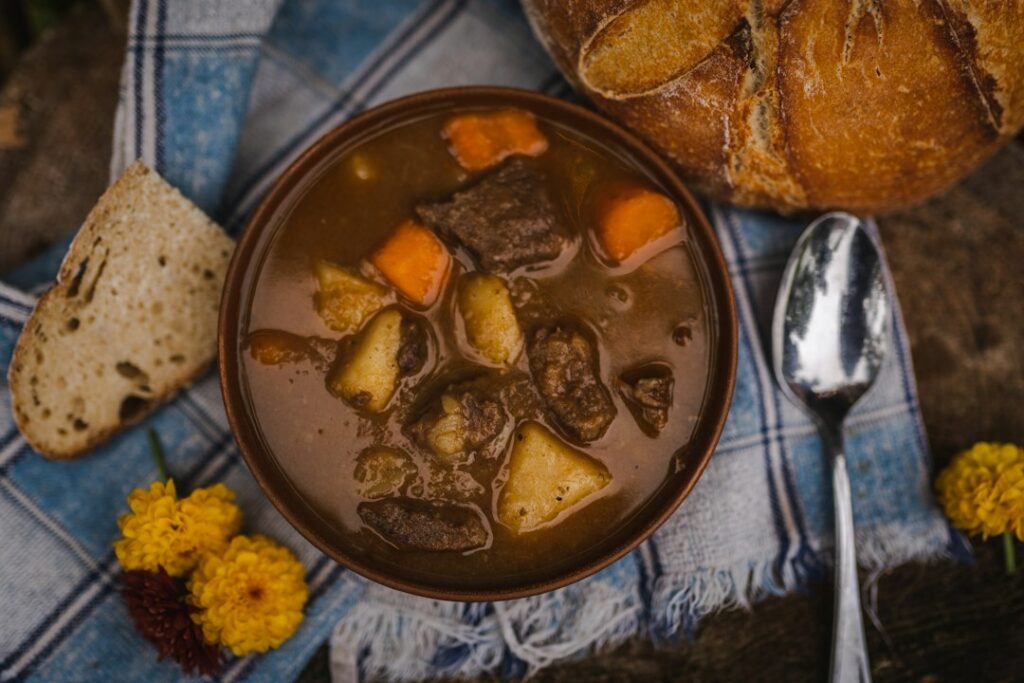
There are dishes that feed you, and then there are dishes that hold you. Irish stew belongs firmly in the second category. Made with nothing more than lamb, potatoes, onions, and time, this one-pot wonder has warmed Irish homes for centuries, turning humble ingredients into something that feels like a hug from the inside out.
No cream, no wine, no fancy stocks. Just good meat, good spuds, and the patience to let them work their magic together. That’s the genius of Irish stew — and why it remains the dish every Irish cook has in their repertoire, passed down through kitchens and generations without fuss or ceremony.
The Beauty of Less
Irish stew was born from necessity. In a country where sheep grazed on every hillside and potatoes grew in every patch of earth, these ingredients weren’t just available — they were survival. Farmers and laborers needed meals that could simmer unattended while they worked, that could stretch to feed a family, and that required nothing more than a pot hung over the fire.
The traditional version uses mutton — older sheep with deeper flavor — along with onions and floury potatoes that break down into the broth, thickening it naturally. No flour, no roux, no thickening agents. The potatoes do the work, dissolving at the edges and creating a rich, cloudy liquid that clings to every piece of meat.
Some cooks add carrots or parsnips. Purists will tell you that’s not proper stew. But in truth, Irish stew has always been about using what you had, and every family’s version differs slightly. The constants are lamb, potatoes, onions, water, salt, and pepper. Everything else is negotiable.
How to Make It Right
Start with bone-in lamb — shoulder or neck are ideal. The bones add flavor and body to the broth. Brown the meat if you like a deeper taste, or go the traditional route and skip that step entirely, letting everything simmer together from the start.
Layer your ingredients: meat on the bottom, then onions, then potatoes, seasoned as you go. Add just enough water to cover. Bring it to a gentle boil, then drop it to the lowest simmer you can manage. Cover the pot and let it cook for at least two hours, preferably three.
The magic happens slowly. The lamb becomes tender enough to pull apart with a spoon. The onions melt into sweetness. The potatoes on top stay whole and fluffy, while the ones below dissolve into the liquid, creating a broth that’s thick, pale, and deeply savory.
Some cooks finish it with a handful of chopped parsley. Others add a pinch of thyme. But the dish doesn’t need embellishment. It’s perfect as it is — simple, honest, and completely satisfying.
Where to Taste the Best
You’ll find Irish stew on menus across the country, from Dublin pubs to village kitchens. At The Winding Stair in Dublin, they serve it with soda bread for soaking up every drop. Ard Bia at Nimmo’s in Galway offers a version made with Connemara lamb that’s as tender as it gets. And at The Oar House in Howth, the stew comes with a view of the harbor and fishing boats that brought in the day’s catch — though it’s the lamb, not the fish, that takes center stage here.
But the truth is, the best Irish stew is often found in homes, not restaurants. It’s the dish grandmothers make on cold afternoons, the meal that appears after a long day, the recipe every Irish cook knows by heart even if they’ve never written it down.
Why It Endures
Irish stew isn’t trying to impress anyone. It doesn’t need exotic spices or complex techniques. It’s the kind of food that reminds you why people cook in the first place — not to show off, but to nourish, to comfort, to gather around a table and share something warm.
In a world of elaborate recipes and Instagram-ready plates, Irish stew stands as a quiet rebuke. It says that good food doesn’t have to be complicated. That flavor comes from time and care, not from a long list of ingredients. That sometimes, the best meals are the ones that have been made the same way for generations, because they got it right the first time.
Serve it in deep bowls. Eat it with thick slices of soda bread, still warm and slathered with butter. Pour a pint of stout or a cup of strong tea. And take your time. Irish stew isn’t fast food — it’s slow food in the best sense, made to be savored and remembered.
Love stories like this? Subscribe to the Ireland Moments newsletter and get a daily celebration of Ireland — its food, music, places, and traditions — delivered to your inbox every morning.