Carlingford doesn’t announce itself. There’s no grand entrance, no highway signage counting down the kilometers. You round a bend on the R173, and suddenly the Cooley Mountains rise to your left, Carlingford Lough spreads silver to your right, and before you sits a village that looks like it wandered out of the 13th century and decided to stay.
This is County Louth’s best-kept secret—a medieval trading port where narrow streets still follow Viking-era layouts, where castle ruins punctuate harbor views, and where the pubs serve oysters pulled from the lough that morning.
A Village Built by Vikings and Normans
Carlingford’s story begins with the Vikings, who recognized the natural harbor’s strategic value and established a settlement here over a thousand years ago. The town’s name comes from the Norse “Kerlingfjörðr”—the narrow sea inlet of the hag, referring to a legendary witch said to have leapt across the lough.
The Normans arrived in the 12th century and transformed Carlingford into one of medieval Ireland’s most important ports. They built King John’s Castle on a rocky outcrop overlooking the lough around 1200, creating a fortress that still dominates the waterfront. The D-shaped structure, with walls up to 20 feet thick, commanded shipping traffic between Ireland and Scotland.
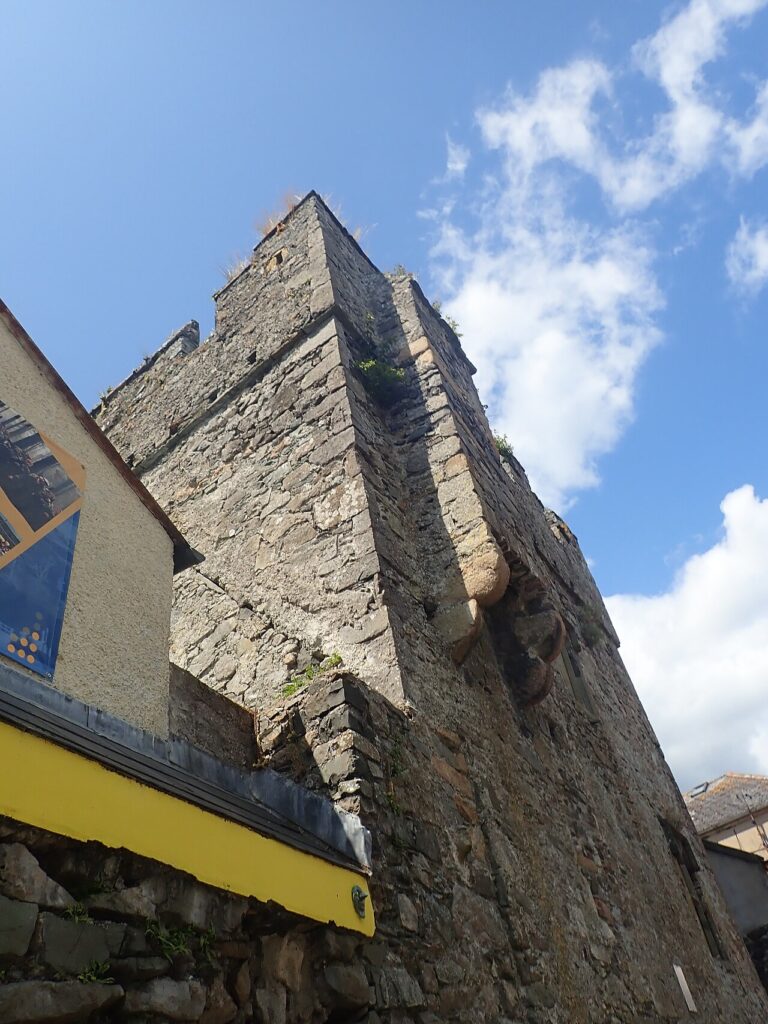
Walk Tholsel Street, and you’re following the same medieval route that merchants traveled 800 years ago. The Mint, a fortified townhouse from the 1460s, stands remarkably intact with its defensive turrets and Celtic-style windows. The Tholsel Gate, one of the town’s original entrances, still frames views of the mountains beyond.
These aren’t reconstructions or tourist attractions—they’re the actual buildings, still integrated into daily village life, with homes and businesses operating alongside ruins that pre-date the discovery of the Americas.
Where the Mountains Meet the Lough
Carlingford sits in one of Ireland’s most dramatic natural settings. The Cooley Peninsula forms a mountainous finger pointing into the Irish Sea, with Slieve Foye rising 1,935 feet directly behind the village. On clear days, the Mourne Mountains across the lough in County Down create a backdrop so perfect it seems arranged by a set designer.
The Táin Trail, a 25-mile walking route through the Cooley Mountains, passes through Carlingford and climbs to Slieve Foye’s summit. The trail follows the route of the Táin Bó Cúailnge, Ireland’s greatest epic, through landscape that hasn’t changed much since Cúchulainn supposedly defended Ulster here.
The lough itself is a designated Special Area of Conservation, its sheltered waters producing some of Ireland’s finest oysters. Carlingford Lough oysters have been harvested here since medieval times, and they remain central to the village’s identity and economy.
Oysters, Pubs, and Medieval Festivals
Every August, the Carlingford Oyster Festival transforms the village into a celebration of food, music, and maritime heritage. Oyster-shucking competitions draw international competitors, while the Oyster Pearl competition crowns a festival queen in a tradition dating back decades. Street sessions spill from pubs like PJ O’Hare’s and The Oystercatcher, where the oysters cost around $18 per half-dozen and arrive with nothing but lemon and Tabasco.
The village’s restaurants make full use of the lough’s bounty. Ghan House, a Georgian manor turned boutique hotel and cookery school, serves tasting menus featuring Carlingford oysters, Cooley lamb, and Irish seaweed foraged from nearby shores. Magee’s Bistro on Tholsel Street offers similar fare in a more casual setting, with outdoor tables that catch the evening sun reflected off the lough.
The Medieval Festival each August recreates the village’s Norman past with costumed reenactors, medieval markets, and demonstrations of period crafts in the shadow of King John’s Castle. It’s history without the stuffiness—more village celebration than academic exercise.
A Village That Earns Your Discovery
Carlingford sits just 90 minutes from Dublin and less than an hour from Belfast, yet it feels removed from both. There’s no train station, no bypass highway, no reason to pass through unless you’re coming specifically to be here. That geography has protected it from the kind of development that smooths away medieval quirks in favor of parking lots and chain hotels.
The village works best as a overnight destination. Book a room at the Carlingford House or the Four Seasons Hotel, spend the late afternoon walking the heritage trail that connects the medieval buildings, then settle into a harbourfront pub as the sun drops behind Slieve Foye and the lights begin to glow across the lough in Warrenpoint.
Morning brings the oyster boats returning to harbor, the smell of soda bread from McKevitt’s Village Hotel, and the realization that Carlingford has been here all along, quietly preserving what most villages lost centuries ago.
Want more stories from Ireland’s hidden corners and timeless villages? Subscribe to the Ireland Moments newsletter—a daily celebration of Ireland delivered to your inbox each morning.