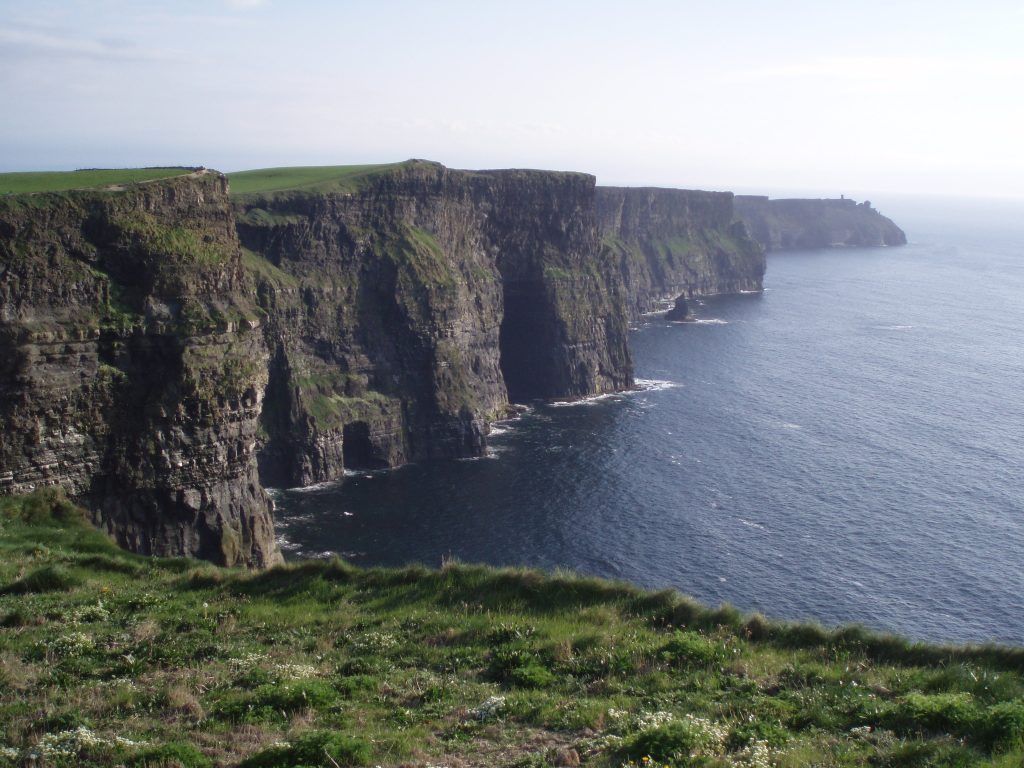
The Cliffs of Moher rise from the Atlantic like a fortress wall, stretching five miles along County Clare’s western coast. At their highest point, they soar 702 feet above the waves—tall enough that puffins nest halfway down and still have room to dive. On a clear day, you can see the Aran Islands, Galway Bay, and the Twelve Bens of Connemara. On a stormy one, the spray climbs halfway up the rock face.
More than 1.5 million people visit these cliffs each year, making them Ireland’s most popular natural attraction. But numbers don’t diminish the experience. Stand at the edge, feel the wind push back, and watch the gannets wheel below—it’s impossible not to be moved.
What Makes These Cliffs Different
The Cliffs of Moher aren’t just tall. They’re layered sandstone and shale, stacked over 300 million years, carved by the relentless Atlantic into columns, caves, and sea stacks. The rock face changes color with the light—gray in morning mist, gold at sunset, black when storms roll in.
O’Brien’s Tower, built in 1835 by landowner Cornelius O’Brien as a viewing platform for Victorian tourists, still stands at the cliffs’ highest point. For a small fee (around $3), you can climb it for a 360-degree view. On a perfect day, you’ll spot the Blasket Islands to the south and Loop Head to the north.
But the real drama happens at the cliff edge itself. The official viewing areas have protective barriers, but walk north or south along the coastal path and you’ll find stretches where it’s just you, grass, and a straight drop. Use common sense—the edge crumbles, the wind gusts without warning, and people have died getting too close for photos.
The Best Ways to Experience Them
Most visitors arrive at the main visitor center, which is built into the hillside and does a solid job of explaining the geology, wildlife, and history without overwhelming you before you see the real thing. Admission is around $10 per adult, includes parking, and gets you access to the viewing platforms and cliff-top paths.
If you want fewer crowds, come early—before 9 a.m.—or late, after 5 p.m. in summer. The light is better then anyway. Or visit in winter, when Atlantic storms turn the sea into a cauldron and tourist buses stay away. Dress for wind and rain regardless of forecast.
The cliff walk from Doolin to the Cliffs of Moher and onward to Hag’s Head is one of Ireland’s finest coastal hikes. It’s about eight miles one way, mostly along the cliff edge, with views that make you stop every hundred yards. You can start from either end—from Doolin, it’s a gradual climb; from the visitor center toward Hag’s Head, it’s quieter and wilder.
From the water, the cliffs are even more impressive. Several operators in Doolin offer boat trips that run right along the base, into sea caves, and past nesting seabirds. You’ll see the cliffs as the puffins do. Trips run from April through October, cost around $20, and depend entirely on sea conditions.
The Wildlife You’ll See
The Cliffs of Moher are a Special Protection Area for seabirds. More than 20,000 birds nest here every year, including razorbills, guillemots, kittiwakes, and—most famously—puffins. The puffins arrive in April and stay through July, nesting in burrows along the grassy slopes and cliff ledges. Bring binoculars if you want a good look; they’re smaller than you expect and spend most of their time bobbing on the water or flying low and fast.
Peregrine falcons nest here too, the fastest birds on earth. If you see something drop like a stone toward the sea, it’s probably a peregrine diving on prey. Choughs—rare red-billed crows—tumble and call along the cliff tops, and if you’re lucky, you might spot a dolphin or basking shark offshore.
Plan Your Visit Right
The Cliffs of Moher sit on the Wild Atlantic Way, about an hour’s drive from Galway and 90 minutes from Shannon Airport. They’re an easy day trip from either, but if you have time, stay in Doolin or Liscannor and explore the wider area—the Burren is 20 minutes north, and the coastal villages along this stretch are worth lingering in.
Wear layers, even in summer. The wind at the cliff edge is constant and cold. Sturdy shoes are essential if you’re walking the paths. And if you’re afraid of heights, stick to the paved areas near the visitor center—the cliff-edge paths are not for you.
There’s a café at the visitor center with decent coffee and soup, but for a better meal, head to Doolin or Liscannor. Gus O’Connor’s Pub in Doolin serves excellent seafood chowder and often has traditional music in the evenings.
The Cliffs of Moher are everything people say they are—dramatic, beautiful, humbling. They’re also accessible, well-managed, and surrounded by some of Ireland’s best landscape. You’ll share them with crowds, especially in summer, but stand at the edge as the sun drops toward the Atlantic, and none of that matters. It’s just you, the rock, the sea, and the wind.
Want more stories like this delivered to your inbox? Subscribe to the Ireland Moments newsletter—a daily celebration of Ireland’s places, culture, music, and the stories that make the island unforgettable.