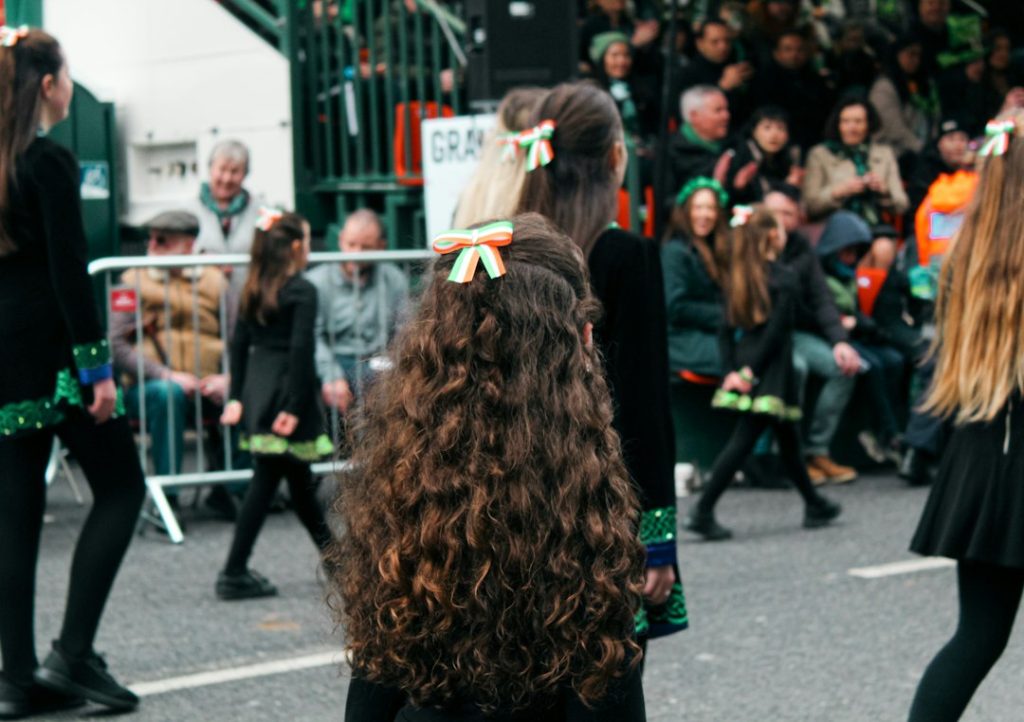
Walk into a céilí anywhere in Ireland on a Friday night and you’ll find something that’s been happening for centuries: complete strangers linking arms, laughing through mistakes, and moving together to reels and jigs that seem to know exactly how fast a heart should beat.
Céilí dancing—Ireland’s social folk dancing tradition—is having a moment. Not the competitive step dancing you’ve seen on stage, but the kind where everyone’s invited, no one’s watching, and the point is the craic as much as the steps.
What Makes a Céilí Different
A céilí (pronounced KAY-lee) is a social gathering centered on group dances performed to live traditional music. Unlike set dancing, which happens in fixed groups of four couples, céilí dances can involve anywhere from two people to the entire room forming long lines or circles.
The dances have names like The Walls of Limerick, The Siege of Ennis, and The Haymakers Jig. Each follows a specific pattern of movements—advances and retires, chains, arches, and swings—but the beauty is in the simplicity. You can teach someone The Waves of Tory in five minutes, and they’ll be flying through it by the second round.
There’s no stage, no audience, no performance pressure. Just a caller shouting instructions over the music, a room full of people moving in organized chaos, and the kind of breathless joy that comes from spinning under someone’s arm while a fiddle tears through a reel at full speed.
Where the Tradition Never Left
In rural Ireland—particularly in Clare, Kerry, Galway, and Donegal—céilís never really went away. Parish halls, community centers, and festival marquees have hosted them continuously, keeping the tradition alive through generations.
Glór Irish Music Centre in Ennis runs céilís every Friday night during the summer, drawing locals and visitors who spill out onto the floor when the band strikes up The Siege of Ennis. In Milltown Malbay, céilís are woven into the fabric of the Willie Clancy Summer School each July, where you’ll find world-class musicians and absolute beginners dancing side by side.
The An Droichead Culturlann in Cork hosts regular céilís where the average age has dropped noticeably in recent years. What was once seen as old-fashioned has become something younger Irish people are reclaiming—not as nostalgia, but as living culture.
Why It’s Coming Back Now
Part of the revival is practical: céilí dancing is participatory, physical, and completely offline. In a world of screens and isolation, there’s something radical about 50 people holding hands in a circle, moving to the same beat.
It’s also accessible. You don’t need lessons, a partner, or special shoes. Show up, listen to the caller, and figure it out as you go. The mistakes are half the fun—when an entire line goes the wrong direction, everyone just laughs and adjusts.
Dublin has seen a surge in céilí nights at venues like The Cobblestone and The Merry Ploughboy. Galway’s Tigh Choilí runs them weekly. Even in smaller towns like Ennis, Tralee, and Sligo, céilís that once drew a dozen regulars are now packing rooms with people in their 20s and 30s.
How to Join Your First Céilí
If you’re in Ireland and want to try, the best advice is simple: just go. Céilís are welcoming by nature. Arrive early—the caller usually teaches the first dance or two before the music gets going. Wear comfortable shoes you can move in, and don’t worry about getting it perfect.
Watch for a round or two if you need to, but don’t wait too long. The whole point is to jump in. Someone will grab your hand and pull you into a set, and you’ll learn more in three minutes of doing than in an hour of watching.
If you’re in County Clare, check out the Glór or any of the céilís during Fleadh Cheoil na hÉireann, which rotates host towns each August. In Galway, Tigh Choilí on Mainguard Street is a reliable bet. Cork’s An Droichead runs monthly céilís that are especially beginner-friendly.
And if you’re not in Ireland yet, céilí dancing has found a foothold in Irish cultural centers across the U.S., Canada, and Australia—places where the diaspora keeps the tradition alive and evolving.
Why It Matters
Céilí dancing is one of those traditions that only makes sense when you’re in the middle of it. It’s not about precision or performance. It’s about connection—to the music, to the people next to you, to something older than any individual memory.
In a céilí, a retired farmer might partner with a student from Boston, and a grandmother might swing a teenager through The Haymakers Jig, and for those few minutes, everyone is exactly equal, exactly welcome, exactly Irish—or honorary Irish, which in a céilí amounts to the same thing.
That’s why it’s coming back. Not because it’s trendy, but because it does something simple and necessary: it brings people together in a room, makes them move, makes them laugh, and reminds them what it feels like to be part of something bigger than themselves.
Want more stories about Ireland’s living traditions? Subscribe to the Ireland Moments newsletter—a daily celebration of the music, culture, places, and people that make Ireland unforgettable.