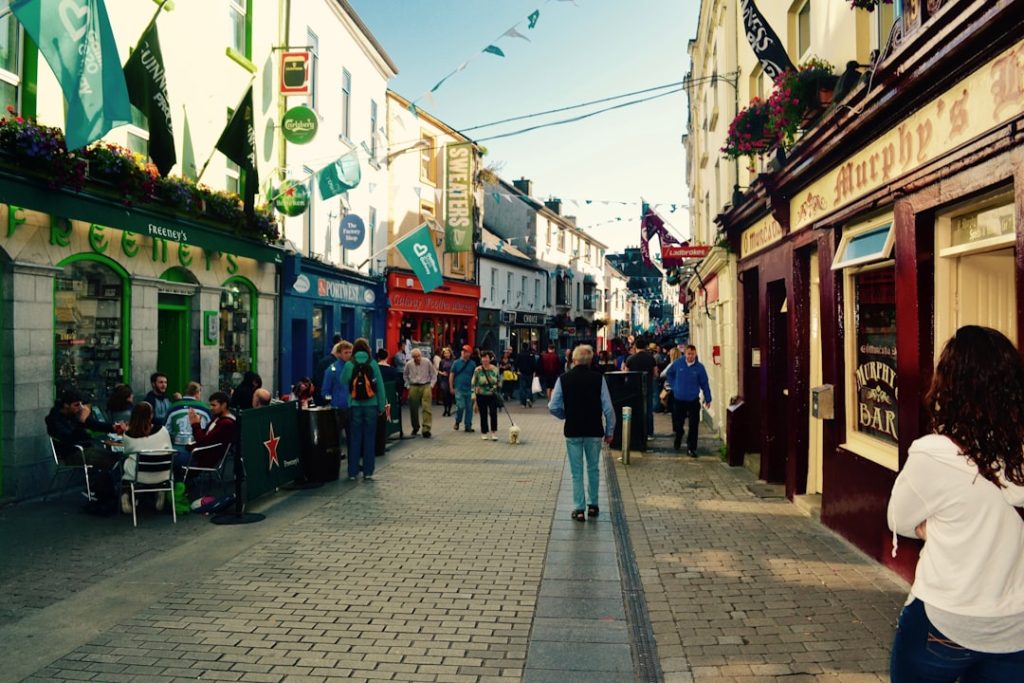
Tucked along the wild Atlantic coast of County Clare, the village of Doolin holds fewer than 300 permanent residents. But on any given night, its three famous pubs overflow with fiddles, flutes, and bodháns—and the crowd singing along knows every word. This is Ireland’s unofficial capital of traditional music, and it has earned that title one session at a time.
Doolin sits just a few miles from the Cliffs of Moher, but visitors who rush past on their way to the cliffs miss something essential. This village has drawn musicians for generations, creating a living tradition that continues to evolve while honoring its roots.
The Three Pubs That Made Doolin Famous
Doolin’s reputation rests on three establishments, each with its own character and loyal following. Gus O’Connor’s Pub, opened in 1832, is the oldest and perhaps most photographed, with its whitewashed walls and thatched roof. The music here starts around 9:30 PM most nights, and the acoustics in the low-ceilinged room make every note feel intimate.
Down the road, McDermott’s has been run by the same family since the 1920s. The music is traditional in the truest sense—no amplification, no setlist, just players who know each other’s rhythms. On summer nights, the crowd spills out onto the street between sets.
McGann’s, the third pillar of Doolin’s music scene, occupies a larger space and often hosts musicians from around Ireland and beyond. The pub serves excellent seafood chowder and brown bread—fuel for the long nights of music that can stretch past midnight.
Why Musicians Keep Coming Back
What sets Doolin apart isn’t just the number of sessions, but their quality and authenticity. Top-tier musicians—people who’ve recorded albums and toured internationally—show up to play alongside talented locals and respectful visitors. The standard is high, but the atmosphere remains welcoming.
The village has produced its own musical legends, including the Micho Russell family, whose influence on Irish flute playing extends far beyond Clare. The Russell Heritage Centre, located in the village, preserves their memory and offers workshops during summer months.
Geography plays a role too. Doolin’s location on the Wild Atlantic Way means musicians traveling the coast often stop here, creating unexpected collaborations. A Tuesday night in October might feature a fiddler from Cork, a button accordion player from Galway, and a singer from Dublin—all meeting for the first time over pints and finding perfect harmony.
Beyond the Music
While traditional music is Doolin’s calling card, the village offers more than sessions. The Doolin Cave contains one of the world’s longest free-hanging stalactites, stretching 23 feet from the cavern ceiling. The guided tours run year-round and last about an hour.
The coastal walking trails connect Doolin to the Cliffs of Moher in one direction and the distinctive terraced landscape of the Burren in the other. The Doolin Cliff Walk is a five-mile path that rewards hikers with stunning views and relative solitude, even in peak season.
For those interested in island life, ferries depart from Doolin Pier to the Aran Islands. Inis Oírr, the smallest of the three islands, sits just 20 minutes offshore and makes an excellent day trip. The pier itself, rebuilt after storm damage, has become a destination in its own right—a dramatic stone structure jutting into the Atlantic.
When to Visit and What to Know
Doolin welcomes visitors year-round, but the experience varies by season. Summer brings the largest crowds and the most musicians, with sessions happening seven nights a week in all three pubs. Expect standing-room-only conditions after 10 PM on weekends from June through August.
Spring and fall offer a quieter experience with equally good music. The locals return to reclaim their favorite seats, and you’ll have better luck actually conversing with the musicians between sets. Winter can be magical—storms roll in off the Atlantic, and the pubs become cozy refuges where the music feels even more essential.
Accommodation books up quickly, especially during the Russell Festival in late February, which celebrates the village’s musical heritage with workshops, concerts, and all-day sessions. Plan ahead, or consider staying in nearby Lisdoonvarna or Ennistymon and driving the short distance.
A few practical notes: sessions generally start between 9 and 9:30 PM. Arrive by 8 if you want a seat. Tipping musicians isn’t customary in Ireland—buy them a pint instead if you want to show appreciation. And remember that these are real sessions, not performances staged for tourists. Respectful silence during tunes, enthusiastic applause after, and joining in on chorus songs when invited are all part of the etiquette.
Whether you play an instrument, sing, or simply love Irish music, Doolin offers something rare: a place where tradition thrives without becoming a museum piece. The music here is alive, passed from one generation to the next in smoky pubs where the pints are cold and the welcome is warm.
Want more stories from Ireland’s towns, villages, and hidden corners? Subscribe to the Ireland Moments newsletter for a daily celebration of the Emerald Isle delivered to your inbox.