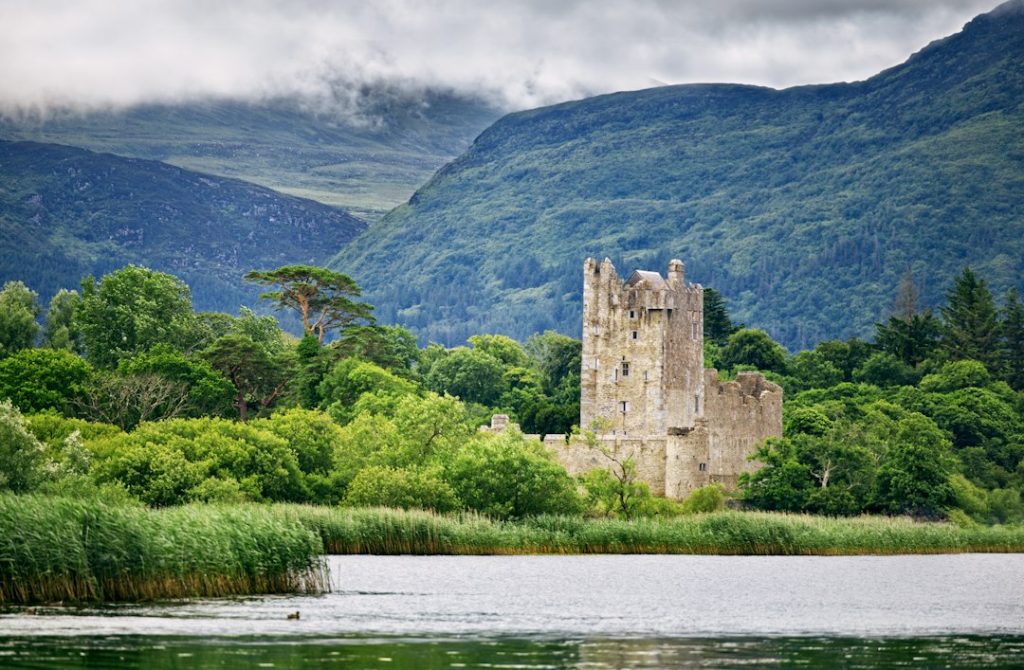
There’s something about approaching Ross Castle by boat that makes the centuries fall away. Rising from the shores of Lough Leane in Killarney National Park, this 15th-century tower house has watched over the Lower Lake for nearly 600 years, its gray stone walls reflected in water that has carried everything from medieval warships to modern pleasure boats.
Unlike Ireland’s grander castles, Ross Castle feels intimate and real. This was a home, a fortress, and a last stand all at once—and today, it’s one of Kerry’s most rewarding visits for anyone who wants to step inside Ireland’s medieval world.
A Castle Built for Defense and Daily Life
Ross Castle was built in the late 15th century by the O’Donoghue Ross chieftains, one of the most powerful Gaelic families in Munster. The tower house—a fortified residence that combined living quarters with serious defensive capability—rises four stories above the lakeshore, surrounded by a defensive bawn with circular corner towers.
What makes Ross Castle special is how complete it remains. The spiral stone staircase still climbs to the upper floors. The great hall retains its massive fireplace. Oak beams cross the ceilings, and narrow windows look out over the lake just as they did when the O’Donoghues watched for approaching enemies.
The castle’s rooms have been furnished to reflect 16th and 17th century life, with period pieces that show how a Gaelic chieftain’s family would have lived. You’ll see the contrast between the relatively comfortable upper floors—where the family resided—and the austere ground floor designed for defense and storage.
The Last Castle to Fall
Ross Castle holds a unique place in Irish history: it was one of the last strongholds to surrender to Cromwell’s Roundheads during the Irish Confederate Wars. In 1652, when much of Ireland had already fallen, Ross Castle held out under Lord Muskerry.
The castle only surrendered when General Ludlow brought warships onto the lake—fulfilling an old prophecy that Ross Castle would never be taken until a ship could sail upon the waters beneath it. The prophecy proved true, though perhaps not in the way its makers intended.
Today, guides at the castle bring this history alive with stories of siege warfare, daily medieval life, and the families who called Ross Castle home through centuries of Irish history.
The Lough Leane Experience
Ross Castle’s location on Lough Leane isn’t just scenic—it’s essential to understanding the place. The lake was a highway in medieval times, connecting Ross Castle to Innisfallen Island (home to one of Ireland’s most important early monasteries) and providing both transportation and defense.
You can take traditional wooden rowboat tours from the castle dock between April and October, exploring the lake much as medieval residents would have done. These tours, operated by local boatmen, typically run around $15 per person and last about an hour. The perspective from the water—looking back at the castle with Killarney’s mountains rising behind—is unforgettable.
The castle grounds are also the starting point for several walking trails through Killarney National Park, including paths along the lakeshore and into the ancient oak woods that once covered much of Ireland.
Planning Your Visit
Ross Castle sits about two miles from Killarney town center, easily reached by car, bike, or a pleasant walk along Ross Road. Parking is available near the castle, and the site is well-signposted from the town.
The castle interior can only be visited by guided tour, which run regularly throughout the day from mid-March through October. Tours last about 30 minutes and cost around $7 for adults. The castle grounds and lakeshore remain open year-round and are free to explore, making this a worthwhile stop even in winter when the interior tours aren’t running.
Early morning or late afternoon visits offer the best light for photography and smaller crowds. If you’re visiting in summer, consider combining your castle visit with a boat tour—the combined experience gives you both the historical detail and the landscape perspective that make Ross Castle special.
The castle is managed by the Office of Public Works and maintained to high standards. The spiral staircases are steep and narrow—authentic medieval construction—so wear sensible shoes and be prepared for tight spaces.
Why Ross Castle Matters
In a country full of castles, Ross Castle stands out for its completeness and accessibility. This isn’t a romantic ruin or a heavily restored manor house—it’s a genuine medieval tower house where you can still feel the weight of stone, climb the defender’s stairs, and look out over a landscape that hasn’t changed much in 500 years.
The castle connects you to specific moments in Irish history: the Gaelic lordships before English conquest, the wars of the 17th century, and the long relationship between Irish people and their lake and mountain landscapes. Standing in the great hall or on the roof walk, you’re not just looking at history—you’re standing inside it.
Want more stories from Ireland’s castles, lakes, and mountains? Subscribe to the Ireland Moments newsletter for a daily celebration of Ireland delivered to your inbox.