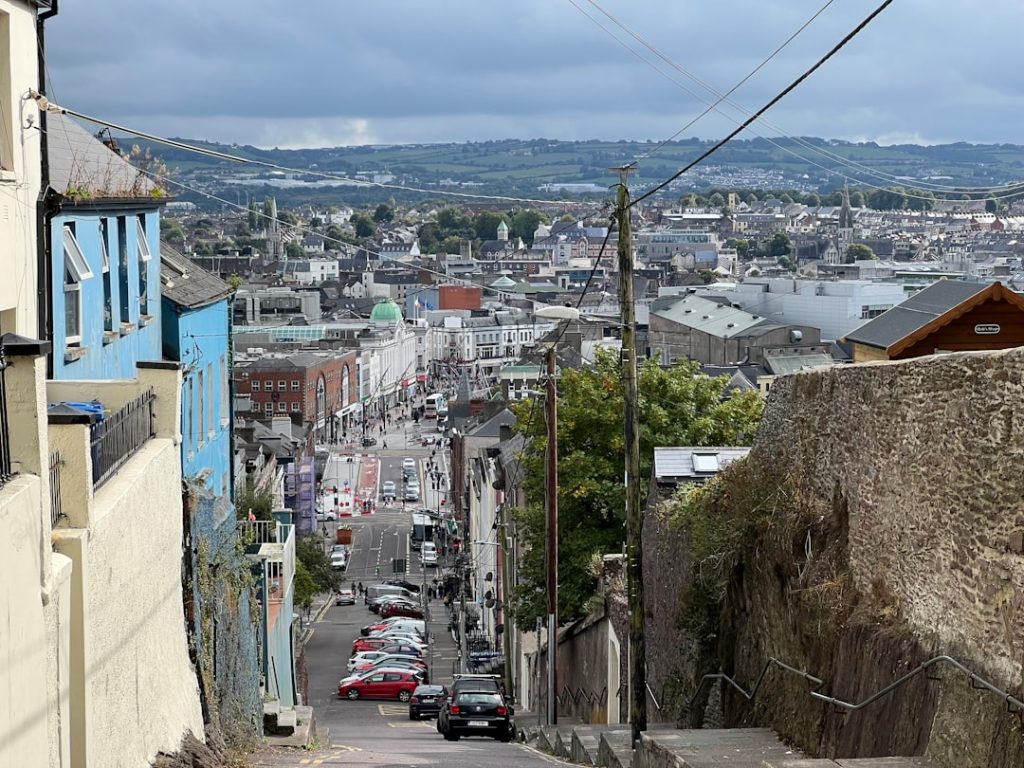
Perched on the edge of Cork Harbour, Cobh is one of those Irish towns that sneaks up on you. From a distance, you’ll spot the brightly painted row houses climbing the hillside and the soaring spire of St. Colman’s Cathedral piercing the sky. Up close, you’ll discover a town steeped in maritime history, emigration stories, and quiet beauty that too many visitors skip on their way to busier stops.
Once called Queenstown, Cobh was the departure point for more than 2.5 million Irish emigrants who left for America between 1848 and 1950. It was also the final port of call for the RMS Titanic in 1912, and the last resting place for many victims of the Lusitania, torpedoed off the Cork coast in 1915. Walk the streets here, and you’re walking through chapters of Irish and world history.
The Cobh Heritage Centre
Start at the Cobh Heritage Centre, housed in the beautifully restored Victorian railway station on the waterfront. The permanent exhibition tells the story of Irish emigration with remarkable depth and sensitivity. You’ll see recreated steerage quarters, read departure letters, and trace family names through passenger lists. For anyone with Irish ancestry—or an interest in the great waves of emigration that shaped the Irish diaspora—this is essential.
The Titanic exhibition is equally moving. Cobh was where 123 passengers boarded the ill-fated ship, many of them third-class travelers chasing new lives across the Atlantic. The center preserves their stories with photographs, documents, and personal effects. Admission is around $12 for adults, and it’s worth every cent.
St. Colman’s Cathedral
You can’t miss St. Colman’s Cathedral—it dominates the skyline. Completed in 1915, this neo-Gothic marvel took nearly 50 years to build. The exterior is striking, but step inside and you’ll find yourself in a space of soaring arches, intricate stonework, and stained glass that filters the Irish light into pools of color on the floor.
The cathedral’s carillon is one of the largest in Europe, with 49 bells that ring out over the harbor. If you time your visit right, you can hear them chime—a sound that’s been part of Cobh’s daily rhythm for over a century. Admission is free, though donations are welcome.
The Deck of Cards and Colorful Streets
One of Cobh’s most photographed spots is West View, a steep row of brightly painted houses known locally as the “Deck of Cards.” The nickname comes from the way the houses seem to cascade down the hillside like a hand of playing cards fanned out. The colors—lemon yellow, coral pink, sky blue, mint green—are pure joy, especially on a clear day when the harbor sparkles below.
Wander the side streets and you’ll find more of the same: pastel-painted Victorian and Edwardian homes, narrow lanes, and sudden views of the water. Bring comfortable shoes—Cobh is built on a serious incline, and you’ll be climbing.
A Harbor Town With Heart
Cobh isn’t trying to be a tourist hub. It’s a working town with fishing boats, a naval base, and locals who go about their business whether you’re visiting or not. That’s part of its charm. You can grab fish and chowder at one of the harborfront cafés, browse the small shops along Pearse Square, or simply sit on a bench and watch the water.
If you’re a walker, the promenade stretches along the waterfront and offers views across to Spike Island, once a monastery, then a fortress, and later a notorious prison. You can take a ferry out to the island for tours during the warmer months—it’s nicknamed “Ireland’s Alcatraz,” and the history is as dark as you’d expect.
For a quieter moment, visit the Old Church Cemetery, where rows of simple headstones mark the graves of Lusitania victims. It’s a somber reminder of how closely Cobh is tied to the sea—its opportunities and its tragedies.
Getting There and Getting Around
Cobh is about 15 miles southeast of Cork city, easily reached by car or train. The train from Cork’s Kent Station takes about 25 minutes and drops you right at the heritage center. If you’re driving, parking is available near the waterfront, though it fills up on summer weekends.
Plan to spend at least half a day here—longer if you want to visit Spike Island or linger over a meal. Cobh pairs beautifully with a visit to Kinsale or Midleton (home of the Jameson distillery), both less than an hour away.
This is a town that rewards slow exploration. Let yourself get a little lost on the steep streets, read the plaques, and imagine the generations who stood on this same harbor edge, looking out toward the Atlantic and whatever waited beyond.
Want more stories like this delivered to your inbox? Subscribe to the Ireland Moments newsletter—a daily celebration of Ireland, from hidden corners to well-loved landmarks.