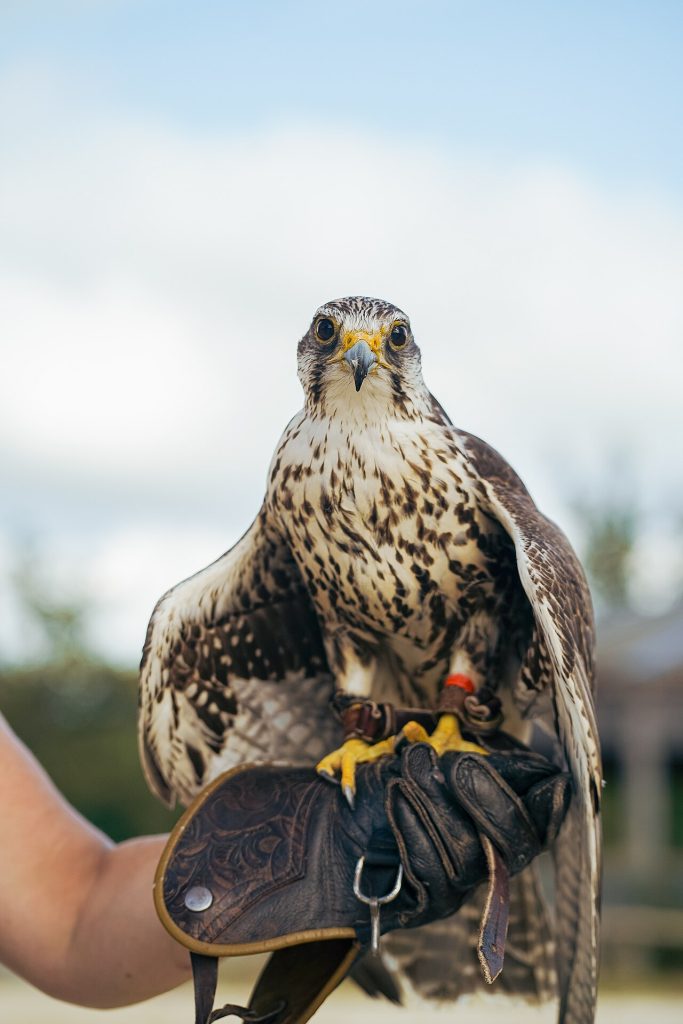
Long before golf courses and fishing lodges, Ireland’s gentry pursued one sport above all others: falconry. For nearly a thousand years, trained hawks and falcons hunted across Irish estates, a partnership between human and raptor that required patience, skill, and deep respect for the natural world.
Today, that tradition lives on at Ashford Castle in Cong, County Galway, where Ireland’s oldest country estate school of falconry continues to teach visitors the ancient craft that once defined nobility.
A Sport Older Than the Castle Itself
Falconry arrived in Ireland with the Normans in the 12th century, though evidence suggests earlier Celtic chiefs may have flown hawks as well. By medieval times, the type of bird you flew announced your social standing: emperors flew eagles, kings flew gyrfalcons, and priests flew sparrowhawks. Commoners, if permitted at all, flew kestrels.
Ashford Castle, built in 1228 and expanded into a Victorian marvel in the 1800s, has maintained its falconry tradition for generations. The Ireland School of Falconry, established on the estate’s grounds, is now the oldest of its kind in the country, housing Harris hawks, peregrine falcons, and barn owls within the castle’s original walled gardens.
What makes the experience remarkable isn’t just proximity to these birds, but the chance to work with them as falconers have for centuries: on the glove, in the field, with trust built one flight at a time.
Meeting the Birds
The hawks at Ashford are working birds, not pets. Harris hawks like Donegin and Finghin are especially prized for their intelligence and willingness to hunt cooperatively. Unlike solitary peregrine falcons, which dive at speeds exceeding 200 miles per hour, Harris hawks work in teams, a trait that makes them ideal for teaching beginners.
During a typical session, you’re fitted with a leather falconry glove, introduced to your hawk, and taught the basic commands. The bird’s weight surprises first-timers—around two pounds, all muscle and focus. Then you walk the castle grounds, hawk on glove, as your guide explains the mechanics of flight, the anatomy of a raptor’s vision, and the bond between falconer and bird.
When the hawk takes flight, launching from your glove to a nearby perch or swooping low across the meadow to return for a reward, the rush is immediate. It’s not a trick or a show. It’s collaboration, honed over centuries.
Why Falconry Still Matters
Falconry nearly disappeared in Ireland during the 20th century. Changing land use, habitat loss, and shifting cultural priorities pushed the practice to the margins. But in the past two decades, it has quietly returned, celebrated not as a relic but as a living connection to Ireland’s landscape and history.
At Ashford, falconry operates as both education and conservation. The birds are ambassadors for their wild cousins, many of which face threats from pesticides and habitat destruction. Handlers stress the importance of protecting Ireland’s remaining birds of prey, from kestrels to red kites, which have been reintroduced to Irish skies after near extinction.
The experience also teaches something rarely found in modern tourism: patience. You can’t hurry a hawk. You can’t force trust. The bird chooses to return to your glove, and when it does, the satisfaction is earned.
Planning Your Visit
The Ireland School of Falconry at Ashford Castle offers experiences ranging from one-hour introductory sessions to full-day hawk walks through the estate’s woodlands and along the shores of Lough Corrib. Prices start around $85 per person for the shorter sessions, with private bookings available.
You don’t need to be a guest of Ashford Castle to participate, though the setting—800 acres of forest, gardens, and waterfront—makes it tempting to stay. The estate is located in Cong, a village that straddles the border of counties Galway and Mayo, about an hour’s drive from Galway city.
Falconry sessions run year-round, though spring and autumn offer the most comfortable weather and the most active birds. Wear sturdy shoes and layers; you’ll be walking fields and woodland paths, often in Irish wind.
No prior experience is necessary. Handlers work with children as young as eight and adults well into their seventies. The hawks, it turns out, don’t care about your résumé.
More Than a Photo Op
Falconry at Ashford isn’t about getting the perfect Instagram shot, though the castle’s turrets and the hawks’ wingspans certainly deliver. It’s about stepping into a practice that has survived because it matters—to the people who keep it alive and to the birds themselves.
Walking back toward the castle with a hawk on your glove, you understand why this sport captivated Irish lords and ladies for generations. It’s not dominance. It’s partnership. And in a world that moves faster every year, that feels like something worth preserving.
Want more stories that celebrate Ireland’s history, landscapes, and living traditions? Subscribe to the Ireland Moments newsletter and get a daily dose of the Emerald Isle delivered to your inbox.