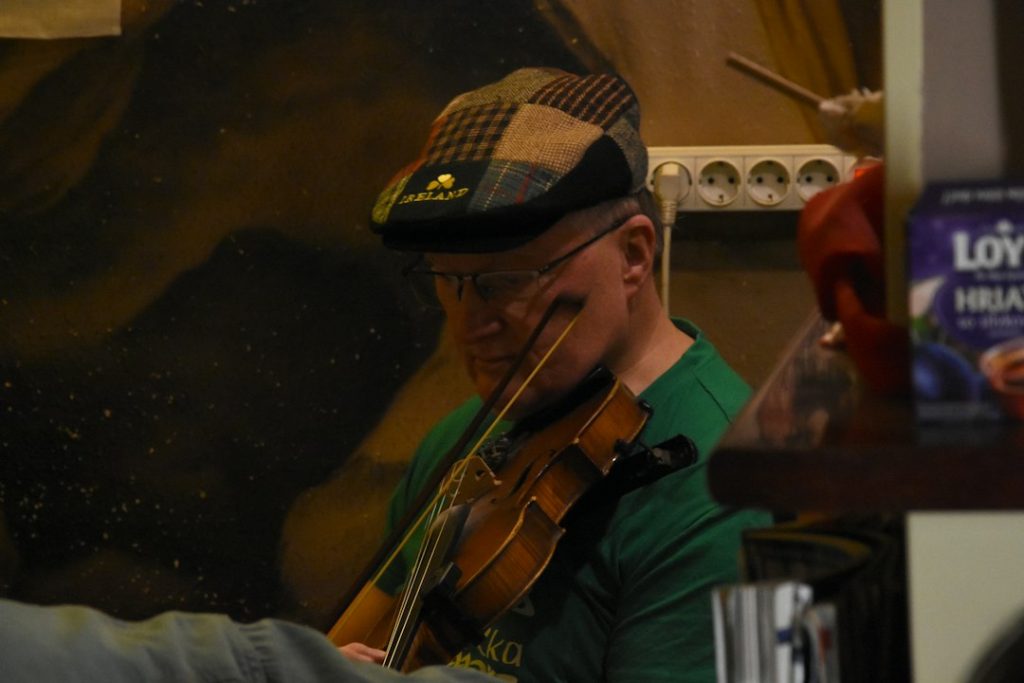
Walk into any trad session from Galway to Belfast, and you’ll hear it before you see it: the bright, singing voice of the fiddle cutting through the buzz of conversation and clinking glasses. The fiddle—identical in construction to the violin but worlds apart in spirit—is the soul of Irish traditional music, shaped by centuries of regional styles, master players, and kitchen sessions that passed tunes from one generation to the next.
What makes the Irish fiddle so essential isn’t just its sound, but the way each region has claimed it as its own, developing styles so distinct you can often tell where a player learned just by listening to their bowing.
Regional Styles That Define the Tradition
Irish fiddle playing isn’t a single tradition—it’s a collection of regional dialects, each with its own accent and attitude. In County Clare, fiddlers favor a rhythmic, driven style with plenty of ornamentation and a pulse that makes feet tap involuntarily. The playing is tight, energetic, and perfect for dancers. Listen to recordings from the Kilfenora Céilí Band or the playing of Bobby Casey to hear Clare at its finest.
Travel north to County Donegal, and the fiddle takes on a different character entirely. Donegal fiddlers use a technique called double-stopping—playing two strings at once—creating a drone effect that echoes the region’s Scottish connections. The rhythm is less rigid, more flowing, with a wild edge that mirrors the rugged Atlantic coastline. Players like Mairéad Ní Mhaonaigh carry this tradition forward today.
In Sligo, the style is fast, fluid, and virtuosic. This is the home of the legendary Michael Coleman, whose 1920s recordings in New York spread the Sligo style across the world. Sligo fiddlers favor smooth bowing and intricate ornamentation, with a sweetness that balances the speed. The influence of Coleman and his contemporaries—James Morrison, Paddy Killoran—still shapes how Irish music is played globally.
County Kerry brings yet another approach: the Sliabh Luachra style, named for the mountainous region straddling the Cork-Kerry border. Here, slides and polkas dominate, played with a rolling, bouncing rhythm and plenty of personality. Fiddlers like Pádraig O’Keeffe and Julia Clifford defined this playful, infectious style that makes staying still impossible.
How a Fiddle Session Really Works
In a session, the fiddle often leads. Not because it’s louder—it isn’t—but because its bright tone cuts through and carries the melody with clarity. Other instruments follow: the bodhrán provides the pulse, the guitar or bouzouki adds rhythm, the flute or whistle doubles the melody, and the accordion or concertina adds texture. But it’s the fiddle that sets the pace and signals the transitions.
A good session fiddler knows hundreds of tunes by heart and can shift seamlessly from a reel to a jig to a hornpipe without missing a beat. They also know when to step back, letting another instrument take the lead or dropping to a quieter dynamic so a singer can be heard. It’s a communal art, and the fiddle’s role is as much about listening as playing.
Where to Hear the Best Fiddle Playing Today
If you want to experience the fiddle in its natural habitat, head to Doolin, County Clare, where pubs like Gus O’Connor’s and McGann’s host nightly sessions featuring some of the finest fiddlers in Ireland. In Sligo town, try Shoot the Crows or McLynn’s, where the local style is still very much alive. Galway’s pubs—especially Tig Coili and Taaffes—draw players from across the country, and you’re likely to hear multiple regional styles in a single evening.
For a deeper dive, attend the Willie Clancy Summer School in Miltown Malbay each July, where fiddlers gather for a week of workshops, concerts, and sessions. Or visit the Frankie Kennedy Winter School in Donegal each January, celebrating the region’s distinctive sound.
You can also catch world-class fiddle playing at festivals like Fleadh Cheoil na hÉireann, which moves to a different Irish town each August and draws tens of thousands of musicians and listeners.
Why the Fiddle Endures
The fiddle’s place in Irish music isn’t about virtuosity alone—it’s about continuity. The same tunes played in a Clare kitchen in 1920 are still played in sessions today, passed down not through sheet music but through listening, imitation, and memory. The fiddle carries that chain unbroken.
It’s portable, affordable, and forgiving enough for beginners yet capable of extraordinary expression in skilled hands. It fits in a pub corner, a front room, or a festival stage with equal ease. And its voice—whether wild and rhythmic or sweet and slow—captures something essential about Ireland itself: resilient, expressive, and deeply rooted.
Want more stories celebrating Ireland’s music, culture, and traditions? Subscribe to the Ireland Moments newsletter—a daily dose of everything that makes the Emerald Isle unforgettable, delivered straight to your inbox.