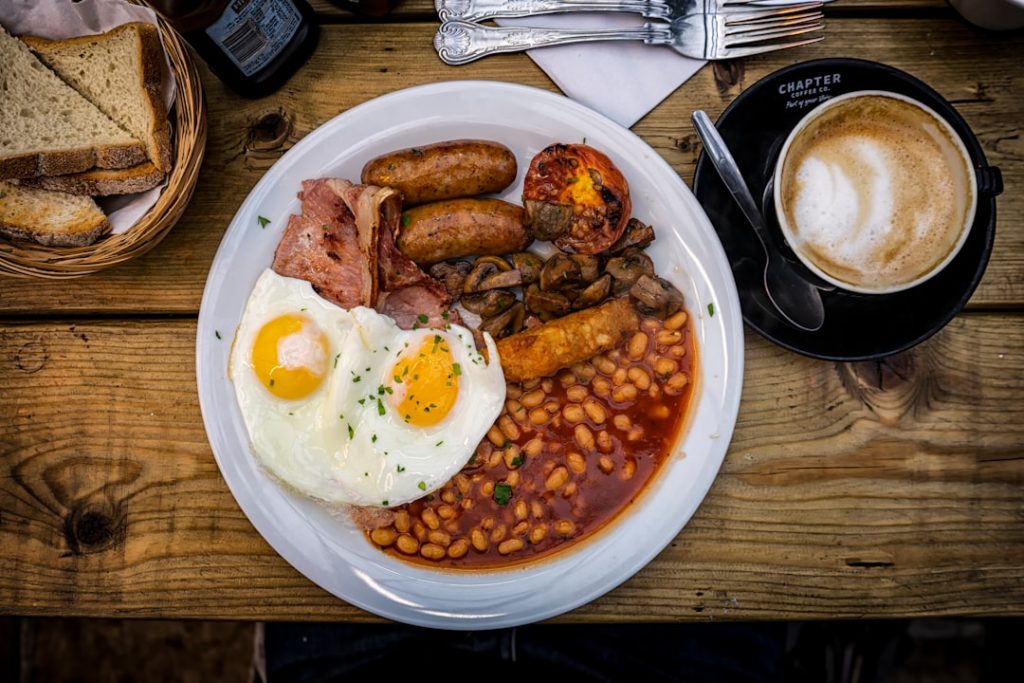
Walk into any B&B, country hotel, or traditional café across Ireland on a weekend morning, and you’ll likely be greeted by the same glorious sight: the full Irish breakfast, laid out on a warm plate with enough sustenance to fuel a day of hiking the hills or exploring coastal villages.
But this isn’t just a big breakfast. It’s a carefully composed tradition, with each element playing its part—and plenty of regional pride over what belongs on the plate and what doesn’t.
What’s Actually on a Full Irish
The foundation is simple but non-negotiable: bacon rashers (back bacon, not crispy American strips), pork sausages, black pudding, white pudding, eggs (fried or scrambled), grilled tomato, mushrooms, baked beans, and toast or soda bread. Some places add hash browns or potato cakes. In the west, you might find boxty. Along the coast, smoked fish sometimes makes an appearance.
The rashers are different from what Americans call bacon—meatier, less fatty, cut from the loin. The sausages are seasoned simply, often from a local butcher. And the puddings—black and white—are where things get distinctly Irish. Black pudding is made with pork, fat, oats or barley, and blood, giving it a rich, earthy flavor. White pudding skips the blood but keeps the spice. Both are sliced thick and fried until the edges crisp.
Then there’s the bread. Soda bread—wheaten or white—is the traditional choice, though brown bread and buttered toast are common too. It’s there to soak up the yolk, mop the plate, and tie everything together.
Why It’s Worth the Wait
A proper Irish breakfast takes time. It’s not fast food, and it’s not meant to be. The rashers sizzle slowly, the pudding gets its crust, the eggs are cracked to order, and the beans simmer on the side. In a good kitchen, everything arrives hot and nothing is microwaved.
This is a meal built for weekends, for mornings after a late session, for visitors adjusting to the time zone, and for anyone who wants to start the day with intention. It’s social, too—eaten slowly, with tea (always tea, though coffee is gaining ground), and often shared around a table where conversation flows as freely as the refills.
Where to Find a Great One
You’ll find full Irish breakfasts across the country, but some places have earned their reputation. In Galway, Ard Bia at Nimmos serves a beautiful version with locally sourced ingredients and a view of the River Corrib. In Dublin, The Woollen Mills on Ha’penny Bridge does a classic rendition in a bright, buzzing space. Down in Kinsale, Fishy Fishy adds smoked haddock to the mix, nodding to the town’s seafood heritage.
Outside the cities, B&Bs are where the tradition really shines. Places like Gregans Castle Hotel in the Burren or the Mustard Seed at Echo Lodge in County Limerick take pride in sourcing everything locally—eggs from nearby farms, sausages from the village butcher, bread baked in-house.
Expect to pay between $12 and $20 USD depending on the setting, though some hotels include it with the room. Either way, it’s a meal that earns its place.
The Ritual, Not Just the Plate
What makes the Irish breakfast more than the sum of its parts is the ritual around it. It’s the pause before the day begins. The clink of cutlery, the warmth of the teapot, the unhurried pace. It’s the kind of meal that invites you to linger, to read the paper, to plan your route, or to do nothing at all.
And while you can attempt it at home—and many do, especially on a Sunday—there’s something about having it served to you in Ireland, in a kitchen that’s been making it the same way for decades, that makes it taste better.
If you love Ireland and want stories like this delivered to your inbox every day, subscribe to the Ireland Moments newsletter—a daily celebration of the places, traditions, and flavors that make the island unforgettable.