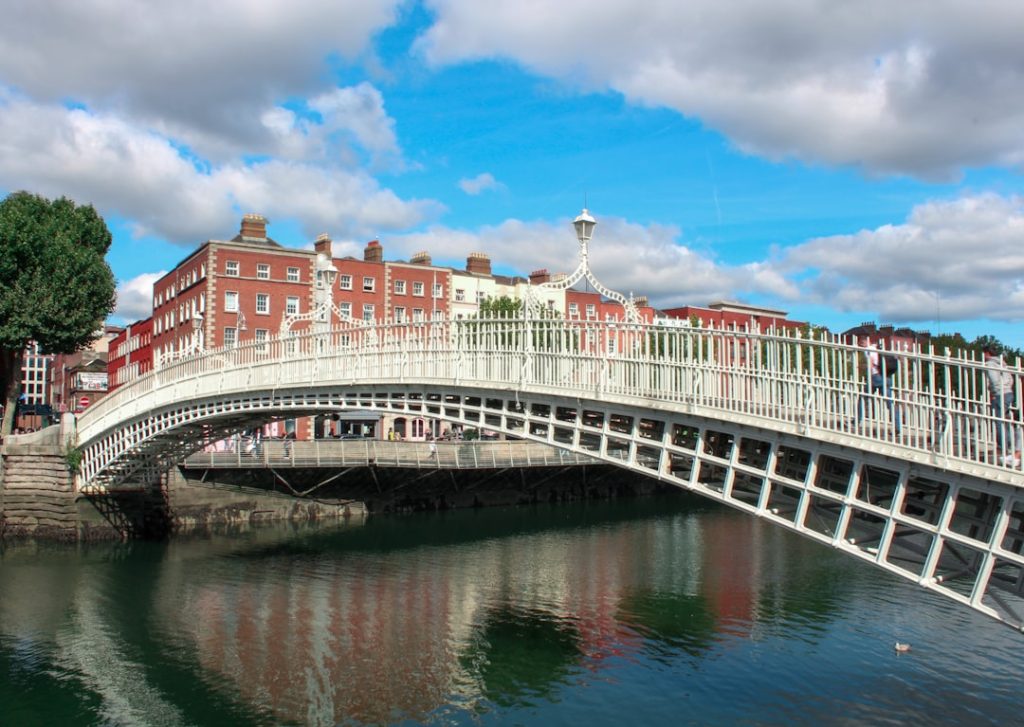
If you’ve wandered through Dublin’s city center, you’ve likely crossed the Ha’penny Bridge—maybe without even realizing its history. This graceful cast-iron arch spanning the River Liffey is more than a convenient shortcut between Temple Bar and the north quays. It’s a symbol of the city itself, and after more than two centuries, it remains one of Ireland’s most beloved landmarks.
Officially named the Liffey Bridge, it earned its nickname from the half-penny toll once charged to cross. That toll disappeared in 1919, but the name stuck. Today, thousands of locals and visitors cross it daily, pausing mid-span to watch swans glide below or catch the light changing over the water.
A Bridge Born from Ferries and Frustration
Before 1816, Dubliners relied on a fleet of seven ferries to cross the Liffey at this spot. The ferryman, William Walsh, operated them under license—but the boats were notoriously leaky and overcrowded. When the city council demanded he repair or replace them, Walsh offered an alternative: he’d fund a footbridge instead, provided he could collect tolls for 100 years.
The proposal was accepted. English ironworker John Windsor was commissioned, and the bridge was cast in Shropshire before being shipped to Dublin and assembled on site. It opened on May 19, 1816, becoming the first pedestrian iron bridge in Ireland and one of the earliest in these islands.
The toll was a halfpenny—expensive enough that many Dubliners still preferred to walk downstream to the next free crossing at O’Connell Bridge. But the Ha’penny quickly became popular, and by the time the toll was abolished, it had woven itself into the fabric of the city.
The 2001 Restoration That Saved It
By the late 20th century, the bridge had been battered by weather, rust, and the constant tramp of feet. In 1998, Dublin City Council closed it for a full restoration. For two years, metalworkers painstakingly repaired the ironwork, replaced corroded elements, and added modern lighting. Original decorative flourishes—cast-iron lamps and balustrades—were restored to their Victorian elegance.
When the bridge reopened in December 2001, it was celebrated as a masterpiece of conservation. The project won awards and set a standard for how historic infrastructure could be preserved without losing its character. Today, it’s stronger than ever, its white-painted railings gleaming against the Liffey’s grey-green waters.
Why It Still Matters
The Ha’penny Bridge isn’t just pretty—it’s proof that a city can honor its past while moving forward. It connects two of Dublin’s liveliest districts: Temple Bar’s cobbled lanes and pubs on the south side, and the historic Abbey Street and O’Connell Street area to the north. It’s appeared in countless photographs, films, and paintings, becoming shorthand for Dublin itself.
Walk it at dawn, and you’ll have it nearly to yourself, the city quiet except for gulls. Cross it at dusk, and the lights reflect in the water like scattered coins—a reminder of those half-pennies collected two centuries ago. Street musicians often perform at either end, their tunes drifting over the river.
Locals still use it as a meeting point. “See you at the Ha’penny” is a phrase as common as “See you at the Spire.” It’s a place where generations have crossed paths, literally and figuratively, and where visitors from every corner of the world pause to take in a view that’s been mostly unchanged since the gaslight era.
Visiting the Ha’penny Bridge
The bridge is open 24 hours and completely free to cross. It sits between the Millennium Bridge to the west and O’Connell Bridge to the east, making it an easy stop on any walking tour of central Dublin. The surrounding quays are lined with cafés, bookshops, and historic buildings worth exploring.
If you’re visiting in the evening, the bridge is beautifully lit, and the nearby Merchant’s Arch—an old stone passageway leading to Temple Bar—adds atmosphere. For photographers, early morning or golden hour offers the best light, especially when the Liffey is calm.
The Ha’penny is also a gateway to some of Dublin’s finest cultural spots: the Abbey Theatre, the Dublin Writers Museum, and the pubs where traditional music sessions still echo nightly. Cross it slowly. You’re walking on history.
Want more stories that celebrate Ireland’s landmarks, music, food, and culture? Subscribe to the Ireland Moments newsletter and get a daily dose of the Emerald Isle delivered to your inbox.