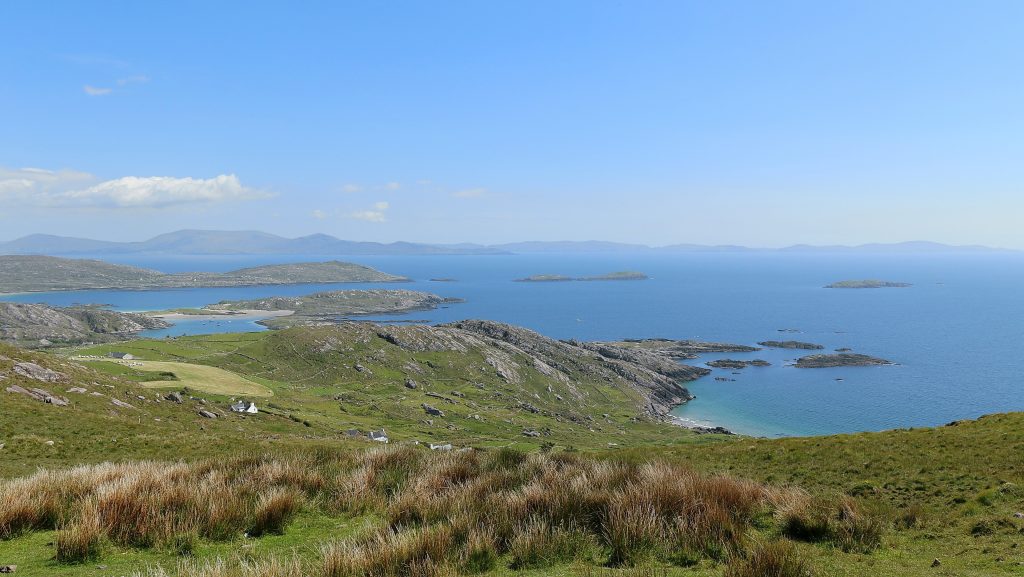
The Ring of Kerry is Ireland‘s most famous drive for a reason. This 111-mile coastal loop around the Iveragh Peninsula in County Kerry packs more drama, history, and heart-stopping scenery into a single day than most countries manage in their entire geography. It’s where mountains plunge into the Atlantic, where stone forts cling to clifftops, and where every bend in the road reveals something worth stopping for.
Most visitors tackle the Ring counterclockwise from Killarney, and there’s good reason for that—tour buses go clockwise, so you’ll avoid traffic jams on narrow roads. But however you drive it, this loop isn’t just about ticking off a bucket list item. It’s about understanding why Ireland looks the way it does, and why people have been drawn to this wild edge of Europe for thousands of years.
The Essential Stops You Can’t Skip
Start in Killarney and head toward Killorglin, where the road opens up to reveal Dingle Bay stretched out to your left. Your first major stop should be Cahersiveen, a small town that punches above its weight in history—it’s the birthplace of Daniel O’Connell, and the Old Barracks Heritage Centre tells his story well.
But the real treasure lies just beyond: Cahergall Stone Fort. This 2,500-year-old ring fort sits in a farmer’s field, its dry-stone walls still standing after millennia. You can walk right up, touch the stones, and climb the interior steps. There’s no gift shop, no admission fee—just you and the ancient past. A few miles away, Leacanabuaile Fort offers similar access with even better views across Valentia Harbour.
Valentia Island deserves more than a quick photo stop. Cross the bridge at Portmagee and drive to the Skellig Experience, where you’ll learn about the monks who lived on Skellig Michael. Even if you’re not visiting the island itself, understanding their story adds depth to everything you’re seeing. At the western tip of Valentia, the Bray Head Loop Walk takes just 90 minutes and rewards you with views that feel like the edge of the known world.
Where the Coast Gets Serious
After Valentia, the Ring begins its most dramatic stretch. The road hugs cliffs, drops to sea level at tiny villages, then climbs again through mountain passes. Waterville is where Charlie Chaplin spent his summers, and you’ll see why—the long beach and mountain backdrop create a kind of quiet perfection.
From Waterville, the road climbs through Coomakista Pass. Pull over at the viewpoint here. The Skellig Islands rise from the ocean like ancient teeth, and on clear days the view stretches 40 miles. This is where you understand what “the Wild Atlantic Way” really means.
Ladies View, near Killarney, gets its name from Queen Victoria’s ladies-in-waiting, who stopped here in 1861 and refused to leave. Looking out over the Lakes of Killarney with the MacGillycuddy’s Reeks rising behind them, you’ll sympathize. It’s one of those views that no photograph quite captures—the scale, the layers of blue and green, the way the light changes every few minutes.
Beyond the Windshield
The Ring of Kerry isn’t meant to be driven straight through. The magic happens when you stop. In Sneem, the colorful houses and two village squares invite a wander. Kenmare, at the southern end of the loop, is where you’ll find some of Kerry’s best restaurants—book ahead at The Lime Tree or Mulcahy’s if you’re staying for dinner.
For walkers, Kerry Way—Ireland’s longest waymarked trail—follows much of the Ring. You don’t need to hike the full 132 miles to appreciate it. The section from Waterville to Caherdaniel offers coastal cliffs and mountain passes without crowds. Even a two-hour walk gives you perspectives no car window can match.
Moll’s Gap, between Kenmare and Killarney, is where craft shops meet genuine artistry. Avoca’s store here showcases Irish design—textiles, pottery, and food—without the tourist tat. Their café serves excellent coffee and sandwiches with views across the gap.
Timing and Practicalities
The Ring takes three to four hours to drive without stops, but plan for a full day if you want to actually experience it. Summer brings crowds and tour buses, but also the longest daylight and best weather odds. September and early October offer clearer roads, lower prices, and that golden autumn light that makes every photo look like a postcard.
Gas stations are sparse once you leave Killarney, so fill up before you start. Pack snacks—you’ll find pubs and cafés in the main towns, but long stretches have nothing. And bring layers. Kerry weather can shift from sunshine to sideways rain in minutes, sometimes both in the same view.
Most visitors drive the Ring, but cyclists tackle it too. If you’re on two wheels, give yourself two or three days and book accommodation in advance. The narrow roads and hills make this a challenging ride, but cyclists consistently rank it among Europe’s best routes.
The Ring of Kerry isn’t just scenery. It’s geology—ancient sandstone and volcanic rock shaped by ice and ocean. It’s history—from Bronze Age forts to Famine villages. It’s culture—Irish is still spoken in pockets, and traditional music fills the pubs at night. Most of all, it’s a reminder of why people have always been drawn to Ireland’s edges, where land and sea collide and every turn reveals another reason to stop and stare.
Want more stories from Ireland’s most beautiful corners delivered to your inbox? Subscribe to the Ireland Moments newsletter—a daily celebration of the Emerald Isle’s places, culture, and spirit.