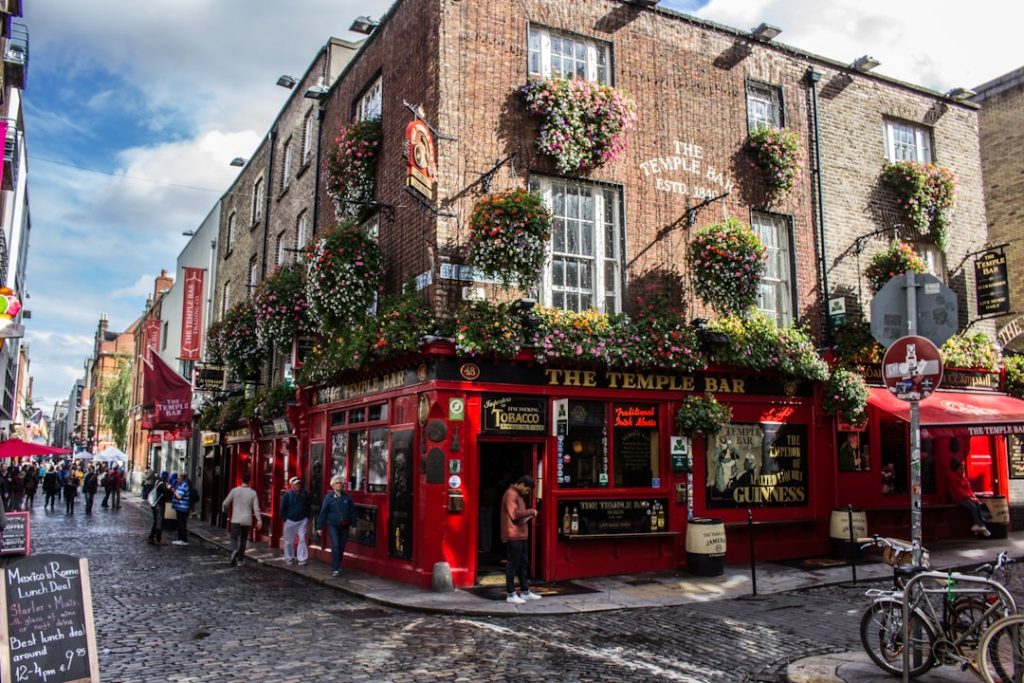
Walk into a real Irish pub and you’ll feel it before you see it. There’s a warmth that has nothing to do with the fire in the hearth, a sense of belonging that wraps around you whether you’re a regular or a first-timer. It’s not about brass plaques or shamrock wallpaper. The authentic Irish pub is something altogether different—a living room for a community, a stage for impromptu music, and a keeper of stories that stretch back generations.
But what exactly makes a pub authentically Irish? And how can you spot the difference between the genuine article and a themed imitation?
The Architecture of Conversation
Real Irish pubs are built for talk. The layout matters: bars that curve or run long enough that the bartender can move between clusters of conversation, high stools that bring strangers to eye level, snugs that offer intimacy without isolation. At places like Tigh Neachtain in Galway or The Long Valley in Cork, the space itself encourages connection.
The floors are usually worn wood or stone, scuffed by decades of boots and brogues. The lighting is dim but not dark—soft enough to feel comfortable, bright enough to see faces clearly. There are no televisions dominating every wall, no blaring music drowning out voices. When music happens, it’s live, and it happens in a corner where players have gathered of their own accord.
The bar itself is often wood, polished smooth by generations of elbows. Behind it, you’ll find a working pub, not a museum piece: taps that pour Guinness, Murphy’s, and Beamish, shelves of whiskey bottles that see regular rotation, and maybe a few photographs of local hurling teams or faded newspaper clippings celebrating county wins.
The People Behind the Bar
An authentic Irish pub is defined by who runs it. Many are still family operations—third or fourth generation publicans who know their regulars by name, drink preference, and family history. The bartender isn’t just pouring pints; they’re mediating disputes, offering advice, remembering who’s recently lost someone, and keeping track of who’s celebrating what.
At John Mulligan’s in Dublin, opened in 1782, or Dick Mack’s in Dingle, where they still sell leather goods in the front room while serving pints in the back, the staff carry institutional knowledge. They know how to pull a proper pint of Guinness—the two-part pour, the settling time, the dome just proud of the rim. They know when to join a conversation and when to let it unfold without interruption.
This isn’t service with a script. It’s hospitality rooted in genuine interest, where the bartender might tell you the history of the building, recommend tomorrow’s session, or simply nod when you need nothing more than a quiet pint.
The Rhythm of the Day
Irish pubs have a rhythm that changes with the hours. Mid-morning might see farmers nursing tea or whiskey after the market. Lunchtime brings workers for soup and sandwiches. Late afternoon belongs to the older regulars, claiming their usual seats, reading the paper, debating the hurling results.
Evening is when the pub truly comes alive. Conversations layer over one another. Someone might arrive with a fiddle case. A bodhrán appears. By nine o’clock, if you’re lucky, a session has formed—unplanned, unpaid, unannounced. This is the session in its natural habitat, not a scheduled tourist show but musicians playing for themselves and anyone who wants to listen.
O’Connor’s in Doolin or McGann’s in nearby Lisdoonvarna epitomize this organic gathering. There’s no cover charge, no reserved seating. You might stand for two hours, pressed against a wall, unable to move—and you wouldn’t dream of leaving.
What You Won’t Find
Authentic Irish pubs don’t try too hard. You won’t find green beer on St. Patrick’s Day. You won’t see leprechaun decorations or neon shamrocks. The walls might display old photographs, vintage advertisements for long-gone products, or actual historical artifacts, but they’re never stage-dressed with imported kitsch.
There’s rarely a food menu beyond solid pub fare: toasted sandwiches, Irish stew, fish and chips, maybe a plate of smoked salmon. The kitchen, if there is one, closes early. This is a drinking establishment first, a restaurant never.
Most importantly, you won’t find the pub trading on its authenticity. Real Irish pubs don’t announce themselves as “authentic” any more than they’d post signs saying “real conversations happen here.” They simply are what they’ve always been—community spaces that happen to serve drink.
Where to Find the Real Thing
In Dublin, seek out The Cobblestone in Smithfield, where the sessions are legendary and the music always comes first. In Belfast, try The John Hewitt, owned by the Belfast Unemployed Resource Centre and as community-focused as pubs get. In Kilkenny, Tynan’s Bridge House has barely changed since it opened in 1703.
West Cork offers the Ferry House in Schull, where sailors and locals mix seamlessly. In Westport, Matt Molloy’s—owned by the Chieftains’ flute player—hosts sessions that attract musicians from across Ireland. In Sligo, Hargadon’s still has its Victorian snugs and hasn’t updated much since 1868.
The best way to find an authentic pub? Ask a local where they drink. Follow the musicians. Look for the place with no sign, or a faded one. Trust your instincts when you walk through the door. You’ll know it when you feel it.
Want more stories about the Ireland you won’t find in guidebooks? Subscribe to the Ireland Moments newsletter—a daily celebration of Ireland, delivered to your inbox each morning.