Achill Island sits off the west coast of County Mayo, connected to the mainland by the Michael Davitt Bridge but feeling like it belongs to another realm entirely. At 57 square miles, it’s Ireland’s largest island, and every inch of it is packed with wild Atlantic beauty, ancient history, and landscapes that stop you mid-step.
This is where the ocean carves cliffs into cathedrals, where beaches stretch empty under massive skies, and where the remnants of famine villages cling to hillsides like ghosts. Achill doesn’t whisper—it roars.
Cliffs, Beaches, and the Wildest Coastal Scenery
Achill’s coastline is a study in contrasts. The Minaun Cliffs on the southern edge rise 800 feet above the Atlantic, offering views that stretch from Clare Island to the Twelve Bens of Connemara. On clear days, you can see the outline of Croagh Patrick to the east, Ireland’s holy mountain standing watch over the bay.
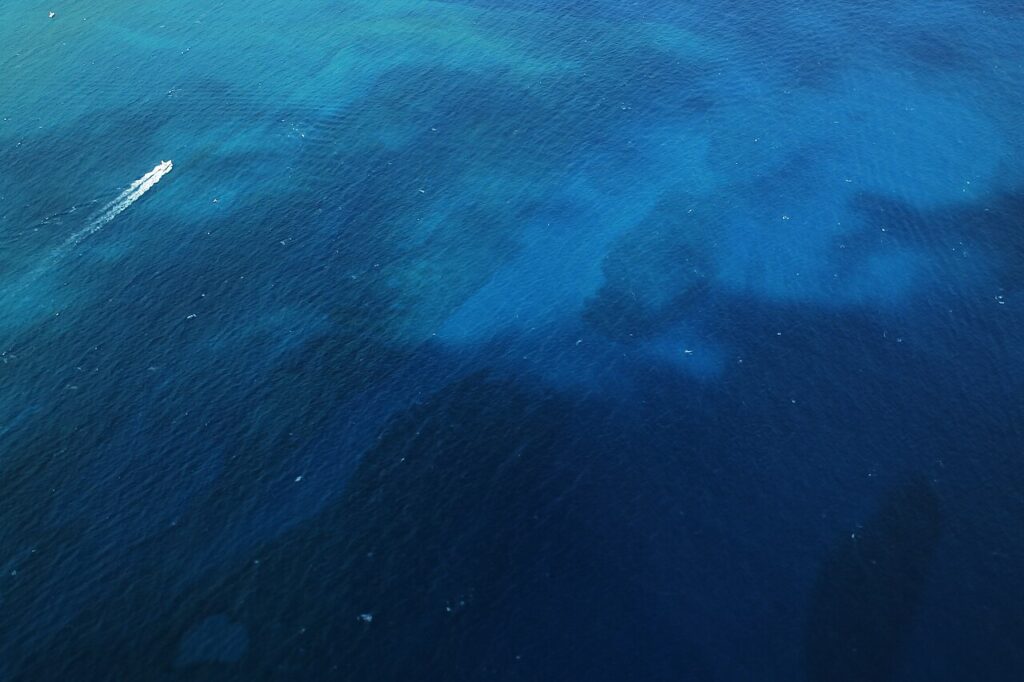
Then there’s Keem Bay, tucked into the western tip of the island. This horseshoe cove, flanked by green cliffs and filled with turquoise water, looks more like the Mediterranean than the Atlantic. It’s one of Ireland’s most photographed beaches, and for good reason—the light here changes by the hour, turning the sand gold, then silver, then pink at sunset.
On the northern coast, Keel Beach stretches for two miles, backed by dunes and fronted by waves that draw surfers year-round. When the tide goes out, the strand becomes a highway of wet sand, perfect for walking, running, or just standing still and taking it all in.
The Deserted Village and Famine Memory
High on the southern slopes of Slievemore Mountain sits the Deserted Village, a cluster of more than 80 stone cottages abandoned during and after the Great Famine of the 1840s. The roofless walls still stand, arranged in neat rows along the old road, and walking among them is like stepping into a silent conversation with the past.
This wasn’t a sudden abandonment. Many families practiced booley farming, moving between winter homes near the coast and summer pastures on the mountain. But famine, emigration, and economic collapse eventually emptied the village for good. Today, it’s one of the most haunting and beautiful heritage sites in Ireland, a place where history isn’t explained—it’s felt.
Nearby, the Achill Archaeology Centre offers context and guided walks, connecting the stones to the stories of the people who built them.
Atlantic Drive and the View from the Summit
The Atlantic Drive is a 25-mile loop around the island that takes you past cliffs, bogs, beaches, and mountains. It’s narrow, winding, and gloriously scenic—the kind of road where you pull over every few minutes just to stare.
For a bigger view, hike to the summit of Croaghaun, one of Europe’s highest sea cliffs at 2,192 feet. The trail starts near Keem Bay and climbs steeply through heather and grass. At the top, you’re standing on the edge of everything, with the Atlantic stretching west to America and the cliffs plunging straight down into foam and rock.
It’s a challenging hike—about five hours round trip—but the summit view is one of the finest in Ireland. On a clear day, you can see five counties and the full sweep of the Wild Atlantic Way.
A Place That Shaped Artists and Writers
Achill has long drawn artists, writers, and dreamers. Heinrich Böll, the German Nobel Prize-winning author, spent his summers here and wrote about the island’s light, isolation, and beauty in Irish Journal. His cottage in Dugort is now available as a retreat for writers and artists.
The painter Paul Henry captured Achill’s dramatic skies and mountains in works that became iconic images of the west of Ireland. His paintings still hang in galleries across the country, and when you stand on Achill and watch the weather roll in off the Atlantic, you see exactly what he saw.
Getting There and Making the Most of It
Achill Island is about 50 miles west of Westport and 65 miles from Knock Airport. Once you cross the bridge, slow down—this isn’t a place to rush through. Stay a few days if you can. The island has guesthouses, B&Bs, and self-catering cottages, most with views that belong on postcards.
Bring layers, even in summer. The weather on Achill changes fast, and the wind off the Atlantic is relentless. Pack a good raincoat, sturdy boots, and a camera—you’ll want both.
Stop at Gielty’s or The Beehive for local food and conversation. Try the seafood chowder, made with catch from the surrounding waters. And if you’re lucky enough to catch a session in one of the island’s pubs, settle in—Achill knows how to play.
Why Achill Stays With You
Achill Island isn’t gentle. It’s big, raw, and unapologetically wild. The cliffs are sheer, the beaches are windswept, and the history is heavy. But it’s also breathtaking, humbling, and deeply beautiful—a place where the land and the ocean meet with no compromise.
This is Ireland at its most elemental, where every view feels earned and every moment feels wide open. Achill doesn’t try to charm you. It just is—and that’s more than enough.
Want more stories from Ireland’s wild and beautiful places? Subscribe to the Ireland Moments newsletter and get a daily celebration of the Emerald Isle delivered to your inbox.