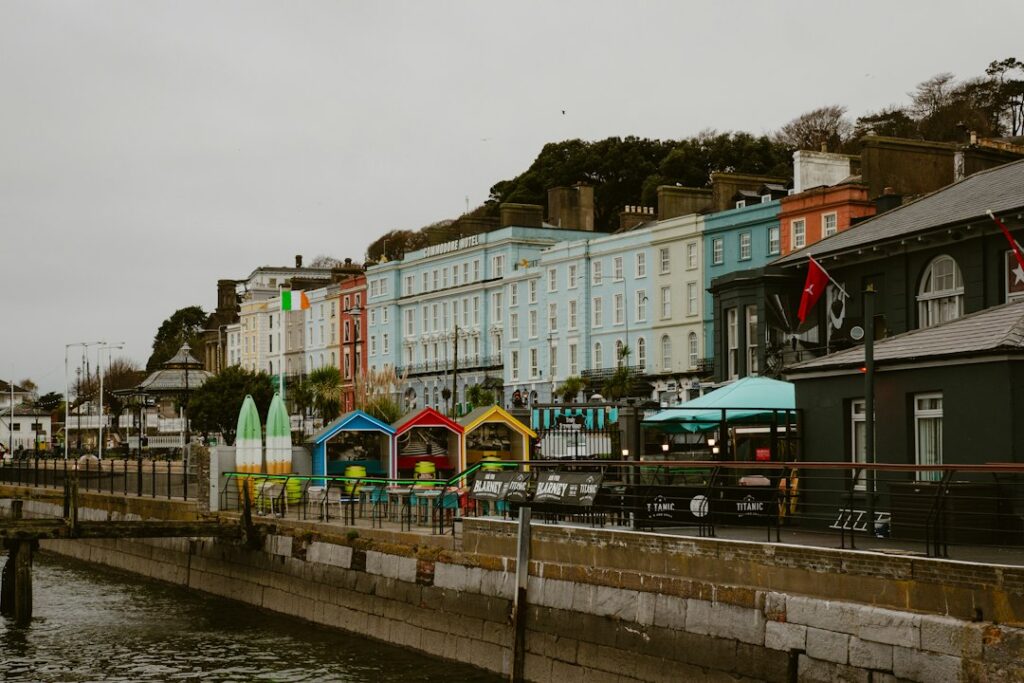
There are harbor towns, and then there’s Cobh. Perched on the edge of Cork Harbor, this small town of pastel-painted houses climbing up steep hills has witnessed more farewells than perhaps any other place in Ireland. Between 1848 and 1950, over 2.5 million people sailed from Cobh to new lives across the Atlantic. It was Ireland’s gateway to the New World, the last glimpse of home for generations of emigrants, and the last port of call for the RMS Titanic.
Today, Cobh is a town where history stands still and memory runs deep. Walk its streets, and you’re tracing the footsteps of millions who left with nothing but hope in their pockets.
The Emigration Story That Shaped a Nation
Cobh—once known as Queenstown from 1849 to 1920—became Ireland’s principal emigration port during the Great Famine. Ships departed daily, packed with families fleeing starvation and desperation. The town’s waterfront was a place of raw emotion: tears, final embraces, and the knowledge that for most, there would be no return.
The Cobh Heritage Centre, located in the beautifully restored Victorian railway station, tells this story with unflinching honesty. Interactive exhibits walk you through the emigrant experience, from the cramped steerage quarters to the anxiety of arrival at Ellis Island. You can search databases for your own ancestors who may have passed through these docks. For many visitors, especially those with Irish heritage, it’s a deeply personal pilgrimage.
The centre also covers the Titanic’s final stop. On April 11, 1912, the doomed liner anchored in Cork Harbor, and 123 passengers boarded via tender. It was the last time the ship would see land. Seven survived the sinking; the rest are remembered in the town’s memorials and walking tours.
The Cathedral That Watches Over the Harbor
Rising above Cobh’s colorful terraces is St. Colman’s Cathedral, a neo-Gothic masterpiece that took 47 years to build and was completed in 1915. Its 300-foot spire is visible for miles across the harbor, and its carillon of 49 bells is one of the largest in Ireland. On Sundays, the bells ring out across the water, the same sound that accompanied so many departures.
Inside, the cathedral is breathtaking: soaring arches, intricate stonework, and stained glass that bathes the nave in colored light. Climb the hill to reach it—Cobh is a town of steep streets and sudden views—and you’ll be rewarded with sweeping vistas of the harbor, dotted with sailboats and the occasional cruise ship.
The cathedral isn’t just a landmark; it’s a symbol of faith and endurance for a community that watched so many of its people leave.
The Deck of Cards and the Town That Rises
Cobh’s most photographed feature is the row of brightly painted houses along the waterfront and climbing up West View. Known locally as the “Deck of Cards,” these terrace houses in shades of pink, yellow, blue, and green create a joyful contrast to the town’s somber history. They were painted in vivid colors so sailors could identify home from the water—a welcoming beacon after months at sea.
Stroll along the promenade and you’ll pass the Lusitania Memorial, honoring the 1,198 people who died when the ship was torpedoed off the Old Head of Kinsale in 1915. Many victims were brought to Cobh, and the town became a center of rescue efforts and mourning. The memorial stands as a quiet reminder of the town’s role in maritime tragedy.
Stop for coffee at Commodore, a harborfront café with windows overlooking the water, or grab fish and chips from one of the local chippers and sit by the pier, watching ferries glide toward Spike Island.
Spike Island and the Harbor Beyond
Just a short ferry ride from Cobh is Spike Island, often called “Ireland’s Alcatraz.” This 104-acre island has served as a monastery, fortress, and prison over the centuries. Its star-shaped fort held convicts awaiting transportation to Australia and later housed political prisoners. Today, it’s a fascinating heritage site with guided tours, restored cells, and panoramic harbor views.
The ferry departs from Kennedy Pier in Cobh, and the 10-minute crossing offers stunning views back toward the town and cathedral. Tours last about two hours, and walking the island’s ramparts gives you a visceral sense of isolation and history. Admission is around $20, and it’s worth every cent.
A Town That Remembers
Cobh isn’t a place that hides its past. It wears its history with dignity and invites you to understand it. Whether you’re walking the Titanic Trail with a local guide, exploring the heritage center, or simply sitting by the water and imagining the countless ships that departed from this very spot, Cobh asks you to feel something.
It’s a town of beauty and sorrow, color and memory. And in a country shaped by emigration, Cobh is the harbor where it all began.
Want more stories from the towns and places that make Ireland unforgettable? Subscribe to the Ireland Moments newsletter—a daily celebration of Ireland, delivered straight to your inbox.