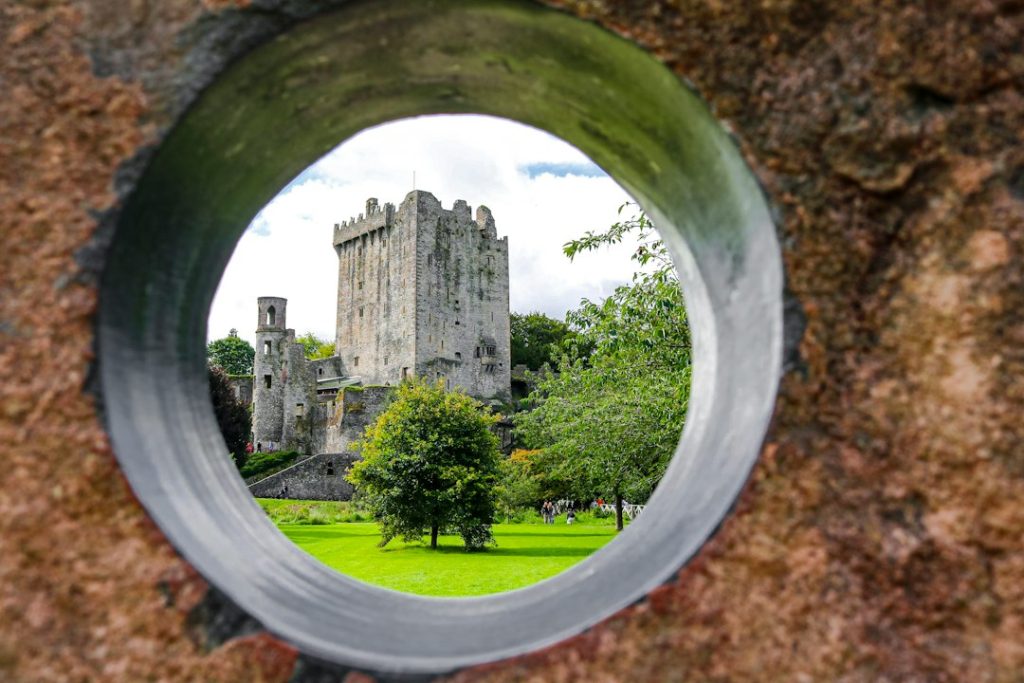
Five miles northwest of Cork city, perched on a limestone outcrop surrounded by ancient woodland and emerald parkland, stands Blarney Castle—a medieval fortress that has somehow convinced millions of people to lie on their backs, lean over a void, and kiss a block of bluestone lodged in its battlements.
The Blarney Stone is one of Ireland’s most enduring rituals, a curious blend of folklore, daring, and the universal human hunger for a little magic. But beyond the Instagram moment, there’s a real castle here—one with 600 years of history, battles, espionage, and the kind of silver-tongued defiance that made the stone famous in the first place.
The Castle and the Cormac Who Wouldn’t Shut Up
Blarney Castle was built in 1446 by Cormac Laidir MacCarthy, King of Munster, on the site of earlier wooden and stone fortifications. The tower house rises 85 feet, with walls up to 18 feet thick in places—built to withstand siege and assert dominance over the surrounding lands.
But Cormac’s real talent wasn’t architecture. It was talk. When Queen Elizabeth I demanded he renounce traditional Irish land tenure and acknowledge English rule, Cormac responded with endless letters—eloquent, flattering, evasive, and utterly unproductive. He promised everything, delivered nothing, and drove the Queen to exasperation. Her officials coined a term for his rhetoric: blarney.
The word stuck. And so did the legend that Cormac’s gift for gab came from the stone itself—placed high in the castle wall and kissed in gratitude to a witch who’d saved him from a lawsuit, or given by a Scottish king, or dropped by the prophet Jeremiah. Choose your myth. Ireland has several.
The Kiss: What It Takes and What It Means
To kiss the Blarney Stone, you climb 127 narrow stone steps to the top of the castle, emerge onto the windswept battlements, and then—guided by a cheerful attendant—lie flat on your back, grip two iron rails, and lean backward over a gap that drops straight down into the castle courtyard far below.
It’s exhilarating, slightly absurd, and completely safe. Metal grilles were installed decades ago, and the attendant helps position you. You arch back, plant your lips on the cool stone, and come up grinning. The tradition promises the gift of eloquence—the ability to speak with persuasion, charm, and wit. Whether it works is between you and your next conversation.
But the real gift is simpler: you’ve done something playful, a little nerve-testing, and deeply Irish. You’ve leaned into the legend.
Beyond the Stone: The Castle Grounds and Hidden Corners
Blarney Castle deserves more than a quick climb and a kiss. The keep itself is a marvel of medieval engineering—explore the Great Hall, the Earl’s bedroom, the murder hole, and the dungeons carved into bedrock. Peer out through arrow slits and imagine archers scanning the woods for approaching armies.
The surrounding estate covers 60 acres of gardens, caves, and trails. The Rock Close is an ancient grove believed to have been a druidic worship site, with moss-covered stones, a wishing steps formation, and the Witch’s Kitchen tucked into a rocky overhang. The Poison Garden grows deadly and medicinal plants behind iron gates—wolfsbane, mandrake, ricin—each labeled with warnings and folklore.
There’s a tranquil lake, a fern garden, waterfalls, and enough pathways to lose yourself for hours. In spring, the rhododendrons and azaleas bloom in riots of pink and purple. In autumn, the beech and oak trees turn copper and gold.
Visiting Blarney: What You Need to Know
Blarney Castle is open year-round, with extended hours in summer. Admission is around $22 USD for adults, with discounts for seniors, students, and children. Book online ahead of time during peak season—June through August draws crowds, and the stone’s popularity means queues on busy days.
Wear comfortable shoes with good grip; the stone steps are worn smooth by centuries of feet. The climb is manageable for most, but skip it if you have mobility issues or a fear of heights—the view from the gardens is just as lovely.
The village of Blarney itself is small but charming: grab lunch at the Muskerry Arms or the Square Table, browse the Blarney Woollen Mills for sweaters and crafts, and soak in the unhurried Cork countryside feel.
Why It Still Matters
In an age of curated experiences and viral bucket lists, the Blarney Stone endures because it asks something of you. You have to climb. You have to trust. You have to be willing to look a little silly in the name of something older than rationality.
And in return, you get a story—one that connects you to Cormac MacCarthy’s defiance, to centuries of pilgrims and poets, to the Irish love of words and the landscapes that inspire them.
Want more stories from the heart of Ireland—castles, music, folklore, food, and the places that make the island unforgettable? Subscribe to the Ireland Moments newsletter and get a daily celebration of the Emerald Isle delivered to your inbox.